LibreOffice 7.3.6 Community has been released

Berlin, September 8, 2022 – LibreOffice 7.3.6 Community, the sixth minor release of the LibreOffice 7.3 family for Windows, macOS (for Apple and Intel silicon) and Linux, targeted at personal productivity users, is available for download from https://www.libreoffice.org/download/. The LibreOffice 7.3 family offers the highest level of compatibility in the office suite market segment, starting with native support for the OpenDocument Format (ODF) – beating proprietary formats in the areas of security and robustness – to superior support for DOCX, XLSX and PPTX files.

For enterprise-class deployments, TDF strongly recommends the LibreOffice Enterprise family of applications from ecosystem partners, with long-term support options, professional assistance and Service Level Agreements: https://www.libreoffice.org/download/libreoffice-in-business/. LibreOffice Community and the LibreOffice Enterprise family of products are based on the LibreOffice Technology platform. They may have a different name, according to each company brand strategy, but they share the same LibreOffice unique advantages, robustness and flexibility.

LibreOffice Technology based products for Android and iOS are listed here: https://www.libreoffice.org/download/android-and-ios/, while for App Stores and ChromeOS are listed here: https://www.libreoffice.org/download/libreoffice-from-microsoft-and-mac-app-stores/

LibreOffice 7.3.6 change log pages are available on TDF’s wiki: https://wiki.documentfoundation.org/Releases/7.3.6/RC1 (changed in RC1) and https://wiki.documentfoundation.org/Releases/7.3.6/RC2 (changed in RC2).

LibreOffice individual users are assisted by a global community of volunteers: https://www.libreoffice.org/get-help/community-support/. On the website and the wiki there are guides, manuals, tutorials and HowTos. Donations help the project to make all of these resources available.

LibreOffice users are invited to join the community at https://ask.libreoffice.org, where they can get and provide user-to-user support. People willing to contribute their time and professional skills to the project can visit the dedicated website at https://whatcanidoforlibreoffice.org.

LibreOffice users, free software advocates and community members can provide financial support to The Document Foundation with a donation via PayPal, credit card or other tools at https://www.libreoffice.org/donate.

LibreOffice 7.3.6 is built with document conversion libraries from the Document Liberation Project: https://www.documentliberation.org.

The Latin American LibreOffice 2022 Conference was a success!

Female volunteering, interoperability, professional training, migration, Python based macro development and much more were highlighted themes at the event held at the Catholic University of Brasilia in the capital of Brazil.

Daniel A. Rodriguez writes:

The Latin American LibreOffice Conference gathered around 400 people, among them students and IT professionals, and was opened to the public on Thursday August 25th in a ceremony presided by Prof. Wesley Sepulvida, representing UCB, Lothar Becker (formerly on the Board of Directors of The Document Foundation) and Olivier Hallot representing the LibreOffice community.

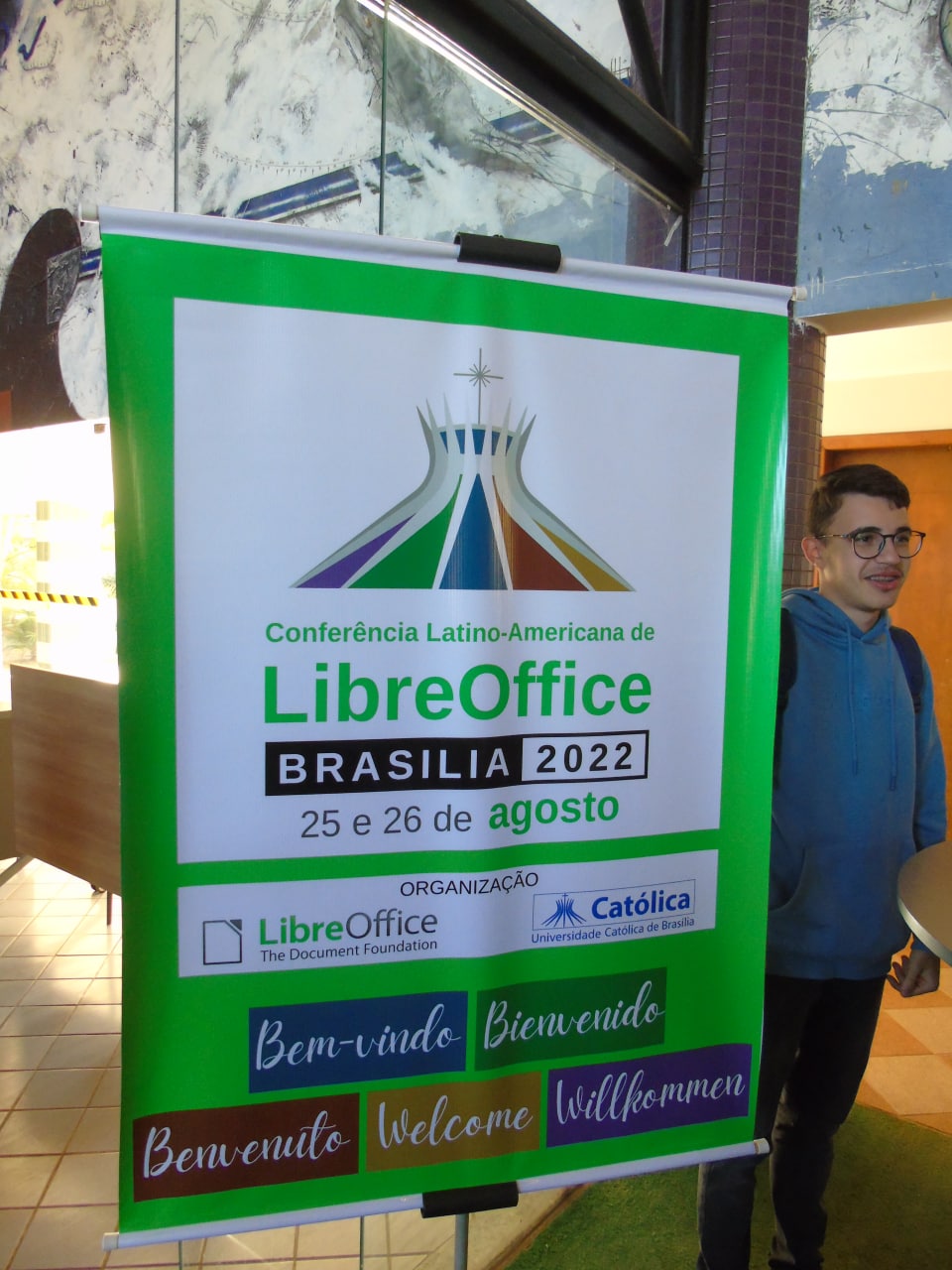
The conference was organized entirely by volunteers, and followed up on the first event held in the city of Asunción in Paraguay in 2019. Brasilia was chosen to host the conference in 2022 because of its importance in the Latin American context and its excellent infrastructure. The lectures and workshops were given by members of the LibreOffice community from Italy, Spain, Mexico, Brazil and Argentina, on August 25 and 26 at the Catholic University of Brasília, on the Taguatinga campus.
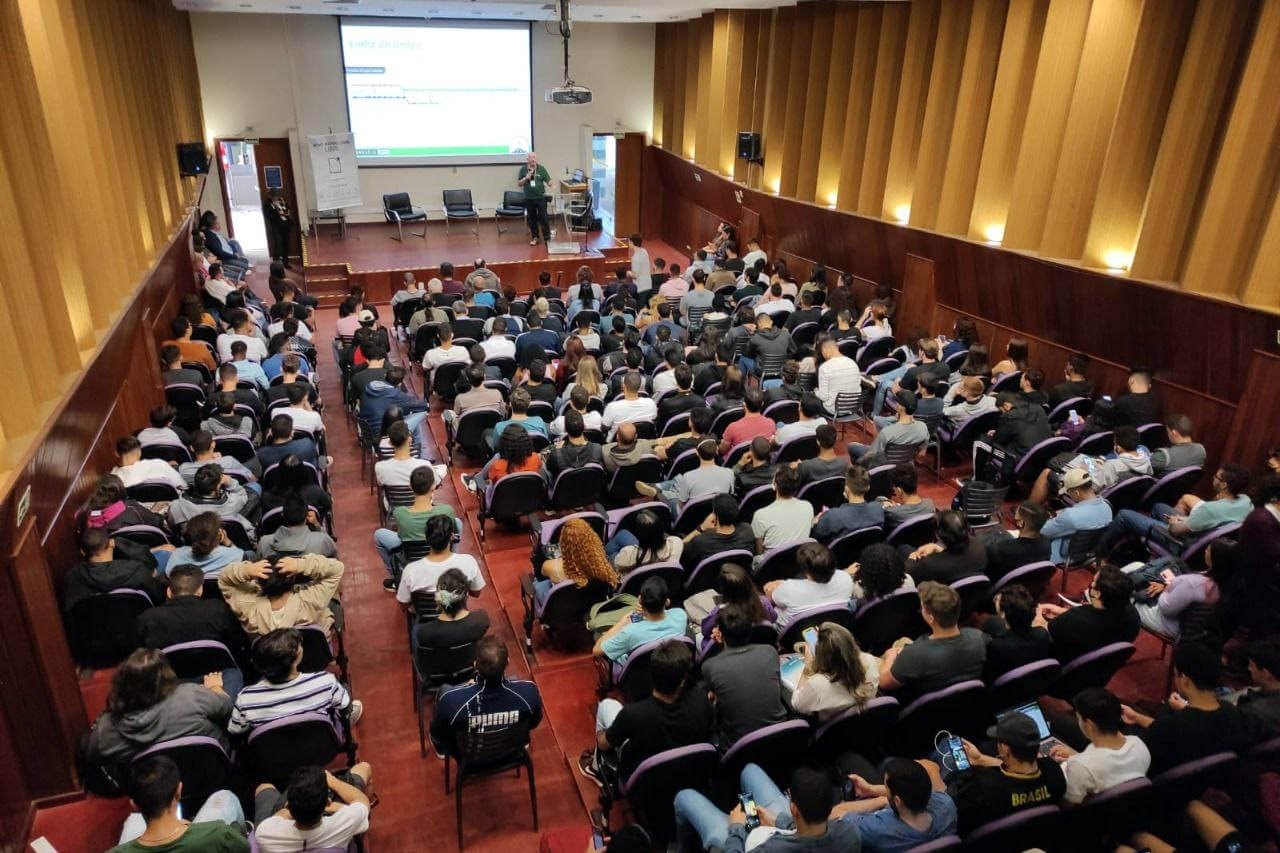
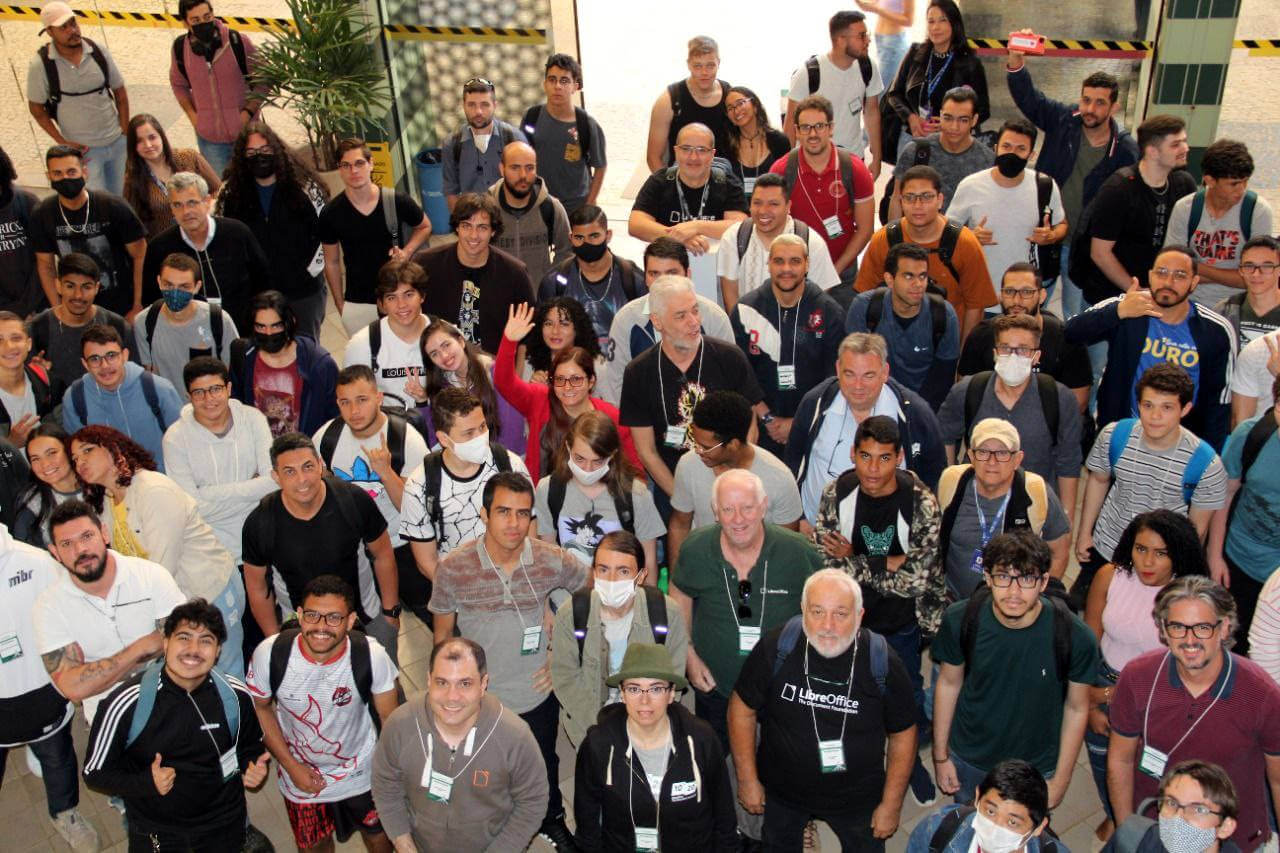
Italo Vignoli (Italy – TDF) and Olivier Hallot (Brazil – TDF), founding members of The Document Foundation, opened the lectures, presenting the sustainability of free software projects and the history of LibreOffice in Brazil, respectively. At the end of the morning, the participants took the official photo of the event.

In the early afternoon, Daniel Rodriguez (Argentina – TDF / UNAU) spoke about the implementation of a version of LibreOffice Online at the Alto Uruguay National University in Argentina, and Rafael Silveira (Brazil) presented the migration project to LibreOffice at Nuclebrás Equipamentos Pesados (NUCLEP). Simultaneously, in the computer lab Henderson Matsuura Sanches (Brazil – TDF) gave a workshop with practical tips about how to do an End of Course Paper in LibreOffice.

Xisco Fauli (Spain – TDF) presented the testing procedure of LibreOffice, followed by Lothar Becker (Germany – TDF) who talked about entrepreneurship with free software. Roberto Salomon (Brazil – Chief architect for Latin America at SUSE) spoke about the future that opens up with the technological innovations that are arriving in Brazil. In the closing of the first day, Prof. Andre Lima (UCB) spoke about open source solutions for LGPD compliance. In the workshops, Rafael Lima (Brazil – TDF) led the work on python scripting with a full room.
On the second day, Gustavo Pacheco (Brazil – TDF) shared with the audience details about the importance of being careful when investing in cryptocurrencies and how LibreOffice can help in decision making. He was followed by Olivier Hallot who presented the different ways of documenting software projects. Tulio Macedo (Brazil – TDF) presented the challenges of more accessible documentation. Simultaneously, Xisco Fauli led the session on software bug identification and confirmation. At the same time, Felipe Marra, Rafael Osiro and Giovanni Favorim from UCB led a workshop on software versioning control with the git tool. Prof. Remis Balaniuk (UCB) gave an introductory workshop on python.

In the afternoon, Italo Vignoli spoke about digital sovereignty. Followed by Olivier Hallot who presented migration strategies between office suites. Eliane Domingos (Brazil – TDF) talked about female volunteering in the LibreOffice project. At the same time, Mauricio Baeza (Mexico – TDF) gave a workshop about creating extensions for LibreOffice. In parallel, Prof. Cleto Spotto (UCB) analyzed snippets of LibreOffice code in a C++ workshop.

Henderson Matsuura showed how to install and use Mendeley in Writer, followed by Olivier Hallot who covered first steps in developing code for LibreOffice. Jackson Junior (Brazil – TDF) presented his experiences in standardizing documents at the Secretariat of Environment and Urban Planning (SEMAPU) of Olinda, Pernambuco, and Prof. Cleto Spotto (UCB) conducted an introductory workshop on LibreOffice Math. Finally, Prof. Hially Vaguetti (UCB) showed how to make academic presentations in LibreOffice Impress.
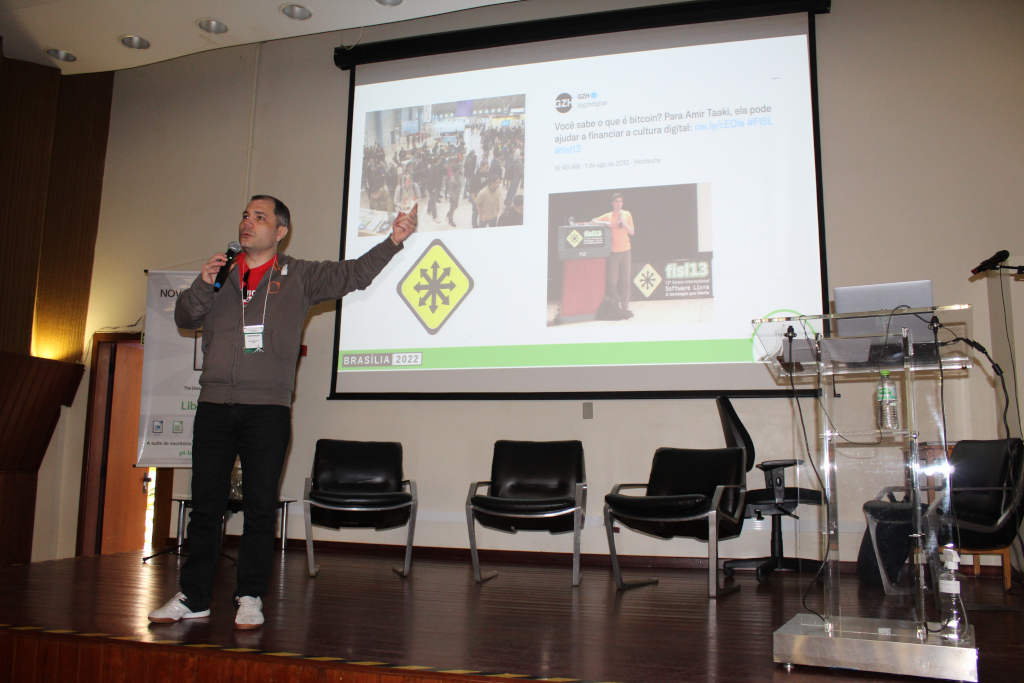
The conference was closed by Prof. Wesley Sepulvida, who thanked The Document Foundation and the LibreOffice community for their presence. In return, Olivier Hallot thanked the Catholic University of Brasilia for its hospitality and the volunteers and speakers for their participation in this first face-to-face event after the pandemic.

Now we look forward to meeting more people at the LibreOffice Conference 2022 in Milan, at the end of this month!

Membership Committee Election 2022: Q+A sessions with the candidates

The Document Foundation is the non-profit home of LibreOffice, and its Membership Committee (MC) administers membership applications and renewals following the criteria defined in the Foundation’s Statutes.

The election process for a new MC is underway, and we’ve had three live Q+A sessions with the candidates! Check them out in this playlist, using the icon in the top-right to switch videos (and we’ll put them on PeerTube very soon):

Please confirm that you want to play a YouTube video. By accepting, you will be accessing content from YouTube, a service provided by an external third party.

YouTube privacy policy

If you accept this notice, your choice will be saved and the page will refresh.

Community Member Monday: Jean-Baptiste Faure

Today we’re talking to Jean-Baptiste Faure from the LibreOffice localisation community

Tell us a bit about yourself!

I am Jean-Baptiste, living in a small town near Lyon in France.

I retired in 2021, and until then I was working as a researcher in hydroinformatics in a public research institute. I was developing numerical simulation software for the study of river flows and their dynamics: mainly floods and pollutant transport.

What are you working on in the LibreOffice project right now?

Currently my main contribution to LibreOffice is the French localization of the UI. So I am less active in Quality Assurance than previously, but I continue to build several versions of LibreOffice for my own use and QA needs.

Note: it is very easy to build LibreOffice on Linux – do not hesitate to try.

Why did you choose to join the project, and how was the experience?

Well, from my point of view, LibreOffice is the natural continuation of the OpenOffice.org project. I started with StarOffice 5.1 in 1998 because I needed a word processor able to write mathematical equations under Microsoft Windows, and I never liked Latex. 😉

In 2008, I was elected to succeed to Sophie as lead of the French speaking community. I managed the QA tests for the French localized versions of OpenOffice.org.

When LibreOffice was launched, it was clear for me that it was the future. Joining the project was proof.

Let’s not lie to ourselves, the experience is not a smooth one. Current debates about LibreOffice Online are an example, but certainly that will not be the last crisis. But LibreOffice is too central and important to be stopped by such crises. I want to believe that the community is strong enough to overcome theses problems.

Anything else you plan to do in the future? What does LibreOffice really need?

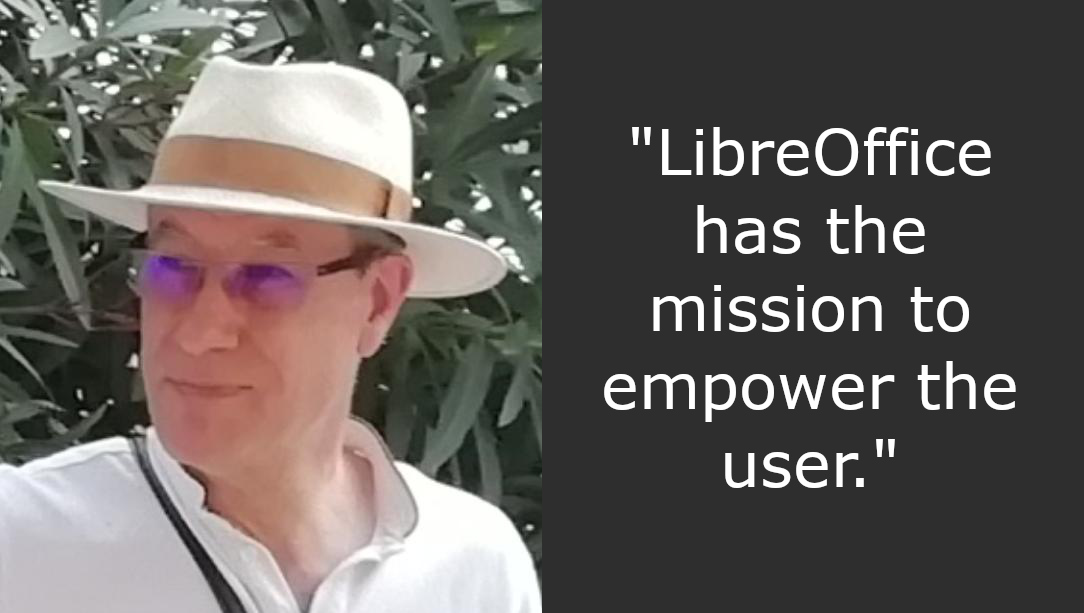
The Document Foundation, through LibreOffice and its other projects, has the mission to empower the user. Free software should make the user less dependent on software and service providers, and give him back the power over the computers he uses, more or less without realizing it.

More concretely, I think that the development effort of LibreOffice should focus in particular on the elimination of regressions, and on the frugality of the software to reduce its ecological impact.

Many thanks to Jean-Baptiste for all his contributions. All LibreOffice users are welcome to get involved, learn new skills – and make LibreOffice even better for millions of users!

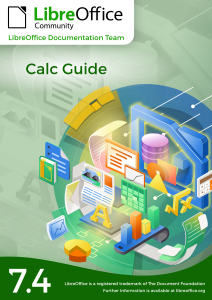
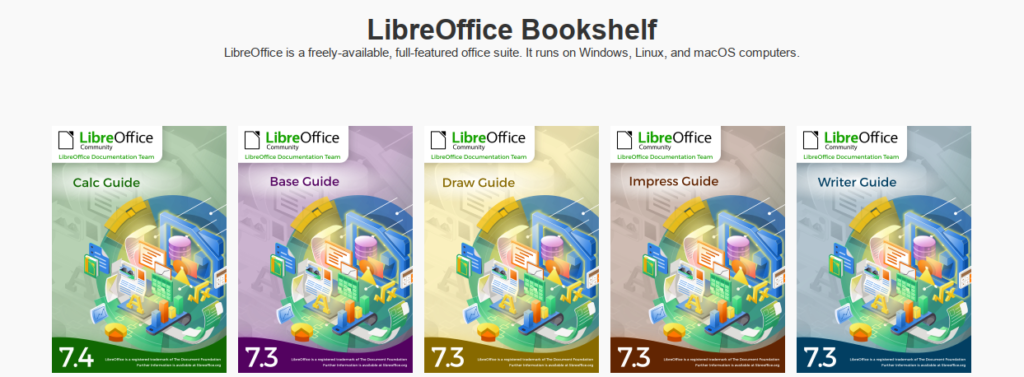
LibreOffice Calc Guide 7.4 is released

The new Calc Guide 7.4 bring updated information for users on the latest LibreOffice 7.4 release.

Skip Masonsmith and Kees Kriek of the LibreOffice Documentation Team are happy to announce the immediate availability of the LibreOffice Calc Guide 7.4.

The guide is for beginner to advanced users of Calc, the spreadsheet component of LibreOffice. The book introduces the features and functions of LibreOffice Calc. It is not a tutorial on using spreadsheets. Some chapters assume familiarity with basic spreadsheet usage when describing how to use Calc.

“It has been fantastic to join the LibreOffice documentation community of technical writing experts. As I worked on the Calc Guide 7.4 updates, I was well supported by the team to ensure the best outcome for everyone. It was a great experience and I look forward to working on more guides with the team.” said Skip Masonsmith, Calc Guide 7.4 coordinator.

Skip Masonsmith
Kees Kriek

The teamwork effort of Skip and Kees allowed to release the Calc Guide 7.4 in record time. The team decided to skip the Calc Guide 7.3 and merged it into the latest release 7.4.

The guide is available to download at the Documentation website and at the LibreOffice Bookshelf website. Both PDF and the source files are available. Our team used LibreOffice master documents to assemble the book and updated the style template for improved reading and text layout.

The community is invited to comment and give us feedback on the LibreOffice Calc 7.4  guide by joining our Documentation FORUM. Come along and let’s turn our Guides in the best LibreOffice user documentation reference.