Extended: Job Search for a Development Mentor (#201711-01)

We originally posted this in November, but we are now extending the deadline for applications to February 16, 2018. Note that we will be at FOSDEM (building K, level 1, group A) on February 3 and 4, so you can talk to us in person there!

The Document Foundation (TDF), the charitable entity behind the world’s leading free office suite LibreOffice, seeks an individual – or individuals part (or full) time – to be

a Development Mentor

to start work as soon as possible. The role requires the following:

  • Self-starting, remote working experience
  • Experience contributing to FLOSS communities
  • Excellent communication skills, with enthusiasm for mentoring
  • Coding experience (LibreOffice coding preferred)
  • Willingness to travel to Hackfests & conferences in Europe and globally

The role involves working from home at your location for at least 20 hours per week, up to full-time and includes among other items:

Supporting existing mentors in the LibreOffice community including:

  • Building relationships between existing mentors and new contributors
  • Identifying and on-boarding new contributors
  • Affirming and encouraging their contribution
  • Building initial relationships with them
  • Encouraging them to join IRC to meet the teams
  • Introducing them to domain experts for deeper learning
  • Helping to educate new contributors by
  • Positively reviewing their code contributions
  • Introducing them to our tooling and culture
  • Attracting new contributors by promoting the project
  • Interaction with UX volunteers

Previous experience with such tasks is highly welcome, so is using free software. Speaking and writing English reasonably well is a mandatory requirement.

The work time during the day is flexible, apart from some fixed times when availability is required (e.g. during meetings, which usually take place at 14:00 or 15:00 UTC once per week).

TDF welcomes applications from all suitably qualified persons regardless of their race, sex, disability, religion/belief, sexual orientation or age.

As always, TDF will give some preference to individuals who have previously shown a commitment to TDF, including but not limited to members of TDF. Not being a member, or never having contributed before, does not exclude any applicants from consideration.

TDF is looking forward to receiving your applications, including curriculum vitae, your financial expectations, and the earliest date of your availability, via e-mail to Florian Effenberger at floeff@documentfoundation.org no later than February 16, 2018. You can encrypt your message via PGP/GnuPG.

If you haven’t received feedback by March 16, 2018, your application could not be considered.

Wednesday Community #3

FOSDEM 2018 is approaching. As usual, several members of the LibreOffice community will move to Brussels to gather for the largest meeting of free and open source advocates in Europe.

People attending FOSDEM 2018 can find LibreOffice representatives at LibreOffice booth in building K during Saturday and Sunday.

On Saturday, there will be several LibreOffice-related presentations at the Open Document Editors DevRoom.

Immediately after FOSDEM, on Monday and Tuesday, there will be a LibreOffice HackFest, with developers working at new features and community members meeting to discuss certification, marketing, QA, design, and other relevant topics.

LibreOffice community focus: Design

LibreOffice’s design community works on the software’s user interface (UI), improving its usability and accessibility. With LibreOffice 6.0 due to be released at the end of the month, we talked to members of the community to get their perspectives on the new version…

What have you been working on in preparation for LibreOffice 6.0?

Various things, including:

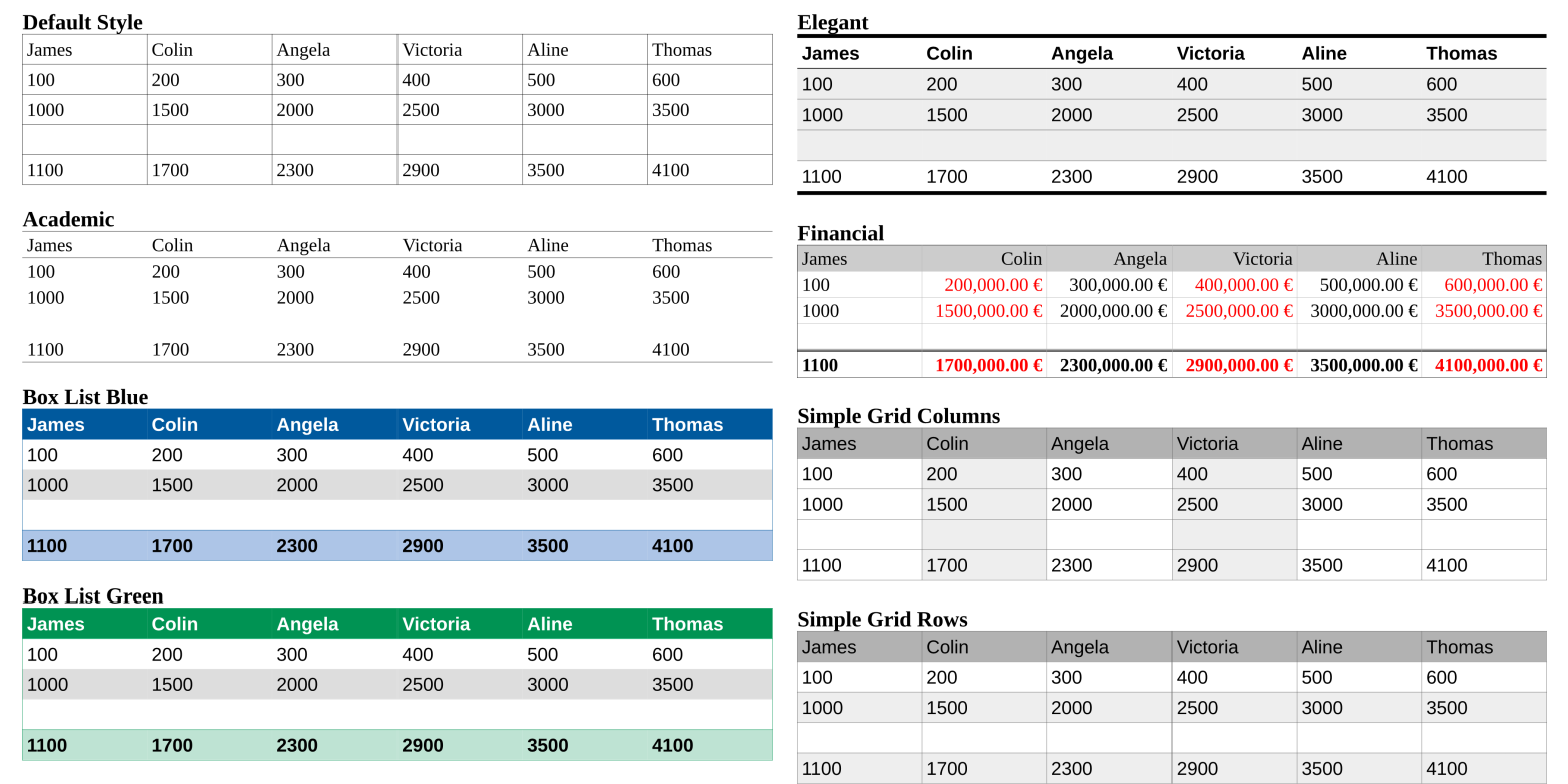
  • New table styles and new gradients (click for bigger):

  • The LibreOffice 6.0 motif/splash screen:

  • And menu and toolbar improvements

What are your favourite new features in this release?

Both GSoC (Google Summer of Code) projects are really nice: the revamped customization dialog, and the special character dialog with quick access from the toolbar. In addition, there’s the ability to rotate images to arbitrary degrees, and many other small improvements.

What tools and services do you use in the design community?

At the moment we use Balsamiq Mockups, but next we switch to Pencil. In addition, we use LibreOffice Draw (eg for the new motif) and Inkscape. For communication, we are active on IRC in the #libreoffice-design channel and Telegram.

Finally, how can people get involved with the design community?

A big thanks to the design team for their input and improvements in LibreOffice 6.0. For our final Community Focus, we’ll talk to the development community – more on that soon!

The Document Liberation project announces five new or improved libraries to export EPUB3 files and import AbiWord, MS Publisher, PageMaker and QuarkXPress documents

Berlin, January 22, 2018 – The Document Liberation Project announces five new or improved libraries to export EPUB3 and import AbiWord, MS Publisher, PageMaker and QuarkXPress files. The libraries have been originally developed for the LibreOffice 6.0 major release, but can be used by any other software thanks to the OSI (Open Source Initiative) compliant license.

libe-book exports LibreOffice ODT files to EPUB3. At the moment it offers just basic features, but development is still undergoing and new features will be added before the next major release. The library can be downloaded from https://sourceforge.net/projects/libebook/. A description of the architecture and the features is available here: https://vmiklos.hu/blog/basic-epub3-export.html.

libabw imports AbiWord documents, and can be downloaded from http://dev-www.libreoffice.org/src/libabw/. The library home page is at https://wiki.documentfoundation.org/DLP/Libraries/libabw.

libmspub imports MS Publisher documents, and can be downloaded from http://dev-www.libreoffice.org/src/libmspub/. The library home page is at https://wiki.documentfoundation.org/DLP/Libraries/libmspub.

libpagemaker imports PageMaker 6/7 documents, and can be downloaded from http://dev-www.libreoffice.org/src/libpagemaker. The library home page is at https://wiki.documentfoundation.org/DLP/Libraries/libpagemaker.

libqxp imports QuarkXPress 3.1/4.1 documents and templates and can be downloaded from http://dev-www.libreoffice.org/src/libqxp/. The library home page is at https://wiki.documentfoundation.org/DLP/Libraries/libqxp.

The Document Liberation Project was created to empower individuals, organizations and governments to recover their data – hidden inside obfuscated proprietary file formats – and migrate them into perennially accessible standard file formats.

To return effective control over content to the real authors, the Document Liberation Project develops software libraries that can be used by applications to read data in proprietary formats. The libraries are currently used by Calligra, Inkscape and Scribus.

Sunday Marketing #3

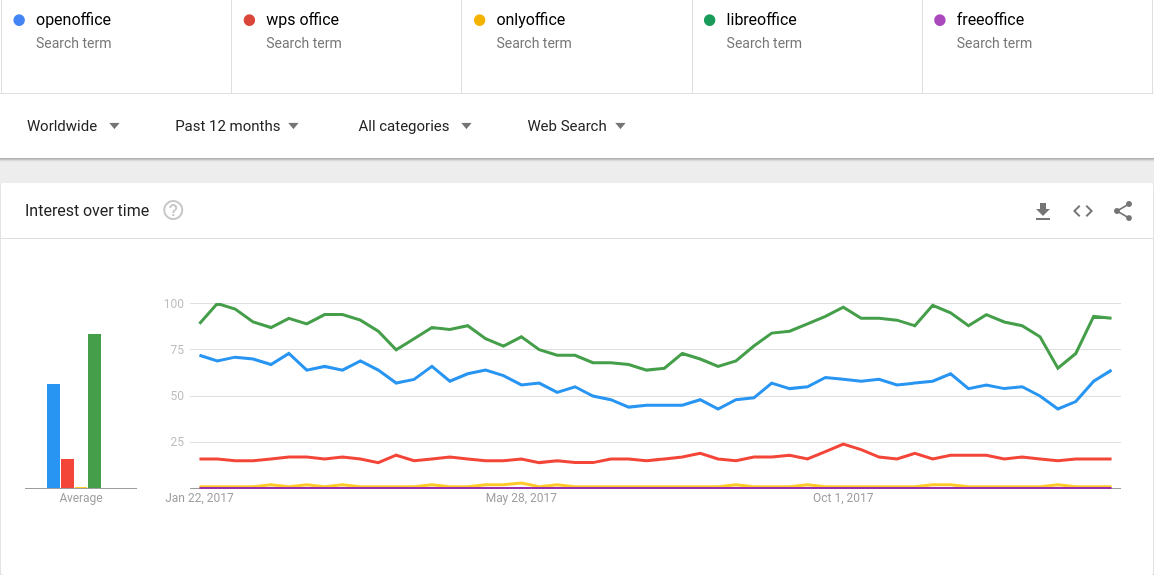
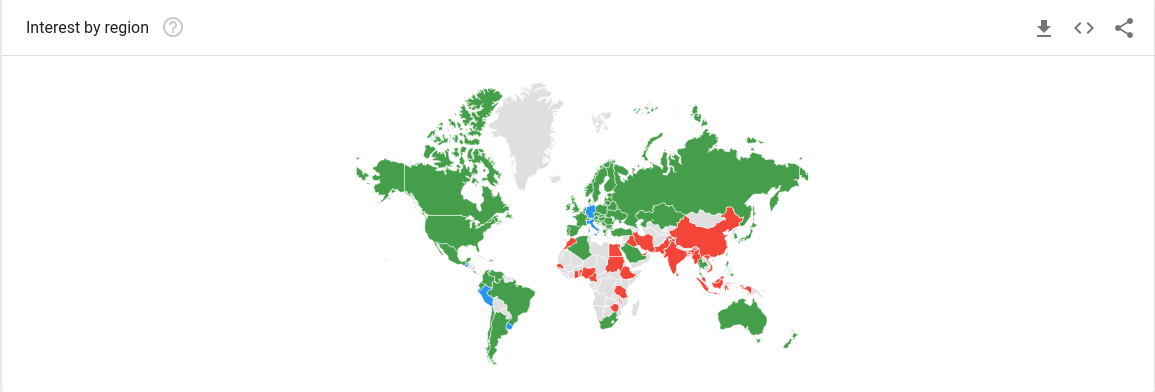
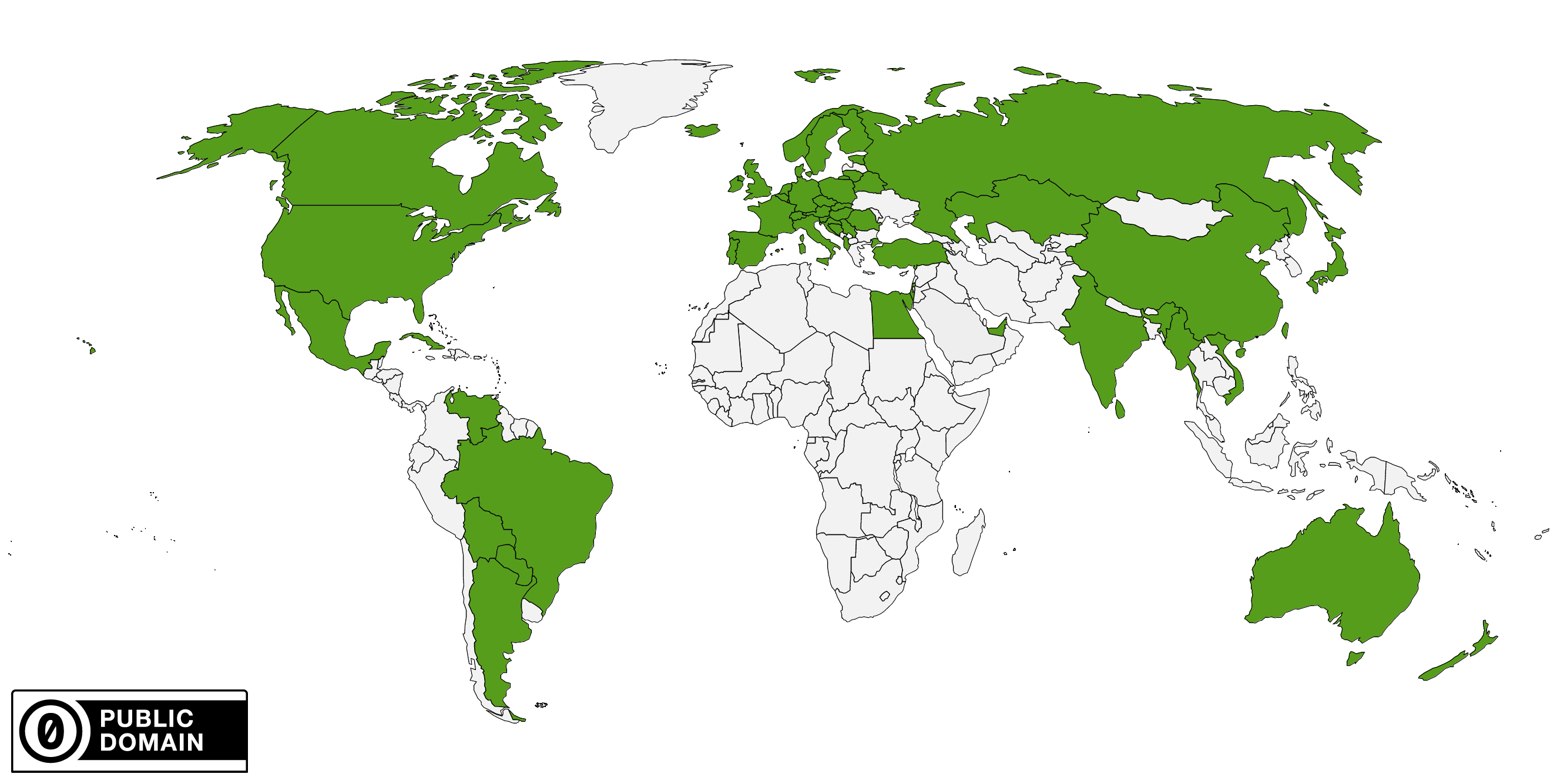
Google Trends is a service which compares end user searches for specific terms, and as such is a useful marketing tool to get some insight on the awareness of LibreOffice in comparison with other applications. I have compared the five alternatives to the leading office suite during the last 12 months: LibreOffice is leading, followed – as expected – by OpenOffice and WPS Office. LibreOffice is also leading in term of geographical coverage.

Wednesday Community #2

The sun never sets on the LibreOffice community, as there are always active members in some countries. Unfortunately, only a minimal part of this global effort is reflected on this blog, which should feature all activities and achievements. In order to get to this objective, we warmly invite all native language communities around the world to send us a short synopsis and a couple of pictures – if available – every time they do something significant for LibreOffice: a talk at a conference, a booth at an exhibition, a meeting, a conference, a localization sprint, or any other event. The same for achievements such as LibreOffice adoptions by government bodies, central or local public administrations, or large enterprises. Just send an email to media@documentfoundation.org, and we will take care of writing the blog post (if necessary, we will translate the local language to English).