Announcement of LibreOffice 6.1.2 at LibreOffice Conference

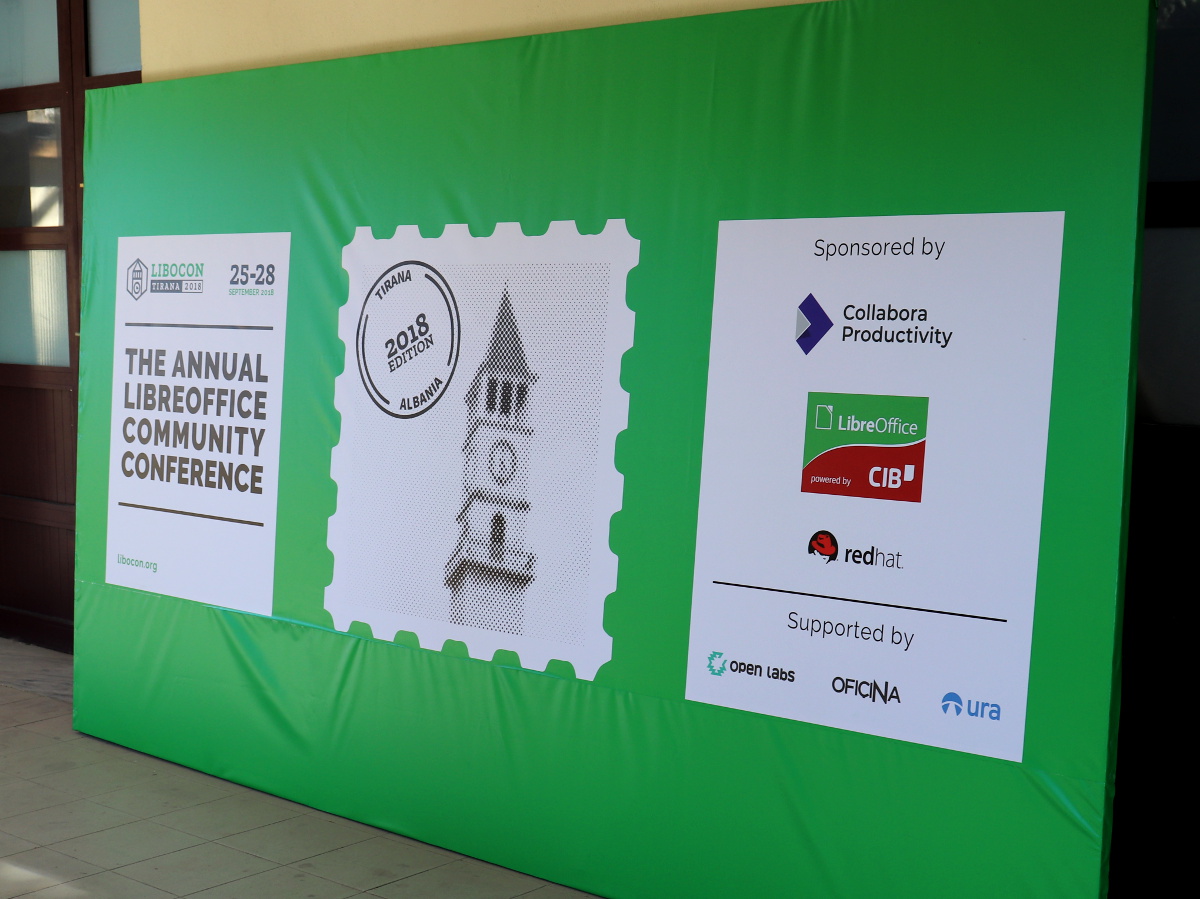
Tirana (Albania), September 27, 2018 – The Document Foundation announces LibreOffice 6.1.2, the second minor release of the LibreOffice 6.1 family, targeted at early adopters, technology enthusiasts and power users. The new release was launched during the LibreOffice Conference 2018, in Tirana, the capital city of Albania. LibreOffice 6.1.2 provides around 70 bug and regression fixes over the previous version.

LibreOffice 6.1.2 bug and regression fixes are described in the change log page: https://wiki.documentfoundation.org/Releases/6.1.2/RC1 (changed in RC1).

Enterprise deployments

LibreOffice 6.1.2 represents the bleeding edge in term of features for open source office suites, and as such is targeted at technology enthusiasts, early adopters and power users.

For any enterprise class deployment, TDF maintains the more mature LibreOffice 6.0.6, which should be sourced from a company providing a Long Term Supported version of the suite (they are all members of TDF Advisory Board, and are listed here: https://www.documentfoundation.org/governance/advisory-board/).

Also, value-added services for migrations and trainings, to support enterprise class deployments in large organizations, should be sourced from certified professionals (list available here: https://www.libreoffice.org/get-help/professional-support/).

LibreOffice is deployed by large organizations in every continent. A list of some large or significant migrations announced in the media is available on the TDF wiki: https://wiki.documentfoundation.org/LibreOffice_Migrations.

Availability of LibreOffice 6.1.2

LibreOffice 6.1.2 is immediately available from the following link: https://www.libreoffice.org/download/. Minimum requirements for proprietary operating systems are Microsoft Windows 7 SP1 and Apple macOS 10.9. Builds of the latest LibreOffice Online source code are available as Docker images: https://hub.docker.com/r/libreoffice/online/.

LibreOffice Online is fundamentally a server service, and should be installed and configured by adding cloud storage and an SSL certificate. It might be considered an enabling technology for the cloud services offered by ISPs or the private cloud of enterprises and large organizations.

LibreOffice users, free software advocates and community members can support The Document Foundation with a donation at https://www.libreoffice.org/donate.

LibreOffice 6.1.2 is built with document conversion libraries from the Document Liberation Project: https://www.documentliberation.org.

LibreOffice 6.1.1 released, for early adopters, technology enthusiasts and power users

Berlin, September 13, 2018 – The Document Foundation announces LibreOffice 6.1.1, targeted at early adopters, technology enthusiasts and power users, which provides over 120 bug and regression fixes for the recently announced LibreOffice 6.1.

LibreOffice users can benefit from some of the interesting new features introduced in August:

  • Colibre, the new icon theme for Windows based on Microsoft’s icon design guidelines;
  • The reworked image handling feature, which is significantly faster and smoother thanks to a new graphic manager and an improved image lifecycle;
  • The reorganization of Draw menus with the addition of a new Page menu;
  • The new Online Help pages enriched with text and example files to guide the users through features;
  • Several improvements to all modules of LibreOffice Online, with changes to the user interface to make it more appealing.

Enterprise deployments

LibreOffice 6.1.1 represents the bleeding edge in term of features for open source office suites, and as such is targeted at technology enthusiasts, early adopters and power users.

For any enterprise class deployment, TDF maintains the more mature LibreOffice 6.0.6, which should be sourced from a company providing a Long Term Supported version of the suite (they are all members of TDF Advisory Board, and are listed here: https://www.documentfoundation.org/governance/advisory-board/).

Also, value-added services for migrations and trainings, to support enterprise class deployments in large organizations, should be sourced from certified professionals (list available here: https://www.libreoffice.org/get-help/professional-support/).

LibreOffice is deployed by large organizations in every continent. A list of some large or significant migrations announced in the media is available on the TDF wiki: https://wiki.documentfoundation.org/LibreOffice_Migrations.

Availability of LibreOffice 6.1.1

LibreOffice 6.1.1 is immediately available from the following link: https://www.libreoffice.org/download/. Minimum requirements for proprietary operating systems are Microsoft Windows 7 SP1 and Apple macOS 10.9. Builds of the latest LibreOffice Online source code are available as Docker images: https://hub.docker.com/r/libreoffice/online/.

LibreOffice Online is fundamentally a server service, and should be installed and configured by adding cloud storage and an SSL certificate. It might be considered an enabling technology for the cloud services offered by ISPs or the private cloud of enterprises and large organizations.

LibreOffice users, free software advocates and community members can support The Document Foundation with a donation at https://www.libreoffice.org/donate.

LibreOffice 6.1.1 is built with document conversion libraries from the Document Liberation Project: https://www.documentliberation.org.

The Document Foundation announces LibreOffice 6.1, a major release which shows the power of a large and diverse community of contributors

Berlin, August 8, 2018 – The Document Foundation announces LibreOffice 6.1, the second major release of the LibreOffice 6 family presented in January 2018, with a significant number of new and improved features:

  • Colibre, a new icon theme for Windows based on Microsoft’s icon design guidelines, which makes the office suite visually appealing for users coming from the Microsoft environment;
  • A reworked image handling feature, which is significantly faster and smoother thanks to a new graphic manager and an improved image lifecycle, with some advantages also when loading documents in Microsoft proprietary formats;
  • The reorganization of Draw menus with the addition of a new Page menu, for better UX consistency across the different modules;
  • A major improvement for Base, only available in experimental mode: the old HSQLDB database engine has been deprecated, though still available, and the new Firebird database engine is now the default option (users are encouraged to migrate files using the migration assistant from HSQLDB to Firebird, or by exporting them to an external HSQLDB server);
  • Significant improvements in all modules of LibreOffice Online, with changes to the user interface to make it more appealing and consistent with the desktop version,
  • An improved EPUB export filter, in terms of link, table, image, font embedding and footnote support, with more options for customizing metadata;
  • Online Help pages have been enriched with text and example files to guide the users through features, and are now easier to localize.

LibreOffice 6.1’s new features have been developed by a large community of code contributors: 72% of commits are from developers employed by companies sitting in the Advisory Board like Collabora, Red Hat and CIB and by other contributors such as SIL and Pardus, and 28% are from individual volunteers.

In addition, there is a global community of individual volunteers taking care of other fundamental activities such as quality assurance, software localization, user interface design and user experience, editing of help system text and documentation, plus free software and open document standards advocacy at a local level.

A video summarizing the top new features of LibreOffice 6.1 is available on YouTube: https://www.youtube.com/watch?v=JvoCpnwGNFU.

Enterprise deployments

LibreOffice 6.1 represents the bleeding edge in term of features for open source office suites, and as such is targeted at technology enthusiasts, early adopters and power users.

For any enterprise class deployment, TDF maintains the more mature LibreOffice 6.0, which should be sourced from a company providing a Long Term Supported version of the suite (they are all members of TDF Advisory Board, and are listed here: http://www.documentfoundation.org/governance/advisory-board/).

Also, value-added services for migrations and trainings, to support enterprise class deployments in large organizations, should be sourced from certified professionals (list available here: http://www.libreoffice.org/get-help/professional-support/).

LibreOffice is deployed by large organizations in every continent. A list of some large or significant migrations announced in the media is available on the TDF wiki: https://wiki.documentfoundation.org/LibreOffice_Migrations.

Availability of LibreOffice 6.1

LibreOffice 6.1 is immediately available from the following link: https://www.libreoffice.org/download/. Minimum requirements for proprietary operating systems are Microsoft Windows 7 SP1 and Apple macOS 10.9. Builds of the latest LibreOffice Online source code are available as Docker images: https://hub.docker.com/r/libreoffice/online/.

LibreOffice Online is fundamentally a server service, and should be installed and configured by adding cloud storage and an SSL certificate. It might be considered an enabling technology for the cloud services offered by ISPs or the private cloud of enterprises and large organizations.

LibreOffice users, free software advocates and community members can support The Document Foundation with a donation at https://www.libreoffice.org/donate.

LibreOffice 6.1 is built with document conversion libraries from the Document Liberation Project: https://www.documentliberation.org.

Press Kit

The press kit, with background documents – Hybrid PDF, opened from within LibreOffice can be edited as normal ODT files – and high-resolution images, is here: https://nextcloud.documentfoundation.org/s/3B8ZecMNMcWcxHy.


LibreOffice 6.1: a background on the user interface

For the last eight years, LibreOffice’s user interface guidelines have been inspired by a consistent end-user-driven and context-based approach (according to the available screen real estate, the application and the specific task), to provide the best mix between power (the level of control over features) and simplicity (the number of options available on the screen).

The Design Team at The Document Foundation has made several changes to the different icon styles for LibreOffice 6.1, to improve the visual appearance of the office suite and provide a more consistent look and feel with operating systems and desktop environments.

Colibre, a completely new icon style designed from scratch by the Austrian volunteer Andreas Kainz, is now the default on Windows. Colibre is entirely based on icon design guidelines from Microsoft, which means that the style uses the same color scheme as Microsoft Office and offers a consistent look and feel with the proprietary office suite. The design of each icon has been inspired by Breeze and Elementary.

Karasa Jaga, a new icon style originally created for Sundara OS and designed by the Indonesian volunteer Rizal Muttaqin, has also been added. Karasa Jaga, which means “feel the future” in the Sundanese language spoken in western Java, has been heavily inspired (and is derived) from the now discontinued Oxygen icon style.

Elementary is now the default icon style on Gnome-based desktop environments, while Sifr has replaced HiContrast as the default high contrast icon style.

Industrial and Oxygen have been removed because of missing maintenance and SVG support. All legacy icon styles are available as extensions.

In addition, the Notebookbar – which is still experimental – has been significantly improved and has been completed for Writer, while it is still work in progress for the other modules in the suite. The objective is to provide a solution as powerful and simple as the current default LibreOffice user interface, which is based on toolbars.

Looking forward, it looks like LibreOffice user interface – for which the source code is available on our repository at https://github.com/LibreOffice – has inspired the future evolution of some proprietary office suites, which in the last 10 years have chosen a different – and obviously obfuscated – approach.


Contributors to LibreOffice 6.1

LibreOffice 6.1 represents the global effort of a large and diverse community of enterprise-sponsored and volunteer contributors.

This is a list of the people who have contributed a new feature or an improvement to the software or the user interface, or a new localization.

Adolfo Jayme Barrientos
Andrea Gelmini
Andreas Kainz
Armin Le Grand, CIB
Ashod Nakashian, Collabora
Ayaspell
Belkacem Mohammed
Berend Ytsma
Caolán McNamara, Red Hat
DaeHyun Sung
Dennis Francis, Collabora
Dennis Roczek
Eike Rathke, Red Hat
Furkan Tokac
Gabor Kelemen
Gülşah Köse, Pardus
Heiko Tietze
Henry Castro, Collabora
Ilmari Lauhakangas
Jan Holešovský, Collabora
Joseph S. Maza
Kohei Yoshida
Kompilainenn
László Németh, FSF.hu
Lera Goncharuk
Luboš Luňák, Collabora
Marco Cecchetti, Collabora
Mark Hung
Maxim Monastirsky
Merzouk Ouchenem
Michael Meeks, Collabora
Michael Stahl, CIB
Michael Wolf
Mike Kaganski, Collabora
Miklos Vajna, Collabora
Muhammet Kara, Pardus
Nabil Semɛun
Nithin Kumar Padavu
Olivier Hallot, TDF
Pranav Kant, Collabora
Rizal Muttaqin
Samuel Mehrbrodt, CIB
Serge Krot, CIB
Slimane Amiri
Sophia Schröder
Stanislav Horáček
Stephan Bergmann, Red Hat
Szymon Kłos, Collabora
Tamás Bunth, Collabora
Tomaž Vajngerl, Collabora
Tor Lillqvist, Collabora
V. Stuart Foote
Yasin Bouklif
Yazid Bouhamam
Yousuf Philips
Xisco Faulí, TDF

Of course, the release of LibreOffice 6.1 has been possible thanks to the invaluable contributions of many other people, who have donated their time for user interface design and user experience improvements, localization in over 100 different languages, quality assurance, documentation and online help, and other product related activities, including marketing and communications.

In addition, many other people have supported end users on mailing lists, online resources and social media, answering questions and providing guidance to solve any kind of issue, from a simple download query to the most sophisticated pivot table questions.

The Document Foundation announces LibreOffice 6.0.5

Berlin, June 22, 2018 – The Document Foundation (TDF) announces LibreOffice 6.0.5, which still represents the bleeding edge in terms of features – and as such is targeted at early adopters, tech-savvy and power users – but is also ready for mainstream users and enterprise deployments.

TDF recommends deploying LibreOffice in production environments with the backing of certified professionals, providing development, migration and training support (an updated list is available at https://www.libreoffice.org/get-help/professional-support/). This is extremely important for the growth of the LibreOffice ecosystem.

LibreOffice 6.0.5 change logs are available at the following links: https://wiki.documentfoundation.org/Releases/6.0.5/RC1 (fixed in RC1) and https://wiki.documentfoundation.org/Releases/6.0.5/RC2 (fixed in RC2).

Download LibreOffice

LibreOffice 6.0.5 is immediately available for download at the following link: https://www.libreoffice.org/download/download/.

LibreOffice users, free software advocates and community members can support The Document Foundation with a donation at https://www.libreoffice.org/donate/. Donations help TDF to maintain its infrastructure, share knowledge, and fund the presence of volunteers at events like the LibreOffice Conference, where they can meet with free software advocates coming from all over the world (https://www.libocon.org/).

Several companies sitting in TDF’s Advisory Board (https://www.documentfoundation.org/governance/advisory-board/) provide either value-added LTS versions of LibreOffice or consultancy services for migrations and training, based on best practices distilled by The Document Foundation.

LibreOffice 6.0.3 now available for download

Berlin, April 5, 2018 – The Document Foundation (TDF) announces LibreOffice 6.0.3, the third minor release of the LibreOffice 6 family, with around 70 bug and regression fixes.
LibreOffice 6.0.3 represents the bleeding edge in terms of features and as such is targeted at early adopters, tech-savvy and power users, while LibreOffice 5.4.6 – provided as an alternative download option – is targeted at mainstream users and enterprise deployments.

TDF suggests to always deploy LibreOffice in production environments with the backing of certified developers, migrators and trainers (an updated list is available at https://www.libreoffice.org/get-help/professional-support/). This is extremely important for the growth of the LibreOffice ecosystem.

Technical details about LibreOffice 6.0.3 bug and regression fixes are available, as usual, in the change logs: https://wiki.documentfoundation.org/Releases/6.0.3/RC1 (fixed in RC1) and https://wiki.documentfoundation.org/Releases/6.0.3/RC2 (fixed in RC2).

Download LibreOffice

LibreOffice 6.0.3 is immediately available for download at the following link: https://www.libreoffice.org/download/download/.

LibreOffice users, free software advocates and community members can support The Document Foundation with a donation at https://www.libreoffice.org/donate/. Donations help TDF to maintain its infrastructure, share knowledge, and fund the activities of local communities.

Several companies sitting in TDF’s Advisory Board (https://www.documentfoundation.org/governance/advisory-board/) provide either value-added LTS versions of LibreOffice or consultancy services for migrations and training, based on best practices distilled by The Document Foundation.

The Document Foundation announces LibreOffice 6.0: power, simplicity, security and interoperability from desktop to cloud

Berlin, January 31, 2018 – The Document Foundation announces LibreOffice 6.0, a major release and a dramatically improved free office suite, which celebrates the 7th anniversary of the availability of the very first version of LibreOffice. Today LibreOffice is more powerful, simple and secure, and offers superior interoperability with Microsoft Office documents.

LibreOffice 6.0 is immediately available for Windows, macOS and Linux, and for the cloud. The new major release adds a large number of significant new features to the core engine and to individual modules (Writer, Calc and Impress/Draw), with the objective of providing users with the best in terms of personal productivity.

A video summarizing the top new features of LibreOffice 6.0 is available on YouTube: https://www.youtube.com/watch?v=YHBve8v13VY.

Power

The Notebookbar, although still an experimental feature, has been enriched with two new variants: Grouped Bar Full for Writer, Calc and Impress, and Tabbed Compact for Writer. The Special Characters dialog has been reworked, with the addition of lists for Recent and Favorite characters, along with a Search field. The Customize dialog has also been redesigned, and is now more modern and intuitive.

In Writer, a Form menu has been added, making it easier to access one of the most powerful – and often unknown – LibreOffice features: the ability to design forms, and create standards-compliant PDF forms. The Find toolbar has been enhanced with a drop-down list of search types, to speed up navigation. A new default table style has been added, together with a new collection of table styles to reflect evolving visual trends.

The Mail Merge function has been improved, and it is now possible to use either a Writer document or an XLSX file as data source.

In Calc, ODF 1.2-compliant functions SEARCHB, FINDB and REPLACEB have been added, to improve support for the ISO standard format. Also, a cell range selection or a selected group of shapes (images) can be now exported in PNG or JPG format.

In Impress, the default slide size has been switched to 16:9, to support the most recent form factors of screens and projectors. As a consequence, 10 new Impress templates have been added, and a couple of old templates have been updated.

Simplicity

The old WikiHelp has been replaced by the new Help Online system, with attractive web pages that can also be displayed on mobile devices. In general, LibreOffice Help has been updated both in terms of contents and code, with other improvements due all along the life of the LibreOffice 6 family.

User dictionaries now allow automatic affixation or compounding. This is a general spell checking improvement in LibreOffice which can speed up work for Writer users. Instead of manually handling several forms of a new word in a language with rich morphology or compounding, the Hunspell spell checker can automatically recognize a new word with affixes or compounds, based on a “Grammar By” model.

Security

OpenPGP keys can be used to sign ODF documents on all desktop operating systems, with experimental support for OpenPGP-based encryption. To enable this feature, users will have to install the specific GPG software for their operating systems.

Document classification has also been improved, and allows multiple policies (which are now exported to OOXML files). In Writer, marking and signing are now supported at paragraph level.

Interoperability

OOXML interoperability has been improved in several areas: import of SmartArt and import/export of ActiveX controls, support of embedded text documents and spreadsheets, export of embedded videos to PPTX, export of cross-references to DOCX, export of MailMerge fields to DOCX, and improvements to the PPTX filter to prevent the creation of broken files.

New filters for exporting Writer documents to ePub and importing QuarkXPress files have also been added, together with an improved filter for importing EMF+ (Enhanced Metafile Format Plus) files as used by Microsoft Office documents. Some improvements have also been added to the ODF export filter, making it easier for other ODF readers to display visuals.

LibreOffice Online

LibreOffice Online is fundamentally a server service, and should be installed and configured by adding cloud storage and an SSL certificate. It might be considered an enabling technology for the cloud services offered by ISPs or the private cloud of enterprises and large organizations.

New features introduced with LibreOffice 6.0 aim to align the functionality of the desktop and cloud versions, especially in areas where users expect similar behavior. For instance, a Save As feature has been added, while the amount of rows managed by Calc has been increased to half a million. In addition, a Find and Replace dialog and spell checking support have been added to Writer, Calc and Impress.

Builds of the latest LibreOffice Online source code are available as Docker images: https://hub.docker.com/r/libreoffice/online/. Background on LibreOffice Online: https://nextcloud.documentfoundation.org/s/scDjtQPATAzpeyE.

LibreOffice Viewer for Android

The upcoming release of LibreOffice Viewer for Android will be able to create new documents, will offer a tab-based toolbar with formatting options, and will let users add pictures either from the camera or from a file stored locally or in the cloud. In addition, the Calc user interface will be improved with column headers, while Impress will offer a presentation mode. The release is planned during the first quarter of 2018.

Enterprise deployments

LibreOffice 6.0 represents the bleeding edge in term of features for open source office suites, and as such is targeted at technology enthusiasts, early adopters and power users.
For enterprise class deployments, TDF maintains the more mature 5.4 family – now at 5.4.4 – which should always be supported by certified professionals (a list is available here: http://www.libreoffice.org/get-help/professional-support/).

Several companies sitting in TDF Advisory Board (http://www.documentfoundation.org/governance/advisory-board/) are providing either value added Long Term Supported versions of LibreOffice or consultancy services for migrations and trainings, based on best practices by The Document Foundation.

LibreOffice is deployed by large organizations in every continent. A list of the most significant migrations announced in the media is available on TDF wiki: https://wiki.documentfoundation.org/LibreOffice_Migrations.

Availability of LibreOffice 6.0

LibreOffice 6.0 is immediately available from the following link: https://www.libreoffice.org/download/. Minimum requirements for proprietary operating systems are Microsoft Windows 7 SP1 and Apple macOS 10.9.

LibreOffice users, free software advocates and community members can support The Document Foundation with a donation at https://www.libreoffice.org/donate.

LibreOffice 6.0 is built with document conversion libraries from the Document Liberation Project: https://www.documentliberation.org.

Press Kit

The press kit, with background documents – Hybrid PDF, opened from within LibreOffice can be edited as normal ODT files – and high-resolution images, is here: https://nextcloud.documentfoundation.org/s/0hAzrnp6ecLJwbe.