The LibreOffice and Open Source Conference 2024 starts in just a few days in Luxembourg, and it’s supported by the country’s Digital Learning Hub, which offers short and hands-on training courses in the fields of computer science. Director Serge Linckels says:
We are delighted to announce our partnership with the LibreOffice Conference 2024, taking place in Luxembourg. This collaboration underscores our commitment to fostering innovation and supporting the open-source community.
As the Digital Learning Hub, we are dedicated to advancing digital education and empowering individuals with the skills needed for the future. Our involvement in the LibreOffice Conference 2024 reflects our mission to promote digital literacy and open-source solutions. We believe that by supporting events like this, we can help build a more inclusive and technologically adept society.
We look forward to engaging with the vibrant community at the conference, sharing insights, and exploring new opportunities.
Thank you to The Document Foundation for organizing this pivotal event. We are very excited to be part of this journey.
On September 21, free and open source software (FOSS) enthusiasts celebrated the 21st worldwide Software Freedom Day. Our community members in Nepal were not behind with the celebrations either: they were active supporting small open source communities and connecting them for the greater good in the LibreOffice community. Here’s their report:
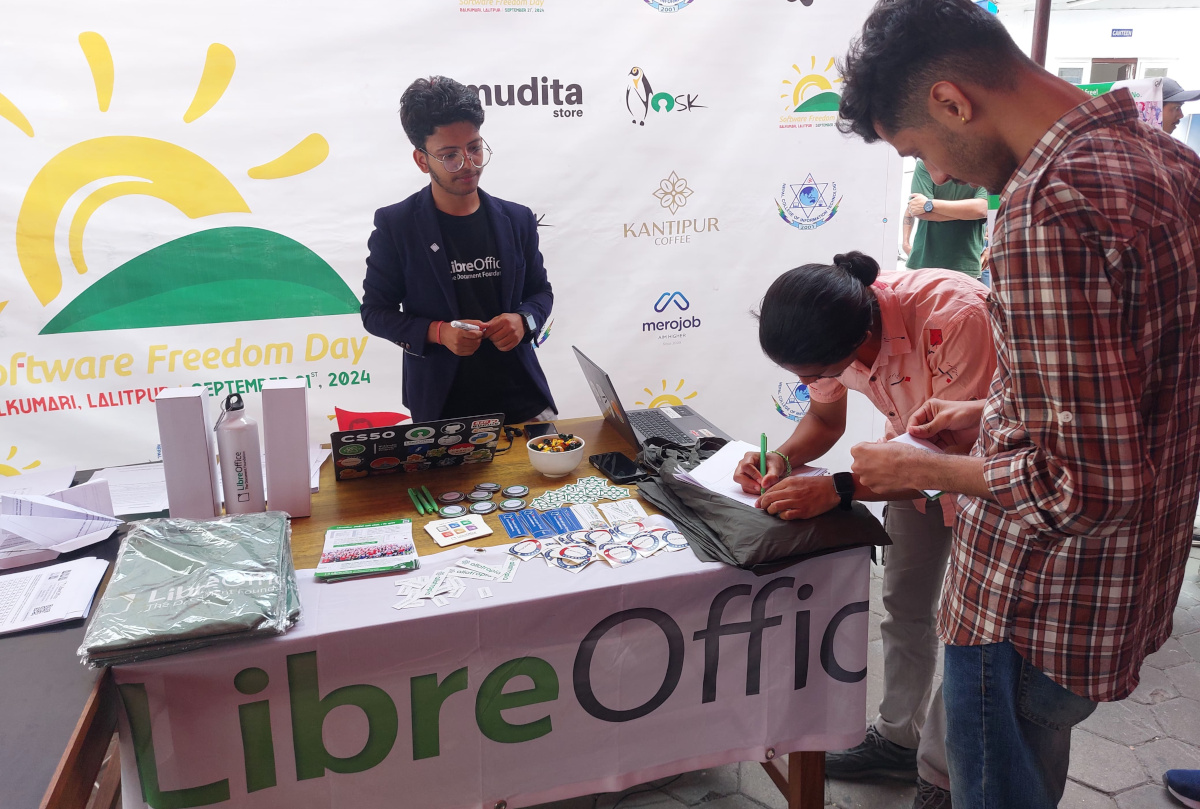
Suraj Bhattarai, LibreOffice liaison in Nepal, was available at the LibreOffice booth at the Software Freedom Day celebration by Open Source Klub (NOSK) at Nepal College of Information and Technology (NCIT), Lalitpur.
He described how the LibreOffice booth was so busy and engaging. In particular, the LibreOffice community supported the event with fun games, swag, candies, and engagement – all while advocating for the best free and open source office suite. The booth included amazing LibreOffice merchandise, such as T-shirts, tote-bags, water-bottles, round pin plastic badges, flyers, a variety of stickers, beer mats, candies, and so forth.
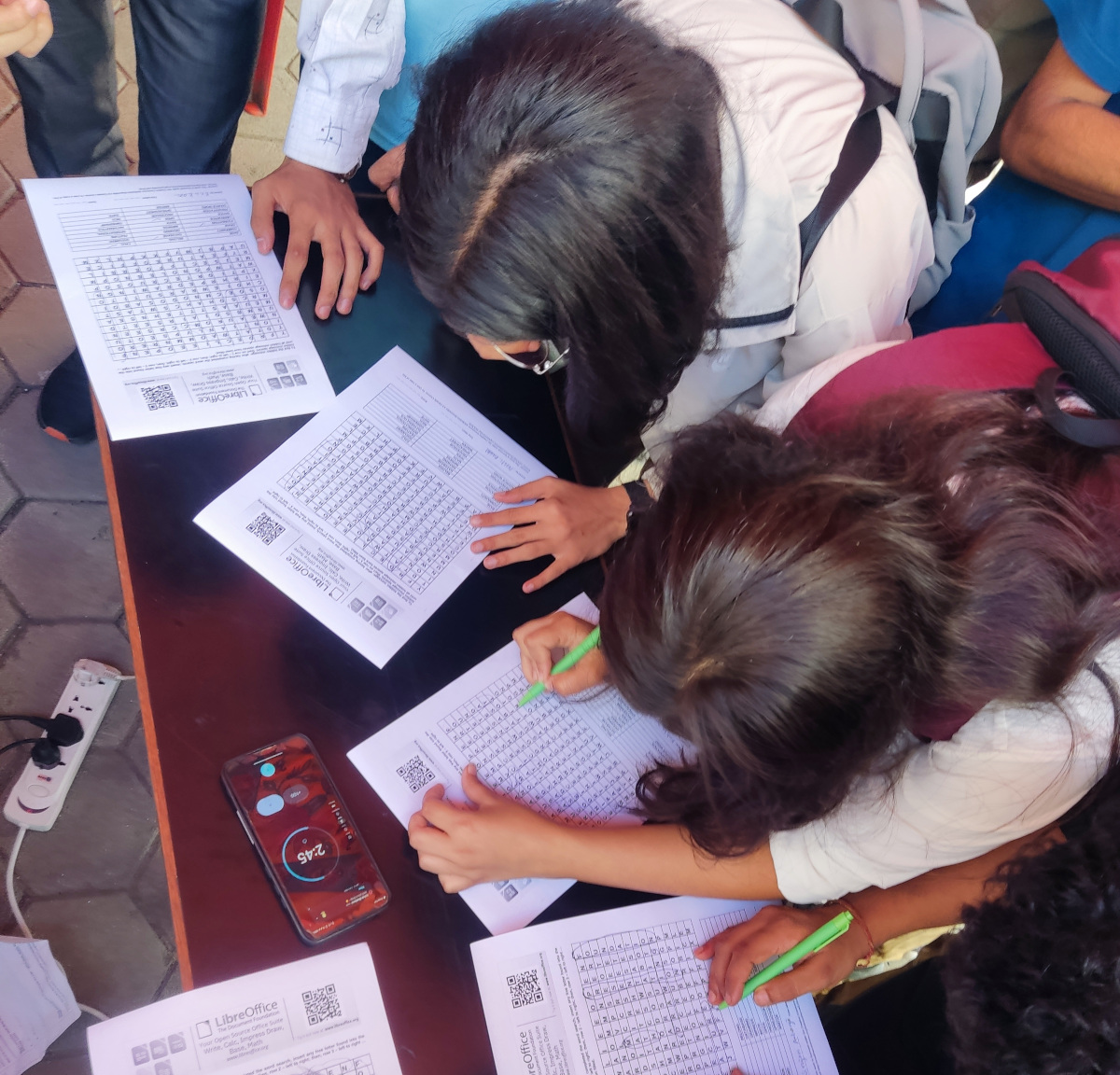
The booth had a LibreOffice crossword game, and showed LibreOffice 24.8 on a display for hands-on testing. There was also a presentation deck for newbies, and some verbal support/assistance to improve the LibreOffice experience and customization for easier navigation within the user interface. Suraj also mentioned that around three quarters of the people who appeared at the booth for a quick “hello” mentioned hearing about or knowing and using LibreOffice in their home or workspace.
The event was mainly joined by students across Kathmandu valley, open source contributors, club alumni, and veteran FOSS contributors/kickstarters in Nepal. Apart from the event itinerary and other activities, the LibreOffice “paper plane contest” received major attention and everyone seems to have enjoyed their paper plane flight to software freedom!
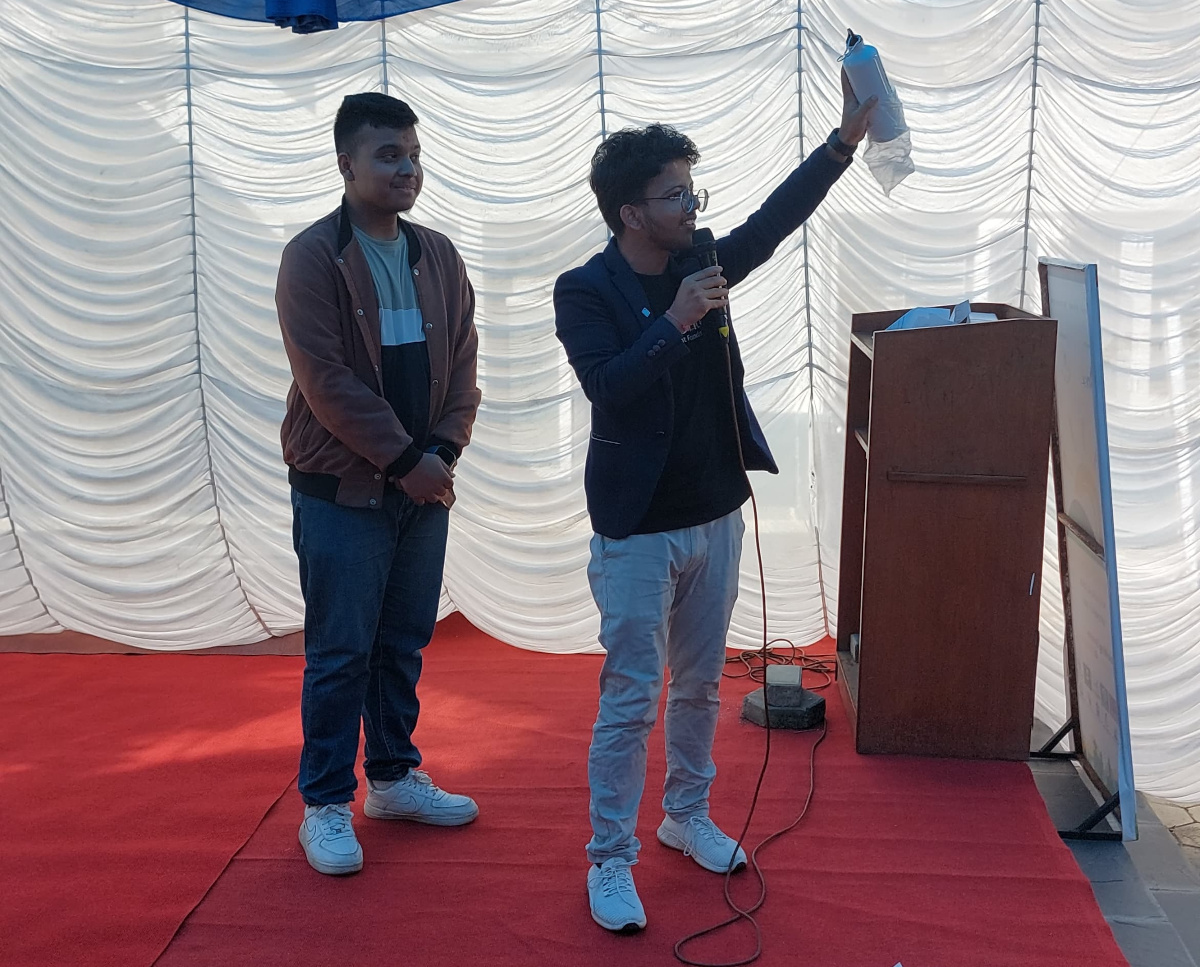
The winner was awarded a 750ML aluminum water bottle, with the LibreOffice logo printed on it. Suraj concluded the competition with the 3R principle and the analogy of releasing paperwork and transitioning to digital open source office suites for document-related work pieces. The college administration expressed some interest in replacing Microsoft Office and migrating the campus computers to LibreOffice suite.
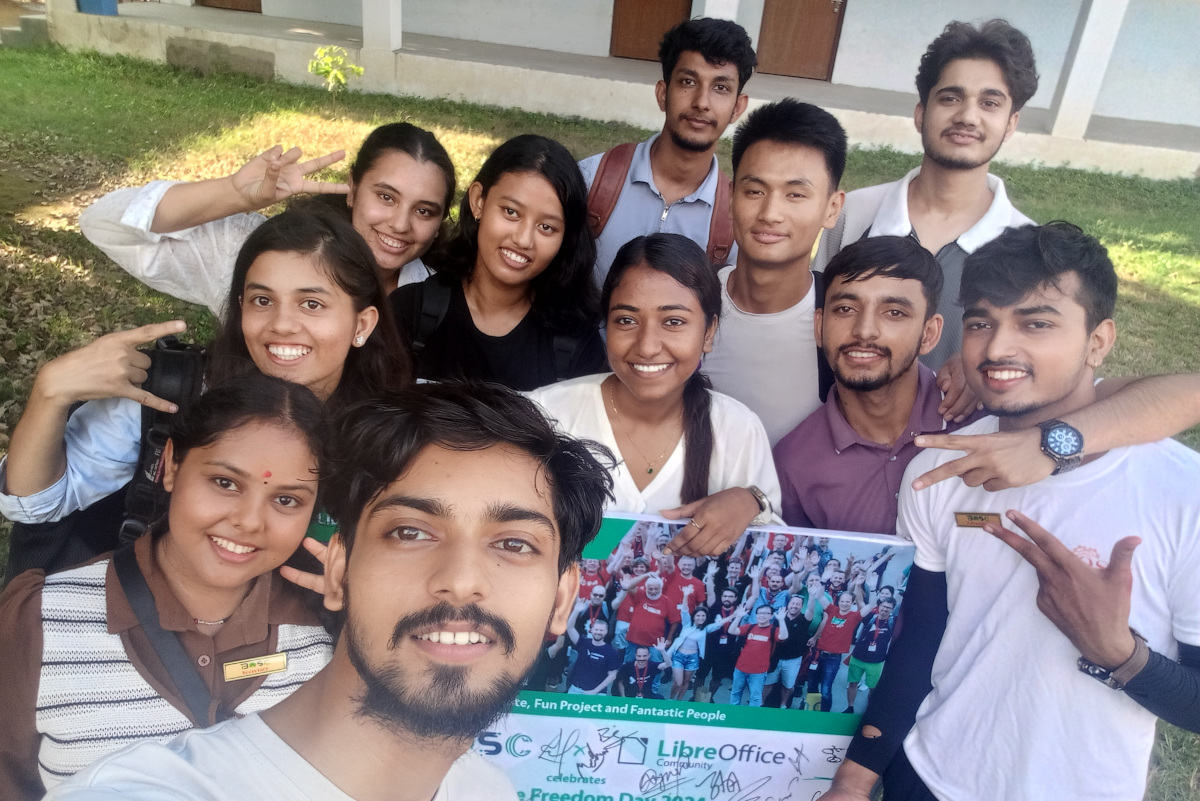
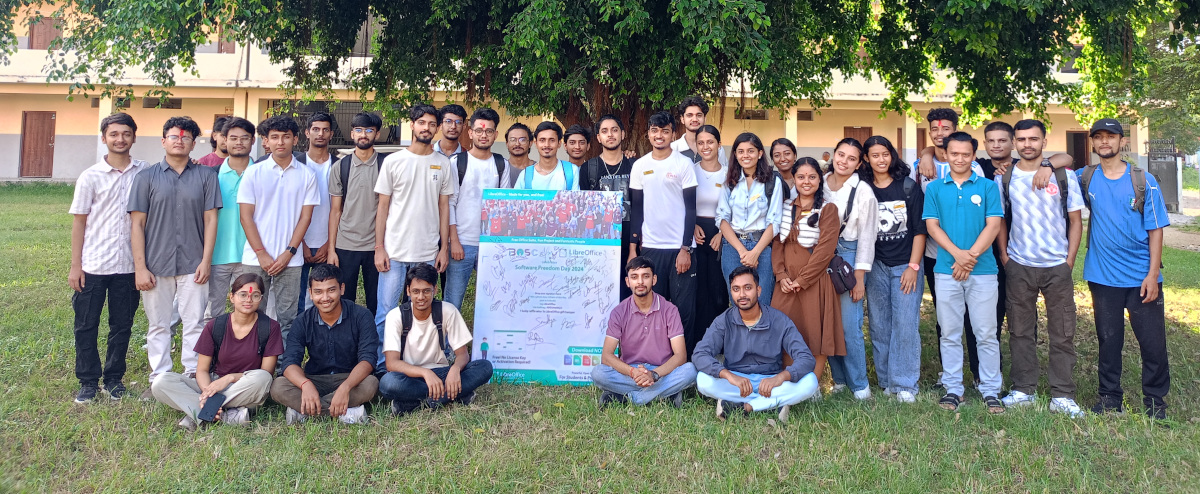
Similarly, Suraj also delivered a recorded talk named “Diversity, Inclusion and Community Model in Free Software Communities” at Birendra Multiple Campus, Chitwan. There, the Software Freedom Day celebration was hosted by the Birendra Open Source Club (BOSC) with support from the LibreOffice community.
The aim of the talk was to deepen and bridge the relationship of the club with the LibreOffice community and LibreOffice activities/contributions in the future. Previously, the club contributed greatly to the success of a local event: the LibreOffice Localization Sprint 2023. Achyut Koirala, the acting president of the on-campus club, represented the LibreOffice community there.
While Suraj himself couldn’t be present, Achyut Koirala together with Shreeram Lamichhane communicated the positive feedback from the recorded talk Suraj had shared. As a closing remark, Achyut thanked the LibreOffice community as a whole for the inclusive community model and for welcoming their community into the project.
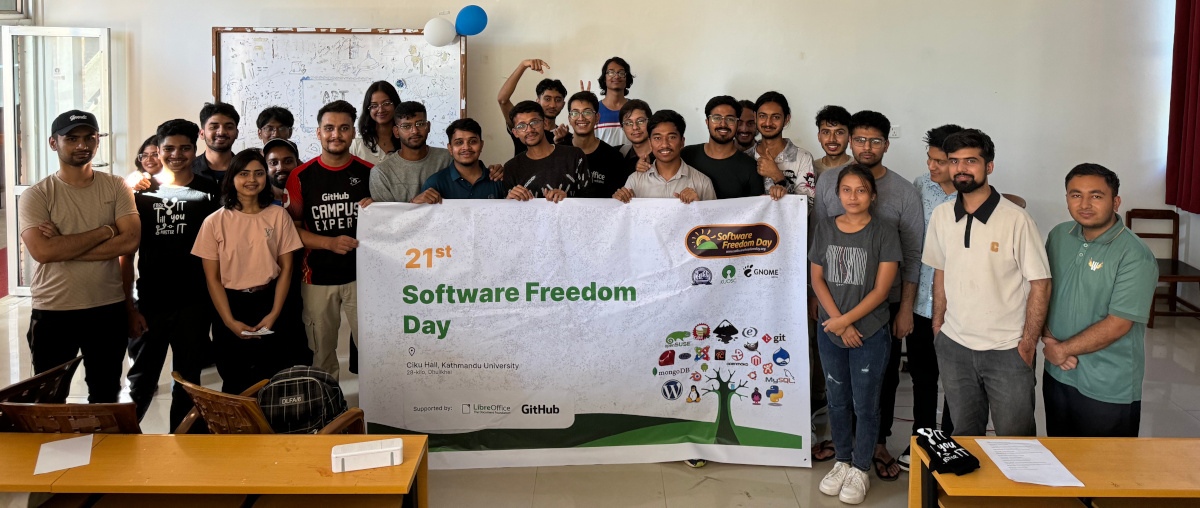
And finally, Nirjal Bhurtel, representing LibreOffice’s local community, did the same at Kathmandu University where the celebration was hosted by their own on-campus community. Kathmandu Open Source Community has been the veteran contributor when it comes to the history of contributions from Nepal in the LibreOffice project.
TDF says: Many thanks to Suraj and the Nepalese community for the great work! And as a bonus, here’s a video from the aforementioned paper plane contest:
Please confirm that you want to play a YouTube video. By accepting, you will be accessing content from YouTube, a service provided by an external third party.
Our LibreOffice and Open Source Conference 2024 is taking place next week in Luxembourg, and one of the sponsors is Passbolt S.A., which makes an open source password manager. Kevin Muller, the company’s CEO, says:
We are excited to participate in the LibreOffice and Open Source Conference, where I will be speaking about the pivotal role open source has played in Passbolt’s commercial success.
Passbolt has been 100% open source from day one—and it always will be. This approach has given us a significant competitive edge, driving market adoption and commercialization from the outset. Compared to many competitors Passbolt’s open source philosophy offers unmatched transparency and control.
In today’s world, where nations are increasingly focused on reclaiming their digital sovereignty, the transparency and trust fostered by open source software are more critical than ever.
Our LibreOffice and Open Source Conference 2024 is taking place in a few weeks in Luxembourg, and the country’s Ministry for Digitalisation wrote to tell us:
We are pleased to contribute to the LibreOffice and Open Source Conference with a speech by Luxembourg’s Minister for Digitalisation and Minister for Research and Higher Education, Stéphanie Obertin and a presentation of Luxchat4Gov by project manager, Patrick Weber.
The secure and interoperable instant messaging dedicated to the public sector, Luxchat4Gov was developed by the Ministry for Digitalisation in collaboration with LU-CIX and leverages the Matrix protocol to ensure seamless interoperability between systems, while maintaining stringent data security. In parallel, LU-CIX and its partners build LuxChat, the public version of LuxChat4Gov to offer the same level of security and digital autonomy.
By adopting this platform, Luxembourg sets a precedent for achieving digital autonomy while fostering an interconnected and secure communication environment across government entities, and the national Luxchat ecosystem. This is just the first effort to assert Luxembourg’s Digital Sovereignty, through using open-source software which has been tailored to fit the country’s specific needs and that is now operating under Luxembourgish jurisdiction. It’s only by having full control on the open-source software and by hosting it in national data centers that a high level of security and confidentiality of the data can ensured.
Hossein Nourikhah, our Developer Community Architect, writes:
Learn LibreOffice development and boost your software skills including bug management, coding, version management using Git, code review using Gerrit and much more! Our workshop titled “Introduction to LibreOffice development” at the LibreOffice Conference 2024 is a great opportunity for all those who love getting involved with a world wide open source community.
Please register soon!
This year, the LibreOffice Conference 2024 will be held in Luxembourg. Alongside the main conference tracks, a development workshop will be held to give the people hands-on experience to LibreOffice development.
The workshop will be held on 11 and 12 October 2024, at the same place as the LibreOffice Conference in Luxembourg. If you like to be with us, please register here:
Many people from The Document Foundation (TDF), the charity behind LibreOffice will present different topics in the workshop. Also, other contributors and also experienced developers from the ecosystem companies will participate.
We are excited to be able to see you in person in Luxembourg to share practical knowledge about LibreOffice and open source development model with you.
Workshop Topics
These are the topics of the workshop. For more information, please refer to the workshop page at the conference website:
8. LibreOffice automation via scripting (BASIC, Python) (3 hours)
Presenter: Rafael Lima / Alain Romedenne / Jean-Pierre Ledure
Requirements
The workshop is based on “bring your own device”. For the scripting, you will need a working LibreOffice installation. You will need to install some development tools and libraries to be able to compile LibreOffice from source code.
But, we will be there in-person at the workshop to help you install the requirements step by step!
What Can You Expect?
After successful participation in the workshop, you can gain better understanding the open source development model, bug reporting and triaging, get started with Git and Gerrit, and also build and run your modified LibreOffice from source code. You will also understand the basic structure of the LibreOffice source code, which will help you to start LibreOffice development.
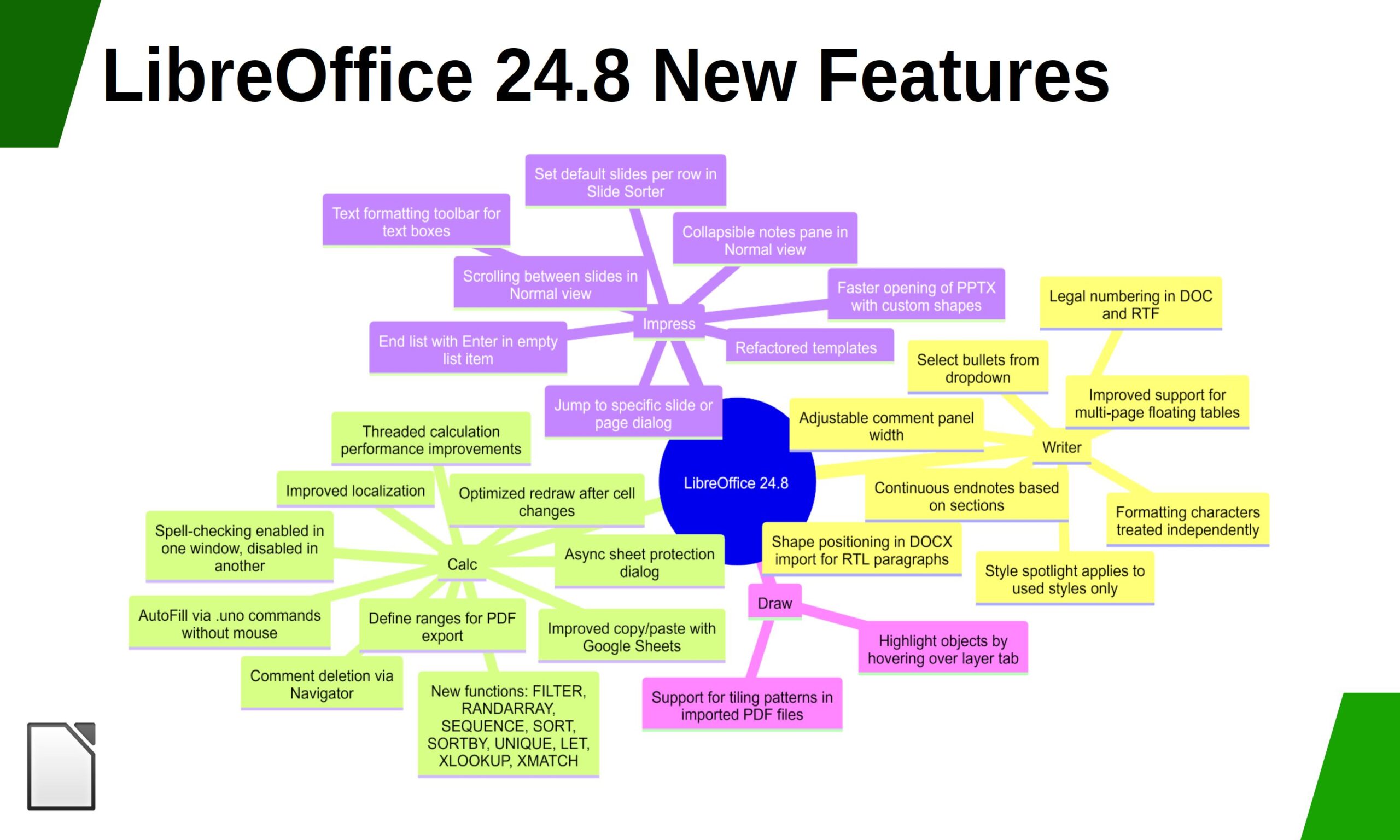
The LibreOffice 24.8 family is optimised for the privacy-conscious office suite user who wants full control over the information they share
Berlin, 12 September 2024 – LibreOffice 24.8.1, the first minor release of the LibreOffice 24.8 family of the free, volunteer-supported office suite for Windows (Intel, AMD and ARM), macOS (Apple and Intel) and Linux, is available at www.libreoffice.org/download. For users who don’t need the latest features and prefer a more tested version, TDF maintains the previous LibreOffice 24.2 family, with several months of back-ported fixes. The current version is LibreOffice 24.2.6.
LibreOffice is the only software for creating documents that contain personal or confidential information that respects the privacy of the user – ensuring that the user is able to decide if and with whom to share the content they create. As such, LibreOffice is the best option for the privacy-conscious office suite user, and offers a feature set comparable to the leading product on the market.
In addition, LibreOffice offers a range of interface options to suit different user habits, from traditional to modern, and makes the most of different screen sizes by optimising the space available on the desktop to put the maximum number of features just a click or two away.
The biggest advantage over competing products is the LibreOffice Technology Engine, the single software platform on which desktop, mobile and cloud versions of LibreOffice – including those from ecosystem companies – are based. This allows LibreOffice to provide a better user experience and to produce identical and fully interoperable documents based on the two available ISO standards: the Open Document Format (ODT, ODS and ODP) and the proprietary Microsoft OOXML (DOCX, XLSX and PPTX). The latter hides a great deal of artificial complexity, which can cause problems for users who are confident that they are using a true open standard.
End users looking for support will be helped by the immediate availability of the LibreOffice 24.8 Getting Started Guide, which can be downloaded from the following link: books.libreoffice.org. In addition, they will be able to get first-level technical support from volunteers on the user mailing lists and the Ask LibreOffice website: ask.libreoffice.org.
Please confirm that you want to play a YouTube video. By accepting, you will be accessing content from YouTube, a service provided by an external third party.
If you accept this notice, your choice will be saved and the page will refresh.
LibreOffice for Enterprise
For enterprise-class deployments, TDF strongly recommends the LibreOffice Enterprise family of applications from ecosystem partners – for desktop, mobile and cloud – with a wide range of dedicated value-added features and other benefits such as SLAs: www.libreoffice.org/download/libreoffice-in-business/.
Every line of code developed by ecosystem companies for enterprise customers is shared with the community on the master code repository and improves the LibreOffice technology platform. Products based on LibreOffice Technology are available for all major desktop operating systems (Windows, macOS, Linux and ChromeOS), mobile platforms (Android and iOS) and the cloud.
The Document Foundation has developed a migration protocol to help companies move from proprietary office suites to LibreOffice, based on the provision of an LTS (long-term support) enterprise-optimised version of LibreOffice, plus migration consulting and training provided by certified professionals who offer value-added solutions that are consistent with proprietary offerings. Reference: www.libreoffice.org/get-help/professional-support/.
In fact, LibreOffice’s mature code base, rich feature set, strong support for open standards, excellent compatibility and LTS options from certified partners make it the ideal solution for organisations looking to regain control of their data and break free from vendor lock-in.
LibreOffice 24.8.1 availability
LibreOffice 24.8.1 is available from www.libreoffice.org/download/. Minimum requirements for proprietary operating systems are Microsoft Windows 7 SP1 (no longer supported by Microsoft) and Apple macOS 10.15. Products based on LibreOffice technology for Android and iOS are listed at www.libreoffice.org/download/android-and-ios/.
LibreOffice users, free software advocates and community members can support The Document Foundation by making a donation at www.libreoffice.org/donate.