Jiajun Xu writes, following on from part 1:
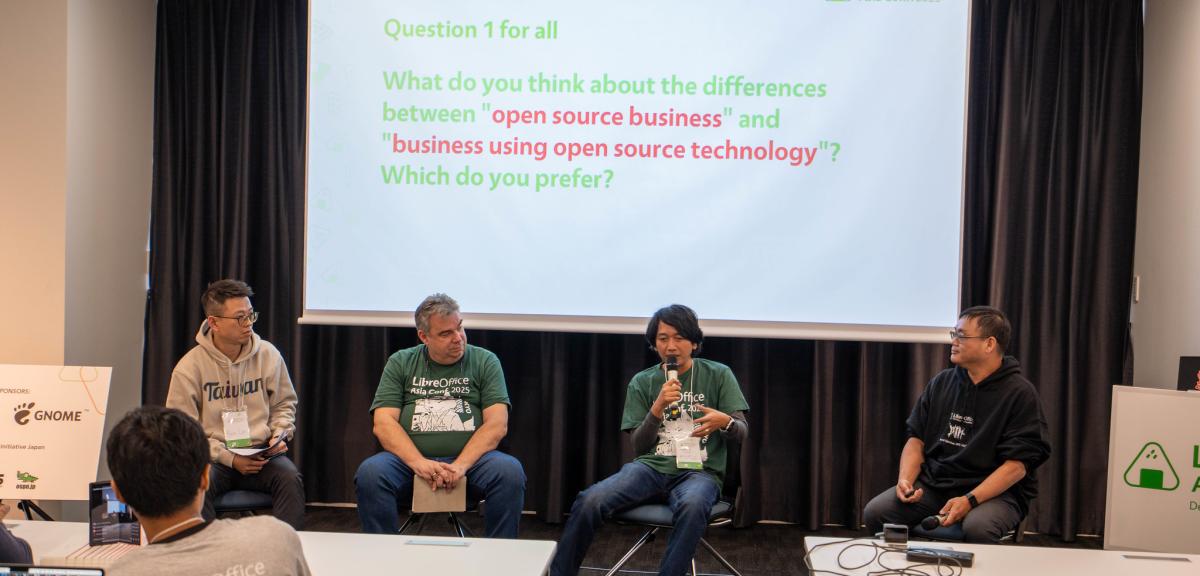
The annual community event LibreOffice Asia Conference was held on December 13–14, 2025 in Tokyo, Japan. One of the sessions was a panel discussion titled “Lessons from Open Source Business,” moderated by Franklin Weng, featuring three company leaders from different countries sharing how they run their businesses through open source tools. This article covers Part II: the moderator’s questions and discussion.
(Note: photo credits: Tetsuji Koyama, CC BY 4.0)
Question 1: Open Source as Business Core vs. Business Using Open Source Technology
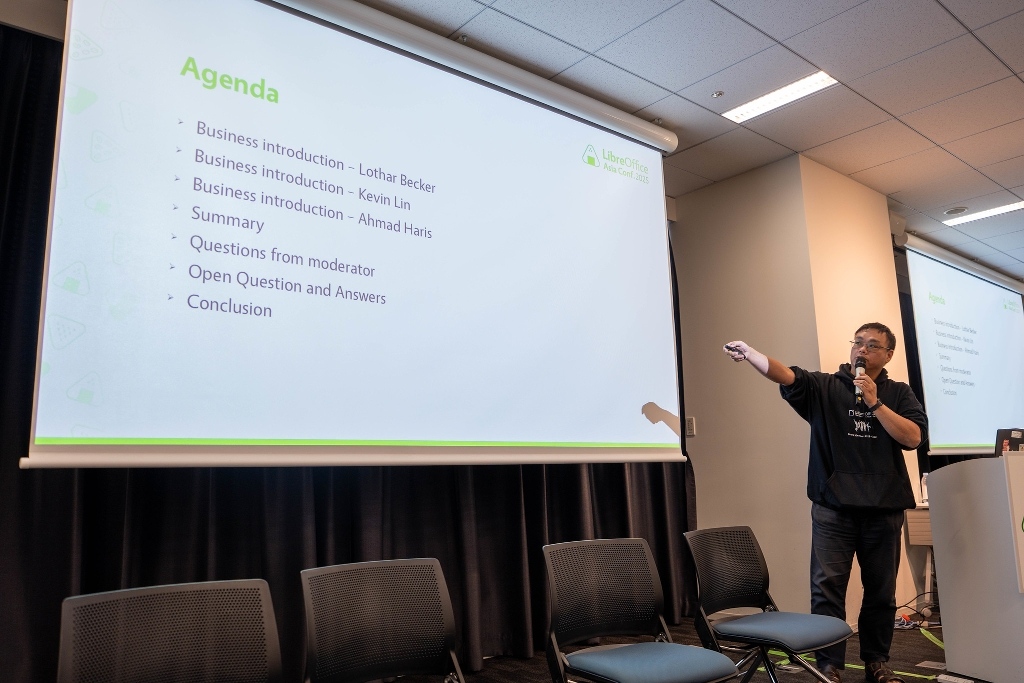
Franklin first provided some context for this question. In 2022, he wrote a handbook on “Public Money, Public Code” for the Friedrich Naumann Foundation for Freedom. At the press conference marking its release, someone asked him about open source business, and he proposed two models:
- “Open source as the business core”: You start with open source software, then think about building a business around it.
- “Business using open source technology”: You start with a business model, then consider which tools to use.
He emphasized that neither approach is inherently better or worse — the distinction simply serves as a useful way to frame the discussion. Franklin then asked the panelists what they thought about the two models and which they preferred.
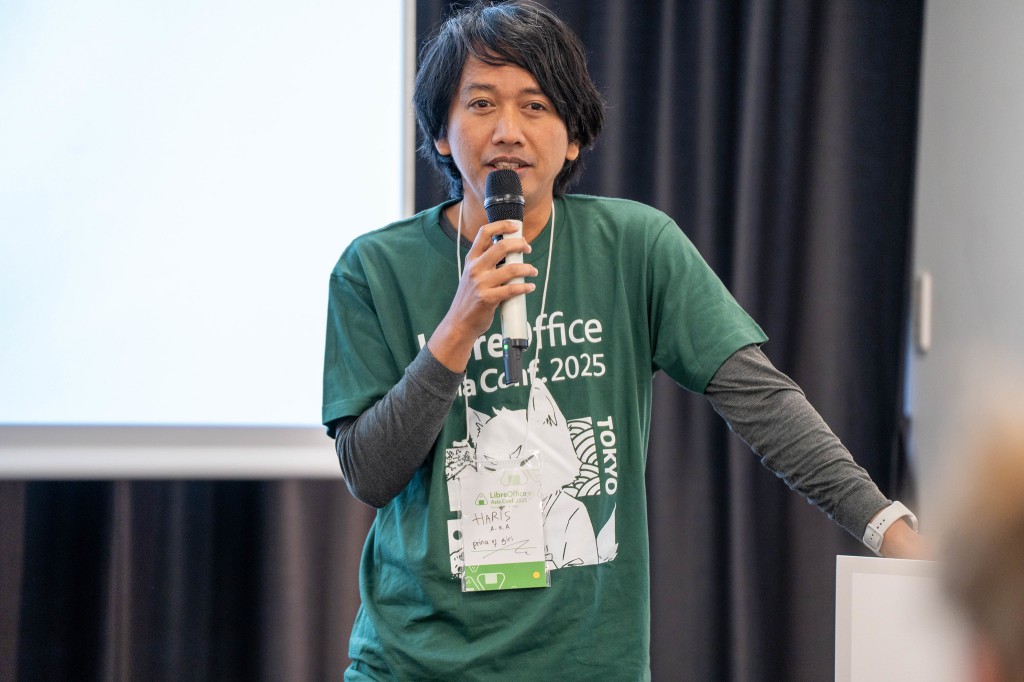
Ahmad Haris said the question was difficult to answer directly, but if forced to choose, he would align with the “business using open source technology” path — and that it has become his way of life. Haris explained that although he never attended university, the community taught him how to use Linux and how to accomplish all sorts of things with open source tools. Without the community’s support, he wouldn’t be where he is today.
However, over the years of participating in the community, he has seen many talented people unable to sustain their involvement due to financial difficulties, which he finds deeply regrettable. This motivated him to think: if he could succeed in business, he could channel resource back into the open source community. To this day, he continues to hold this view: he uses open source technology, avoids reinventing the wheel, and whenever he has the means, gives back to the community or open source projects through sponsorship.
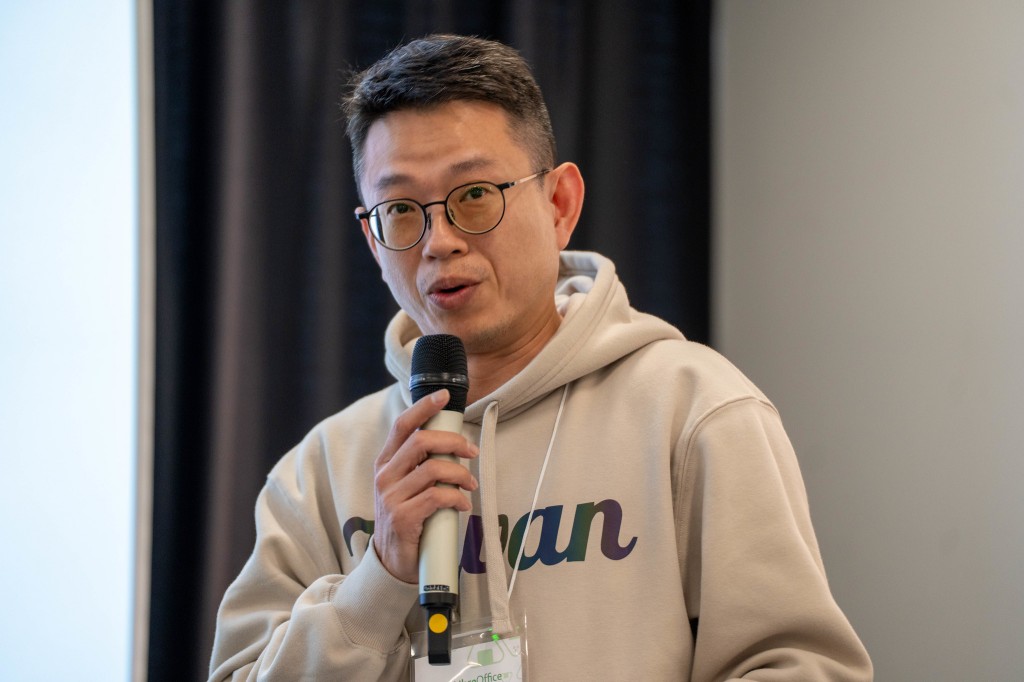
Kevin Lin pointed out that the key difference between the two models becomes particularly evident when working with governments. In their work, they can’t simply be users of open source software — they need the capability to build tools and integrate open source software into their company’s solutions. In practice, OSSII operates with both models running in parallel.
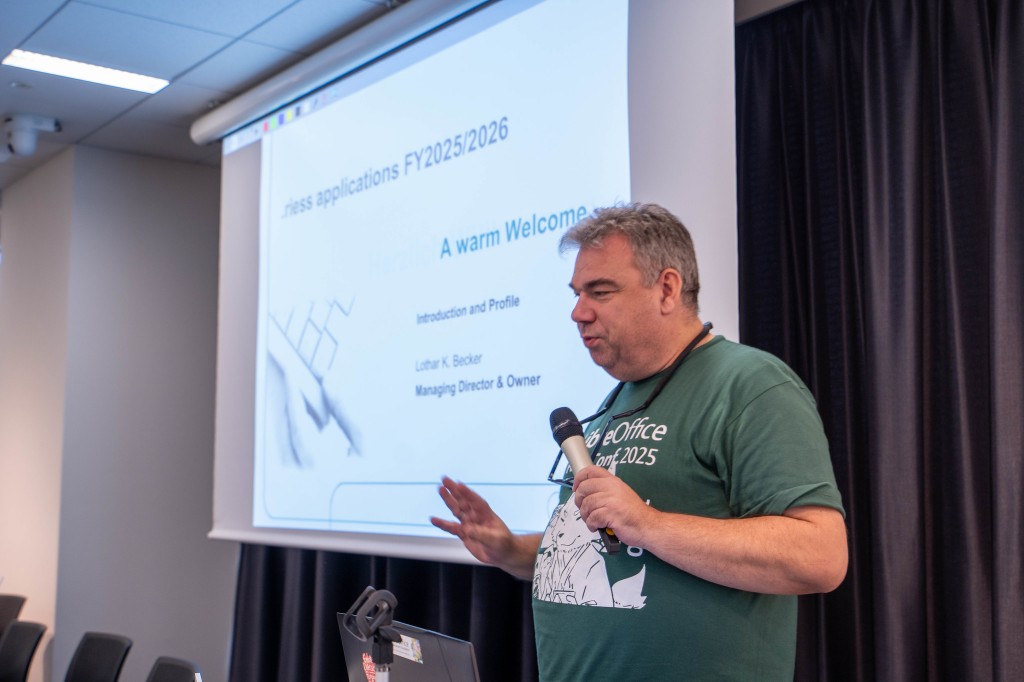
Lothar Becker admitted it’s hard to draw a clear line between the two, especially since the boundary between “contributing code” and “contributing services” isn’t always clear-cut. His personal experience spans both models, but over time he has increasingly leaned toward “business using open source technology,” as he values direct client engagement more. What is particularly interesting is that, as he’s gotten older, his consulting work has actually circled back closer to the open source core: he increasingly advises clients on how to participate in open source communities, such as getting involved in projects like Nextcloud. This isn’t traditional training or technical support, but rather strategic advice on “how to stay connected with the open source world.”
Question 2: Developing Products vs Focusing on Projects
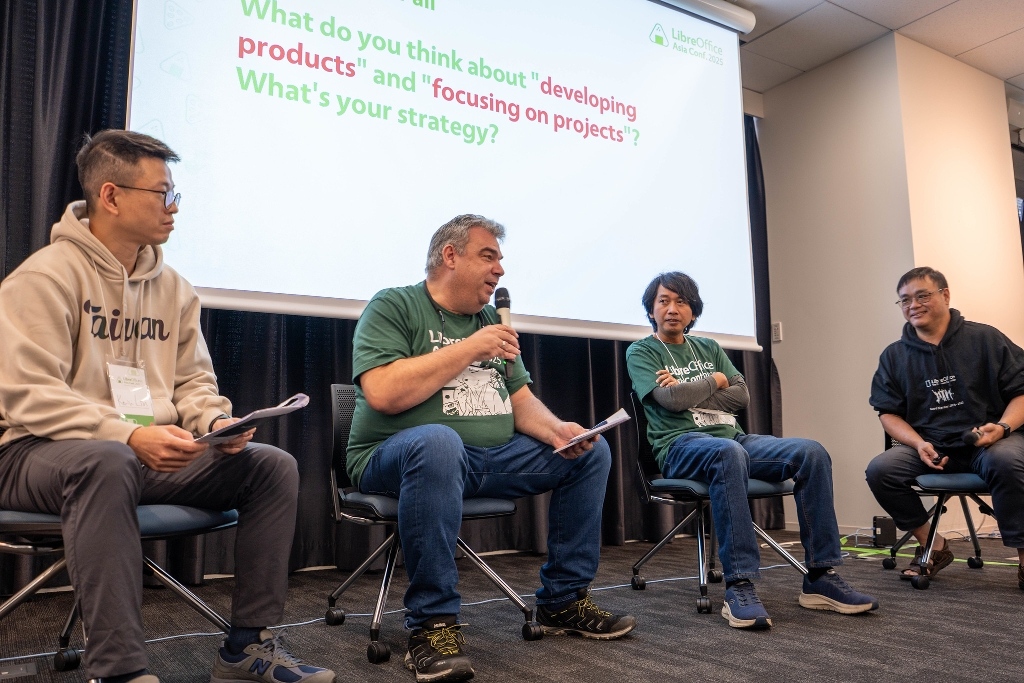
Franklin observed that for small open source companies, there is often a trade-off between “building products” and “taking on projects.” If you invest resources in developing your own product, revenue may be constrained, requiring companies to take on projects to sustain operations. But if you devote too much energy to projects, it reduces the time available for product development. This is especially pronounced when a company is just starting out, so he asked the panelists to share their approaches.
Kevin Lin said that OSSII does both product development and government projects, but they follow one crucial principle: projects should not come at the expense of product development. Therefore, they try to select projects that align with their product roadmap. Whenever they develop a feature for a project, they first ask themselves: “Can this feature also be incorporated into our product, making it more useful for a wider range of clients?” This way, project work and product development don’t pull against each other—they reinforce each other.
Lothar Becker noted that even though .riess is a service company that doesn’t focus on development, they still think about “productizing services.” They have developed a series of standardized training programs around LibreOffice, and in recent years have increasingly been productizing integrated solutions for file sharing plus online office use cases.
Lothar described the process: first, a client comes with a specific need, and they craft a tailored solution. They then step back and ask, “Which parts of this solution could also serve other clients’ needs?” Products grow organically from individual projects this way.
Franklin followed up: clients always demand more customization — how do you deal with that? Lothar acknowledged this is reality, but said it’s not always the case. His advice: if the product can cover 80% of a client’s needs and the remaining 20% requires customization, that is generally considered an acceptable balance. Pricing should factor in a certain degree of individual adjustments from the start, and as the product matures, the proportion of customization naturally decreases. The key, however, is that the sales team must be able to convince the client that the existing product already meets their needs.
Ahmad Haris said he takes different approaches depending on which of his two companies he’s working with. At STIA, where he is an employee and the company is project-oriented, he simply follows the company’s approach. At Nenggala, which he leads, the approach is different; most of the time they are product-oriented, prioritizing product development and getting at least to the proof-of-concept stage. He admitted that his judgment relies more on intuition than formal business training. For instance, when developing a secure communication app, he had a gut feeling that some organization would need it during the next general election — and they did. However, when funds run low, Nenggala still has to fall back on taking projects to stay afloat, even graphic design work. His philosophy: “As long as it’s not murder or arson, I’ll take it.”
Question 3: The Biggest Challenges in Working with Governments
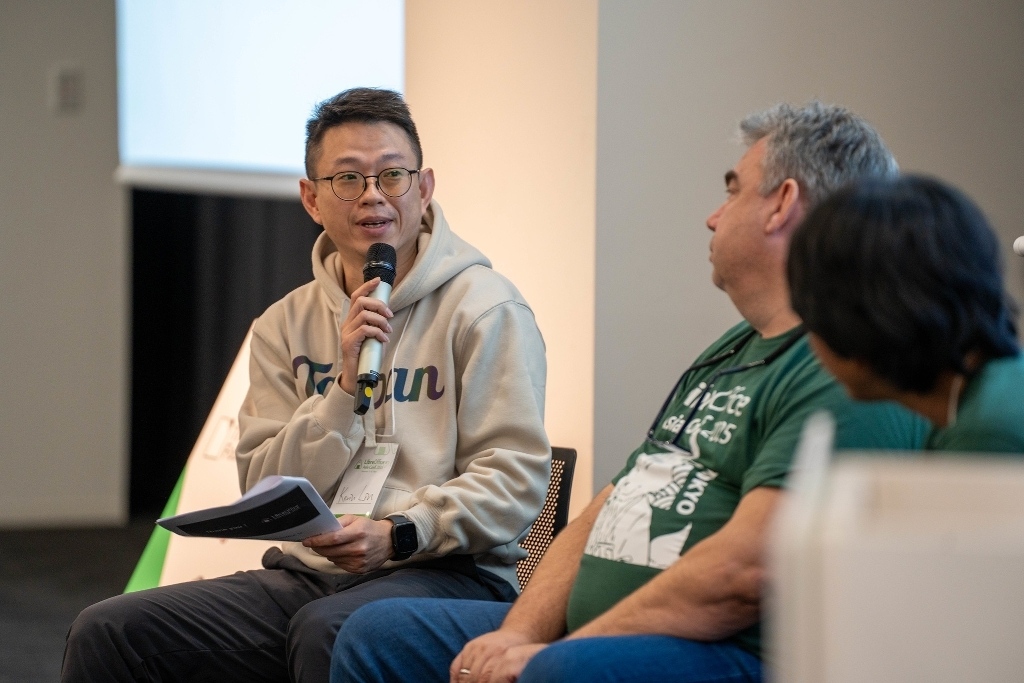
All three panelists have extensive experience working with governments, helping public sector organizations migrate to open source software or open document formats. Franklin asked them: what is the biggest challenge in this process?
Lothar Becker quoted a remark he made at the LibreOffice Asia Conference 2024: “Don’t blame your customer.” He believes the biggest challenge is people’s resistance to change. This resistance exists in both the public and private sectors, but the public sector situation is particularly tricky: government employees face less pressure from job insecurity, making the resistance especially deep-rooted. Lothar emphasized that this needs to be factored into business planning; the cost of “overcoming resistance” should even be included in the budget. In practice, this means extensive communication, training, and people-focused work; the technical aspect is actually secondary.
Ahmad Haris shared an experience from 2008 to 2010, before LibreOffice even existed. At the time, Aceh had just been devastated by the Indian Ocean tsunami, and Haris went there as an NGO member to assist with reconstruction. One of the tasks was to migrate the entire province of Aceh from Microsoft Office to OpenOffice.org. OOo’s word processing capabilities weren’t mature enough at the time, but technical issues were secondary — the real challenge was people. Although Haris is also a Muslim, as a Javanese person, he had a very different language and culture from the local Acehnese, and friction arose frequently when working face-to-face. His solution was to work with the local community: first train local community members, then have them act as a bridge to end users.
Haris pointed out that the most significant outcome of those two years was actually localization. Aceh is an autonomous province that implements Sharia law, and many official documents require Arabic script. At the time, under the Microsoft Windows environment, Arabic support was quite rudimentary. Through OpenOffice.org and Linux, they successfully enabled Arabic text input, and the mayor was delighted: “This is the Islamic way!” This was also something Haris had observed over years of promoting free software in rural areas across Indonesia — one of the features of free software most valued by rural communities.
Kevin Lin offered a more focused perspective. He believes the biggest challenge is finding the real decision-maker and earning enough trust for them to candidly tell you what their concerns and constraints are. Once you achieve that, the technical issues are all solvable. The truly hard part is finding that key person who is genuinely committed to driving the migration forward.
Question 4: The Most Valuable Lessons from Running an Open Source Business
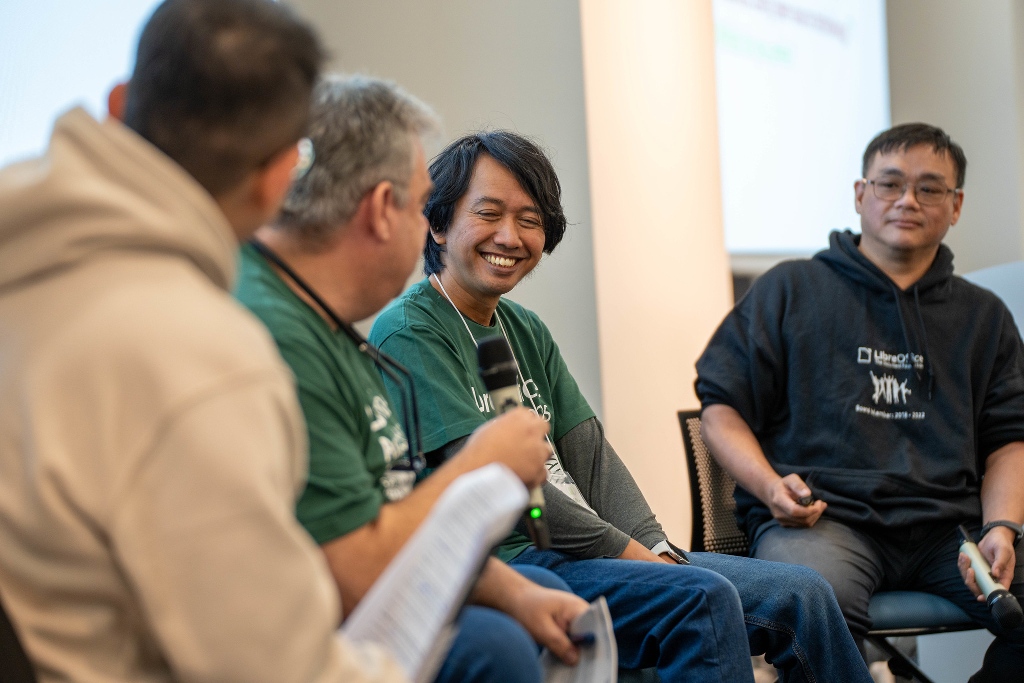
For the final question, Franklin asked the three panelists: after years of running their business, what is the most valuable lesson you’ve learned?
Kevin Lin said that open source has shown him many creative possibilities, though he admitted this feeling is difficult to articulate. Having reached this stage of running a business, he realized that the core is no longer open source itself; it’s about people. In the end, what business owners spend most of their time dealing with isn’t the business model, but people-related challenges.
Lothar Becker laughed and said he had actually written down the same answer before Kevin spoke: “It’s all about people, not about technology.” Finding people who share your passion and are willing to work in ways you believe in is particularly challenging.
He then added another insight: stay true to your values. If you believe open source is the right thing to do, then do it. Over the past 25 years, there was no shortage of skepticism: “Forget it, you’ll never succeed.” Of course, you must constantly think about what you can offer and adapt to changing circumstances, but if this is where your passion lies, stick with it. He said this is essentially why all three of them sitting here are still on this path today.
Ahmad Haris said his answer depends on the context. His experience is: when the government says it wants to migrate to open source, those promises are not always reliable. He hopes that one day governments will truly invest resources — such as donating funds or sponsoring developers to contribute to projects like LibreOffice — but until that day comes, he remains skeptical of government commitments.
In the private sector, however, Haris actually “challenges” his clients: when they insist on customizing everything, he pushes back: “No, you don’t actually need that,” prompting them to re-examine whether their existing solutions are truly inadequate. This somewhat provocative approach often leads to positive outcomes.
Conclusion
At the end of the panel, Franklin summarized the discussion with three key takeaways.
First, companies in the open source space, like those in any other industry, face persistent challenges in achieving profitability and scaling. Precisely because they tend to be small teams, they must collaborate closely with partners — “fight as a group” — in order to provide long-term, stable services.
Second, whether open source is the core of your business or a tool you adopt, you need a sound business model as a foundation. Without that foundation, sustainable becomes difficult.
Third, pushing government migration to open source is undeniably difficult, but the key point is: when the day comes that the government decides to act, we need to be ready. Taiwan’s experience illustrates this perfectly: when the government commits, and there are already partners nearby who can provide immediate assistance, the outcome is vastly different.