Today is Document Freedom Day, which raises awareness of how open standards and open document formats provide us with the freedom to read and write as we wish:
Remember when you were sent an important file that your computer couldn’t read properly? Remember having to buy or download a new application just so you could open an attachment that you needed for work? The same thing happens tens of thousands of times each day. Can you imagine how much knowledge exchange doesn’t happen just because sender and receiver (intentionally or not) are using different data formats? Incompatibilities like this are usually caused by ways of storing information that are secret (‘closed’), and privately owned (‘proprietary’).
Document Freedom Day is an opportunity to tell the world about open standards, which are crucial to ensure our ability to exchange information, remain independent of software vendors, and keep our data accessible in the long term. LibreOffice uses the Open Document Format, for example, which is also used in many other apps.
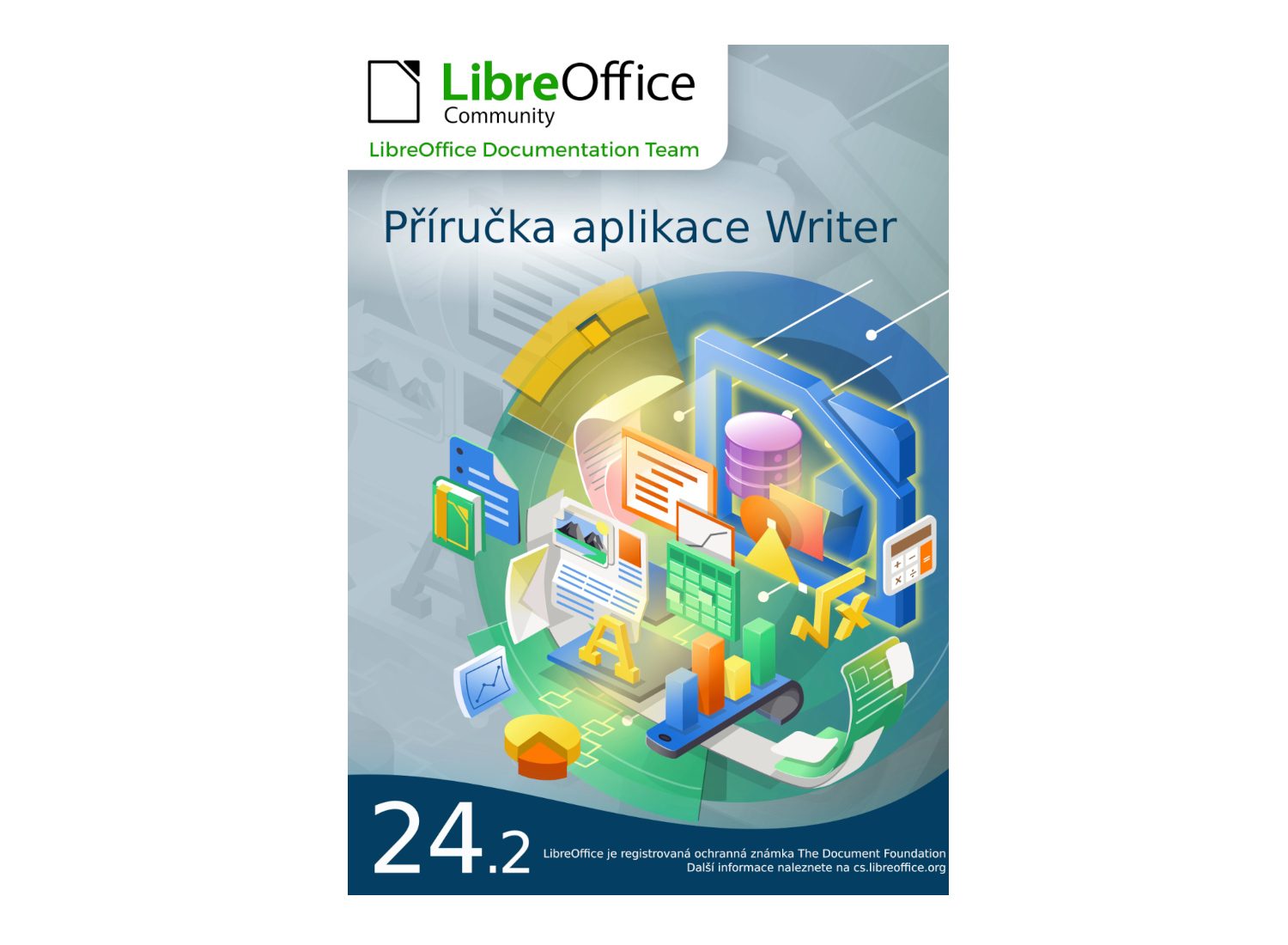
The Czech team has finished translating the LibreOffice Writer Guide 24.2. As usual it was a team effort, with translations by Petr Kuběj, Radomír Strnad and Zdeněk Crhonek. Then Roman Toman contributed localised pictures, and Miloš Šrámek provided technical support. Thanks to everyone in the team for their work!
The Czech translation of the Writer Guide 24.2 is available for download on this page.
We’ve not yet decided which guide we’ll translate next, but we’re always looking for new translators and correctors. Join us!
Today we’re talking to Dione Maddern, who helps out in LibreOffice’s documentation team…
Tell us a bit about yourself!
I’m 44. Originally from Brisbane, Australia but I currently live in Baltimore, on the East Coast of the USA. I’ve worked in a variety of administration, document production roles in the engineering and insurance industries.
Most of my technical writing experience has been writing procedures, instructions, and other documentation for Health Safety Environment and Quality (HSEQ) systems. This is my first software project.
In my spare time, I like to bake, draw, and play video games and tabletop RPGs.
What are you doing in the LibreOffice community at the moment?
I’m working on the Offline Help (F1) function of LibreOffice, fixing broken links and updating instructions and terminology.
How did you join the community, and what was it like?
I saw the banner on the user guide page asking for volunteers to work on Documentation Team. I’d been looking for a volunteer opportunity where I could use my skills in document production for a while and this seemed perfect. So I followed the link and posted my bio on the Documentation forum.
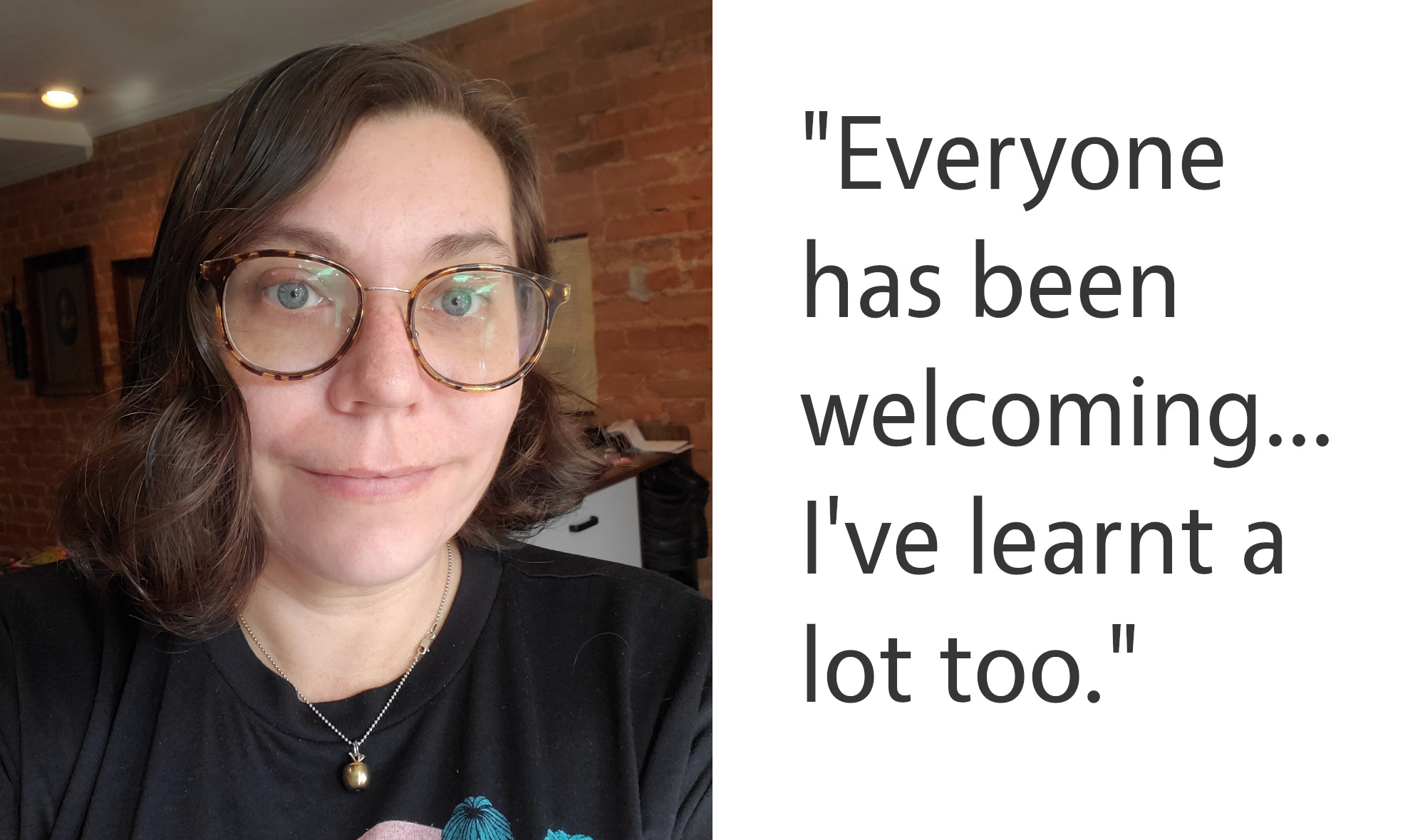
I felt a bit daunted at first because a lot people had more experience than me, or were from a software development background. Everyone has been very welcoming and I feel like I’ve been able to make a contribution to the project. I’ve learned a lot too, including a crash course in XML and Gerrit.
What advice would you give to others who want to join the documentation team?
Dive in! It can seem a bit daunting at first, but it’s easier to get started than you think.
Thanks so much to Dione for all the help! Indeed, everyone is welcome to dive in, help out, and pick up valuable experience along the way. Who knows – perhaps it could lead to a career in technical writing…
Suraj Bhattarai, our Nepalese LibreOffice Community Liaison, writes:
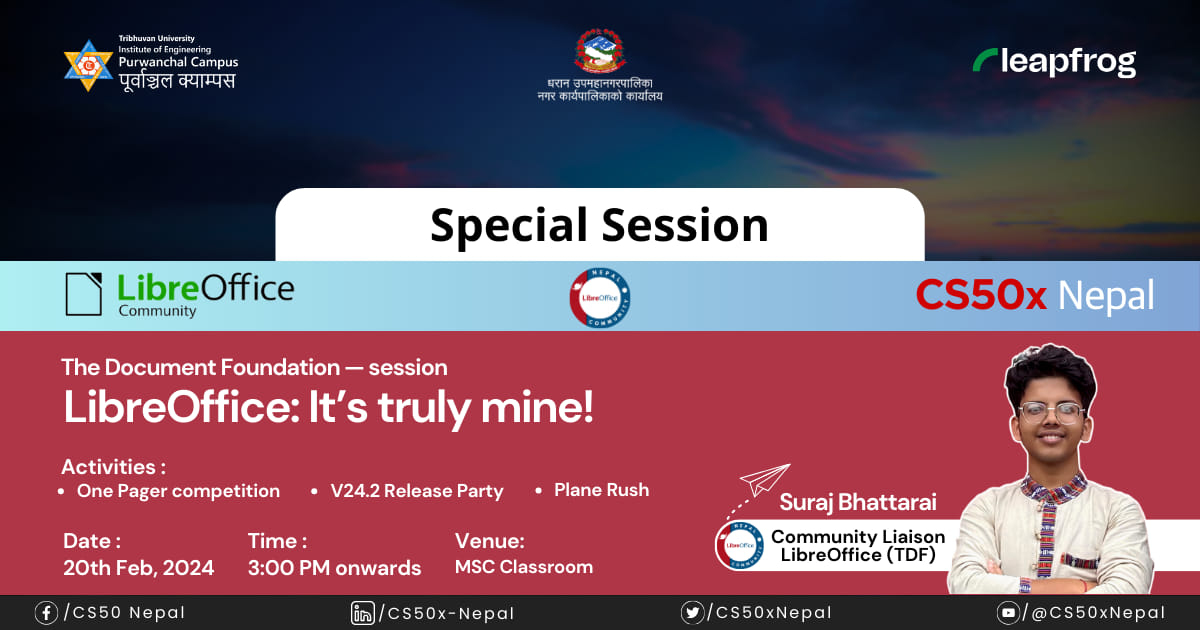
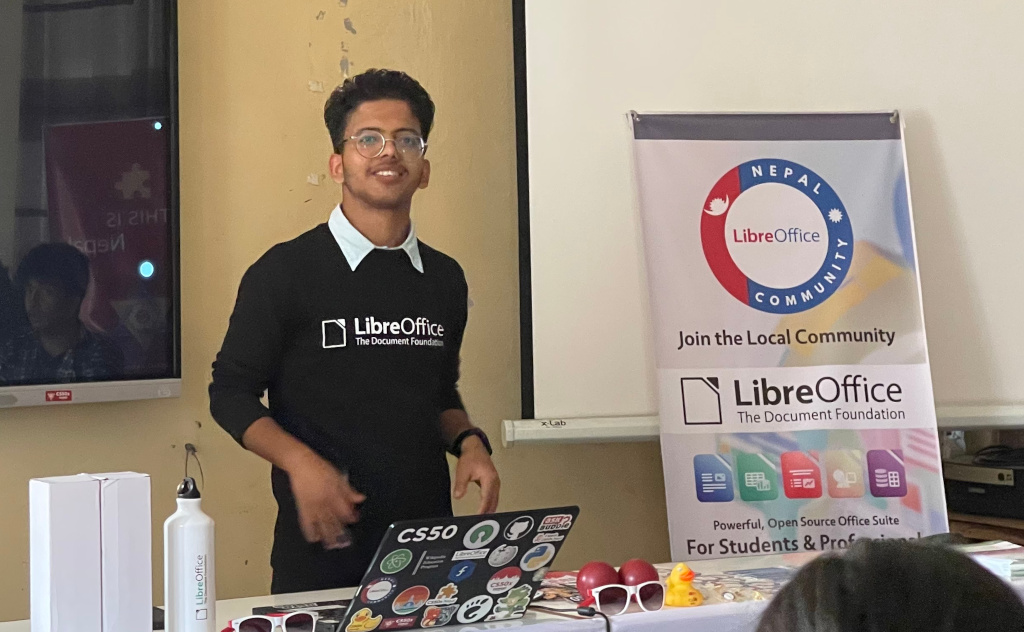
We shared some positive words around the LibreOffice project, among students of IOE Purwanchal Campus enrolled in CS50x Nepal. The LibreOffice orientation was scheduled for two hours on 21st February, 2024 at the MSC special classroom of the same campus; it was a special session in the CS50x Nepal timeline.
The session that I delivered gave a general overview of the LibreOffice project, The Document Foundation, the Document Liberation Project, past activities carried out by the local Nepali community, customization tips and tricks for familiarity, and how to contribute or connect in the community.
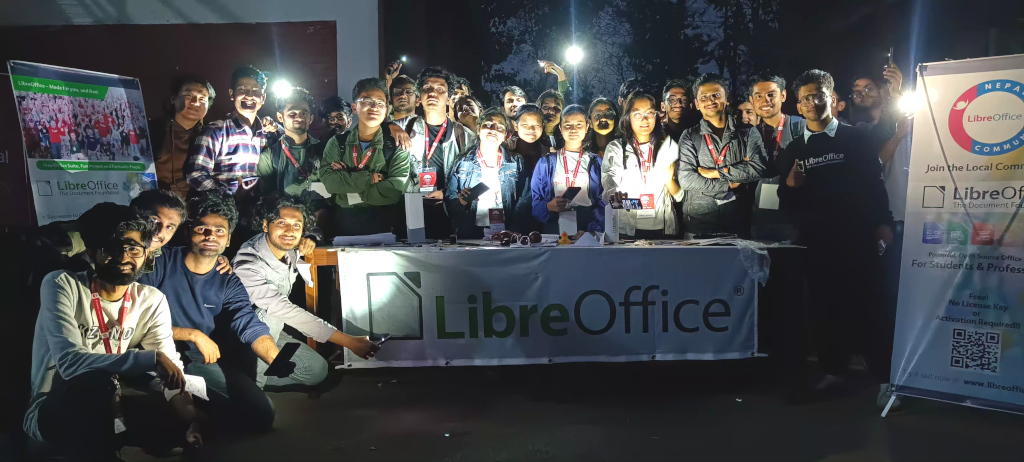
Moreover, the session – organized for 30 CS50x Students – included a total participation of 47 people, seven of whom were Nepali Community members, six of whom were other students, and the rest were the CS50x staff. The session was primarily intended to introduce the LibreOffice suite and provide hands-on experience with it, to the newly enrolled, first-year students in the campus, who were actually enrolled for the CS50x classes.
The session had this breakdown:
40 mins of talks
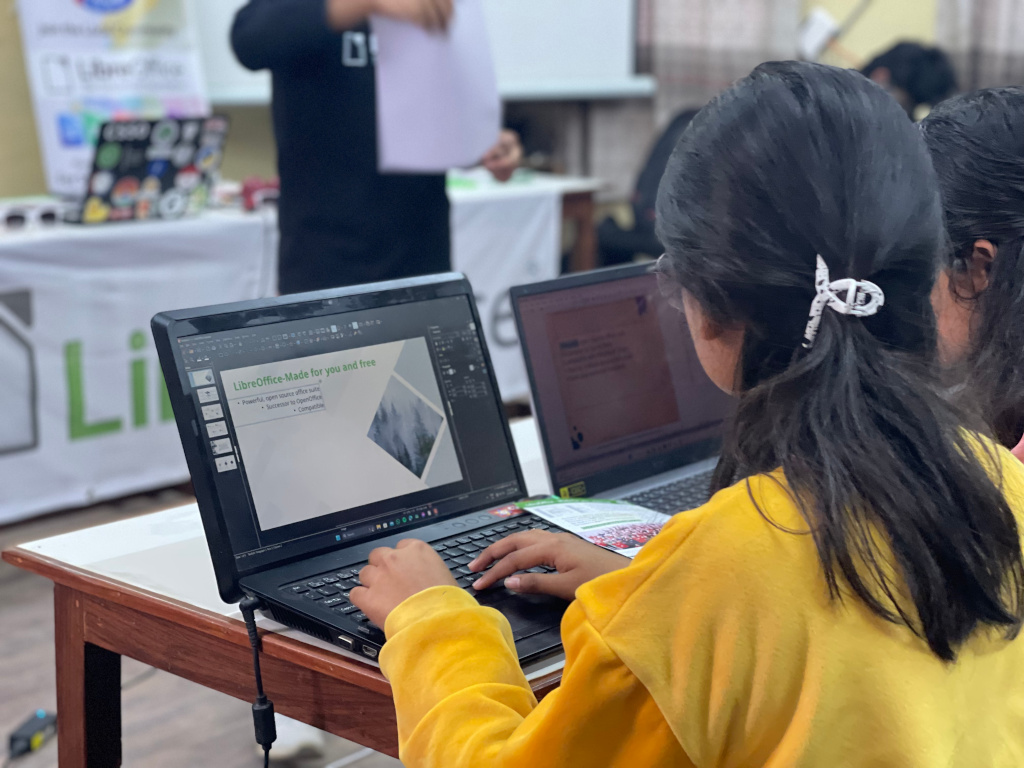
30 mins of quick presentation competition using LibreOffice Impress
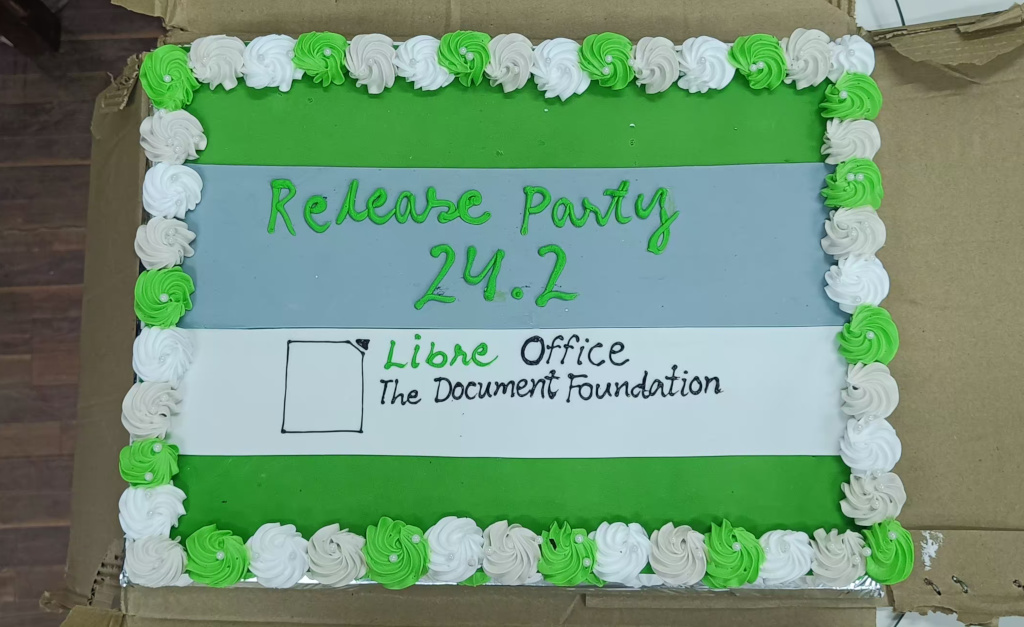
30 mins of release party cake and celebration
And lastly, 30 mins of Plane Rush competition as a fun touch to the session
The competition was facilitated by our community volunteers, where they distributed some gifts as well. The challenge for the competition was to create a visually appealing, quick three-page presentation using LibreOffice Impress on-the-spot, in 25 minutes. All they had to do was recreate the presentation slide version of the LibreOffice university/school (English) flyer.
The gifts were LibreOffice T-shirts, water bottles, Document Liberation Project stickers, pens and more. The same gifts were distributed to winners of the Plane Rush activity as well, and some light items like stickers and pens were given to everyone present in the session.
After some hands-on experience with LibreOffice Impress, a quick survey was conducted, where 27 of the participants claimed that they tried LibreOffice for the very first time. The same survey had asked what they love about LibreOffice. And honestly, a majority of them mentioned the reasons to be: open source, free, compatible with Microsoft Office files, community driven, cross-platform, privacy, and feature-rich.
The latter half of the session was filled with fun, as we cut and shared the vanilla-flavored release party cake with everyone present in the room. The environment was really fun with flashes, noise, claps, smiles, and cameras and eyes all over the cake.
Lastly, in the sunset and the open ground, participants flew their own paper planes based on LibreOffice PaperPlaneFront.odg. The session was totally fun and a unique experience for everyone. And yes, they did collect the planes for paper recycling later on. And with this, the day, joy and celebration all came down to a happy ending with the efforst from the Nepali community.
Please confirm that you want to play a YouTube video. By accepting, you will be accessing content from YouTube, a service provided by an external third party.
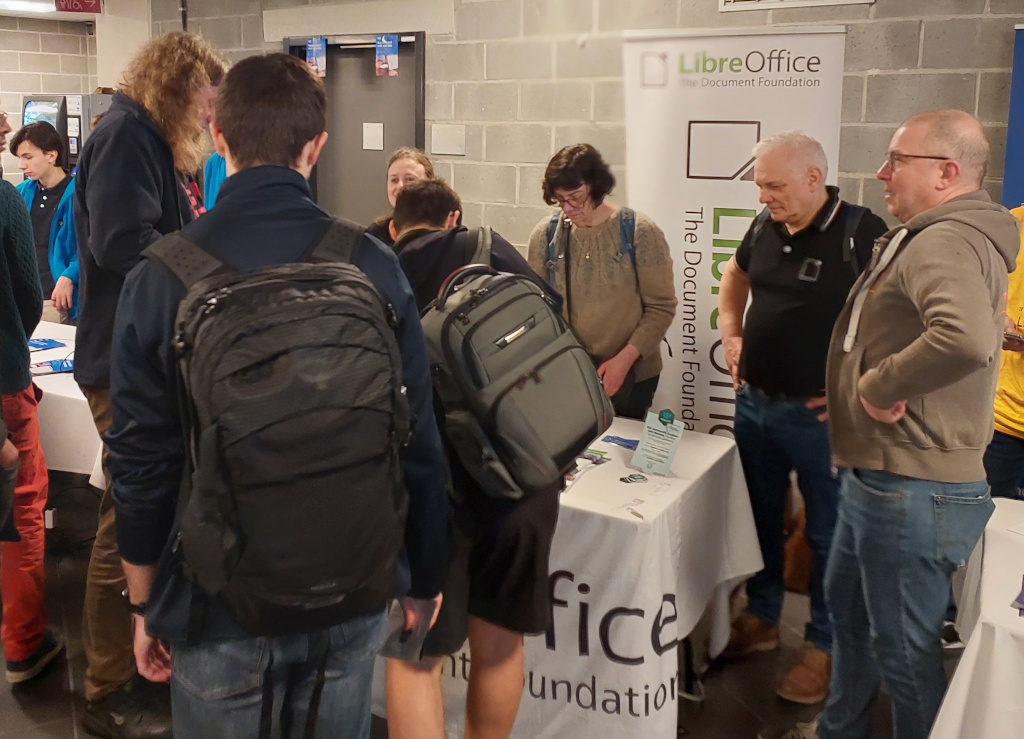
FOSDEM is the biggest meetup of free and open source software (FOSS) developers in Europe, and takes place every year, in early February, in Brussels. And the LibreOffice project is always there!
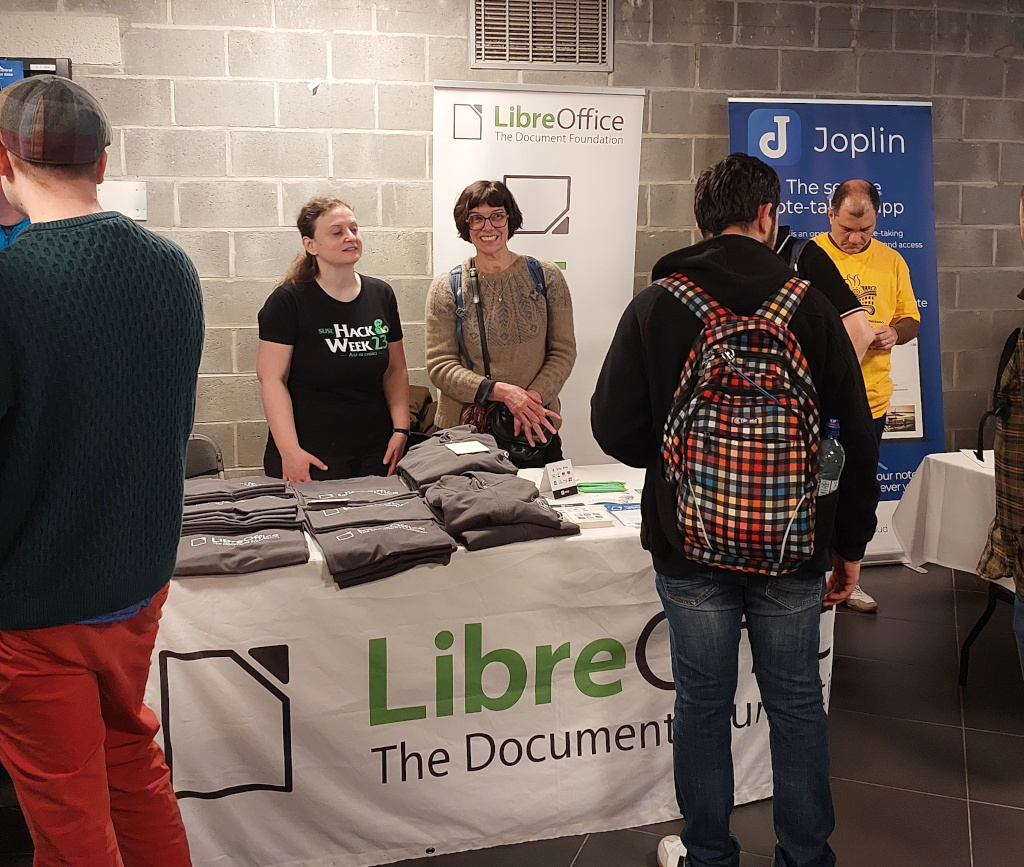
We had a stand with merchandise, and community members were present to answer questions, provide information about new features in LibreOffice, and meet people from other FOSS projects.
Our LibreOffice pens were very popular, as were Document Liberation Project stickers and flyers. Many visitors to the stand were regular LibreOffice users and just wanted to say thank you, some buying a T-shirt or hoodie as well. We even had a couple of donations on the spot! Others asked what they can do for LibreOffice.
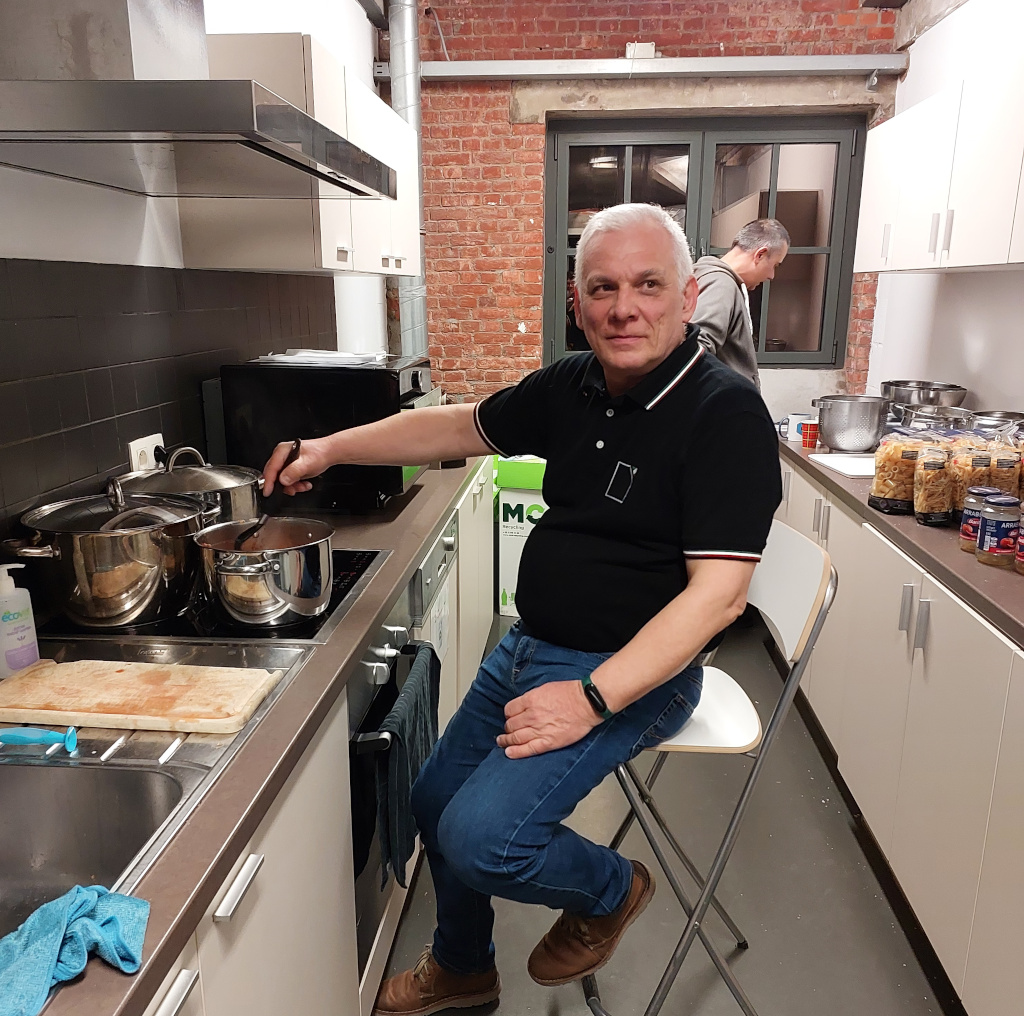
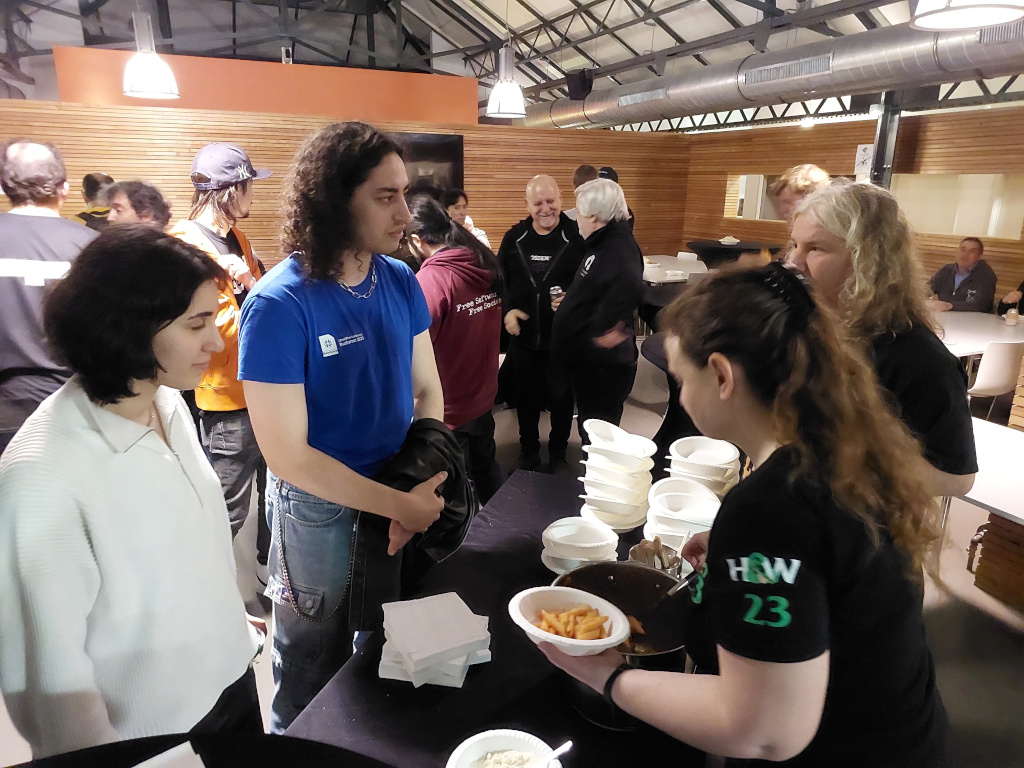
And here are a few photos from the event, and our community dinner. This is just the beginning though – we plan to be at many more events this year!
LibreOffice 24.2 is our new major update, with new features, compatibility improvements, and performance boosts. Check out this video, with subtitles in 28 languages thanks to our awesome localisation community – or if you’d prefer to watch it on PeerTube, here’s a link.
Please confirm that you want to play a YouTube video. By accepting, you will be accessing content from YouTube, a service provided by an external third party.