Updates from the Document Liberation Project


The Document Liberation Project (aka DLP) is working to free users and content creators from vendor lock-in. To achieve this, it develops and maintains libraries for reading documents in many different formats – including those generated by proprietary software. To learn more about the DLP, check our our short video.

In recent months, DLP developers have been working on updates and new features, so read on for all the details.

QuarkXPress import filter

Lithuanian coder Aleksas Pantechovskis (who we interviewed last year) has been working with David Tardon on a filter to read documents generated by the QuarkXPress desktop publishing application. He was doing this as a Google Summer of Code project, and added code for importing text boxes, shapes and other objects.

The image below shows an original QuarkXPress document on the left, and how it is converted into the open and standardised OpenDocument Format for use in LibreOffice and other software:

Aleksas and David have implemented the filter in a new library, libqxp – it supports QuarkXPress 3.1 – 4.1 documents at the moment.

PowerPoint and StarOffice

Meanwhile, Laurent Alonso has been improving a number of libraries for better compatibility with legacy documents. For instance, in libmwaw he has implemented an import filter for presentations created in Microsoft PowerPoint 2 (Windows), PowerPoint 4 (Mac and Windows) and PowerPoint for Windows 95. If you have old presentations in this format and need to retrieve the main contents, this filter will help you out.

In addition, he has updated libstaroffice, which is a library used to read files generated by StarOffice (which later became OpenOffice.org and then LibreOffice – see our timeline for the full history). Thanks to Laurent’s work, .sdc spreadsheet files preserve more of their formatting when imported, while .sda files created with StarOffice Impress are now converted as presentations.

Give us a hand!

As you’ve seen, DLP is helping users and content creators to free their data from old, legacy and proprietary formats. DLP libraries are used by many well-known applications such as LibreOffice, Inkscape and Scribus, so your contributions can help millions of people around the world.

And you don’t have to be a developer! While code contributions are always welcome, you can help us by reverse-engineering and documenting file formats, or sending us sample documents to analyse and test against the DLP libraries. Any help can really make a big difference, so see this page to learn more. We look forward to meeting you!

LibreOffice contributor interview: Nguyen Vu Hung

The Document Foundation’s wiki has lots of resources and materials for marketing LibreOffice in English – such as presentations, flyers, stickers and branding guidelines. But we also want to spread the word about free software and open standards in every country, so we really appreciate our international community which promotes LibreOffice in other languages. One such community member is Nguyễn Vũ Hưng who helps with marketing LibreOffice.

Where do you live, and are you active on social media?

I live in Hanoi, Vietnam, and you can find me on social media at:

Do you work for a LibreOffice-related company or just contribute in your spare time?

I work as an CTO for a game and offshore development company based in Hanoi. The company has nothing related to LibreOffice, but our staff uses LibreOffice at work. I’m a volunteer in the LibreOffice community in my spare time, and have been a long-time contributor to open source projects.

How did you get involved with LibreOffice?

​It goes back about ten years ago, when I contributed to Vietnamese localization and ​community support with OpenOffice.org. When LibreOffice started, I join the new project with nearly the same role, translating the user interface, until recently. The English skills of average users around the world are getting better, which is why I’ve changed my focus to open source and LibreOffice marketing.

What areas of the project do you normally work on? Anything else you want to tackle?

For a year or two until now, I’ve found that the role most fitting for me is forum and Facebook fan-page content seeding. It works 🙂 For that kind of marketing and content seeding activity, getting people involved is the most difficult part. I’ve been looking at what Slashdot does, and I’m learning about approaches to improve KPIs (key performance indicators) such as the statistics for “seen”, “comments” and “engagement” in Facebook posts.

What was your initial experience of contributing to LibreOffice like?

This is not my first experience with LibreOffice, but I still remember: I was mentoring a student who was finishing an Easy Hack. It was not really “easy” to read so much code and start hacking away on a small improvement – but luckily, he did it 🙂 (Here’s the Bugzilla ticket showing how it went.)

What does LibreOffice need most right now?

It needs to go mobile (more work on Android) and get into the cloud (more work on LibreOffice Online).

What do you do when you’re not working on LibreOffice?

Playing with my kids takes up most of my time. I balance time spent with my family with other IT/open source activities, including LibreOffice, Agile Vietnam ​and ITEC (IT Experts Clubs in Vietnam). We hold monthly events about Agile/Scrum and an event series named “S* Architecture”. I wish I could do the same with LibreOffice in Vietnam!

Thanks Nguyễn for all your contributions. And for others reading this who’d like to help out with LibreOffice marketing – or indeed translations, design, documentation, QA and other projects – join us and get involved!

LibreOffice at KDE’s Akademy meetup in Almeria

Collaboration is essential within free and open source software projects – but it’s also important between projects as well. For instance, many LibreOffice users and contributors run it on the GNU/Linux operating system, with KDE as the desktop environment. With this in mind, members of the LibreOffice community attended Akademy, the yearly summit of KDE developers, users and supporters. It was held this year in Almeria, Spain.

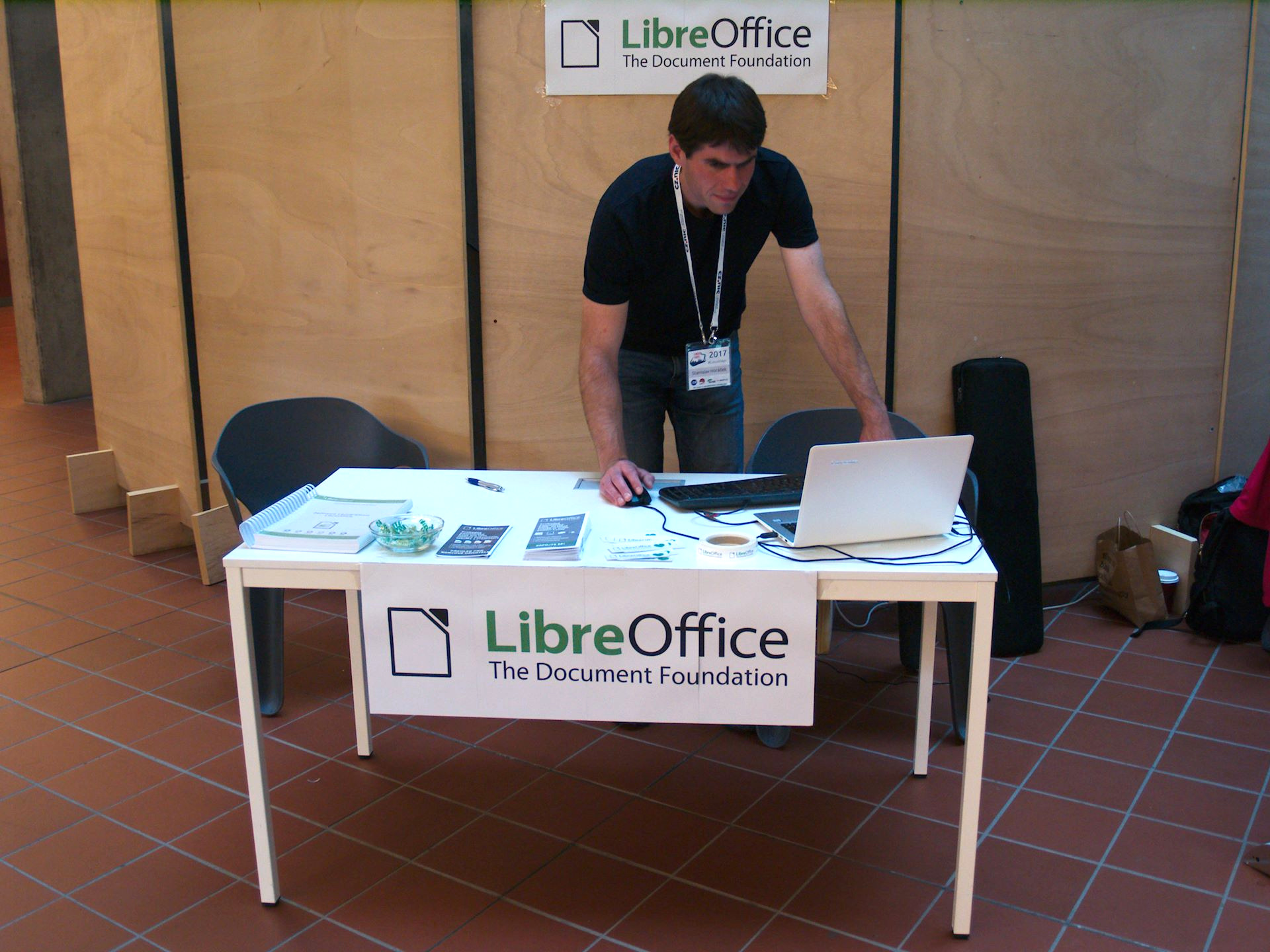
Gabriele Ponzo from LibreItalia, Teodor Mircea Ionita (TDF’s new Development Mentor) and Xisco Fauli (QA engineer) set up a stand for two days of the event. They answered questions from LibreOffice users, and handed out stickers and promotional flyers:

They were assisted by Franklin Weng and Jeff Huang from the Taiwanese LibreOffice community. Franklin gave two presentations:

He also hosted a Birds of a Feather (BoF) session entitled “Migrating FOSS and KDE – Does KDE have chances?”, while Jeff gave a talk about the challenges faced by translation teams. Gabriele and Xisco ran BoF sessions on the value of becoming a TDF member, and they also discussed the newly-released LibreOffice 5.4.

Teodor summarised the event with: “Being somewhat new to the LibreOffice project, this has been a very lucrative opportunity to learn a lot regarding the community and how it works, meet members in person and get a bit more acquainted on a personal human level. Oh, we also had lots of fun too!”

So that was Akademy – but don’t forget that the LibreOffice Conference in Rome is coming up too, in early October. Register now!

LibreOffice 5.3.5 available for download

Berlin, August 3, 2017 – The Document Foundation (TDF) announces LibreOffice 5.3.5, the fifth minor release of the LibreOffice 5.3 family, targeted at enterprises and individual users in production environments.

TDF suggests deploying LibreOffice in large organisations, public administrations and enterprises with the backing of professional support by certified people (a list is available at: http://www.libreoffice.org/get-help/professional-support/).

LibreOffice 5.3.5 includes a number of bug fixes along with improvements to the help content. Technical details about the release can be found in the change logs here: https://wiki.documentfoundation.org/Releases/5.3.5/RC1 (fixed in RC1) and https://wiki.documentfoundation.org/Releases/5.3.5/RC2 (fixed in RC2).

Download LibreOffice

LibreOffice 5.3.5 is immediately available for download from the following link: http://www.libreoffice.org/download/.

LibreOffice users, free software advocates and community members can support The Document Foundation with a donation at http://www.libreoffice.org/donate/. Donations help TDF to maintain its infrastructure, share knowledge, and organise events such as the LibreOffice Conference, with the next one taking place in October in Rome (http://conference.libreoffice.org).

Several companies sitting in TDF’s Advisory Board (http://www.documentfoundation.org/governance/advisory-board/) provide either value-added Long Term Supported versions of LibreOffice or consultancy services for migrations and training, based on best practices distilled by The Document Foundation.

Month of LibreOffice: Stickers in action!

Back in May we had a Month of LibreOffice, celebrating contributions all across the project, from code and documentation through to translations and bug reports. 304 members of our worldwide community won stickers, and we’ve received some photos of them in action – so here they are!

The first is from Gabriele Ponzo, who is in The Document Foundation’s Membership Committee and already has plenty of LibreOffice stickers:

Next up is Osoitz E who helps to translate and localise LibreOffice into Basque:

Franklin Weng promotes LibreOffice and the Open Document Format in Taiwan, and sent us this photo:

Finally, Buovjaga from our QA community has a novel use for his sticker:

We’ll be repeating the Month of LibreOffice in November, so you’ll have another chance to grab a sticker – but you can get involved with our friendly community at any time. Join us and help make LibreOffice even better for millions of people around the world!

LibreOffice Conference 2017 in Rome – register now!

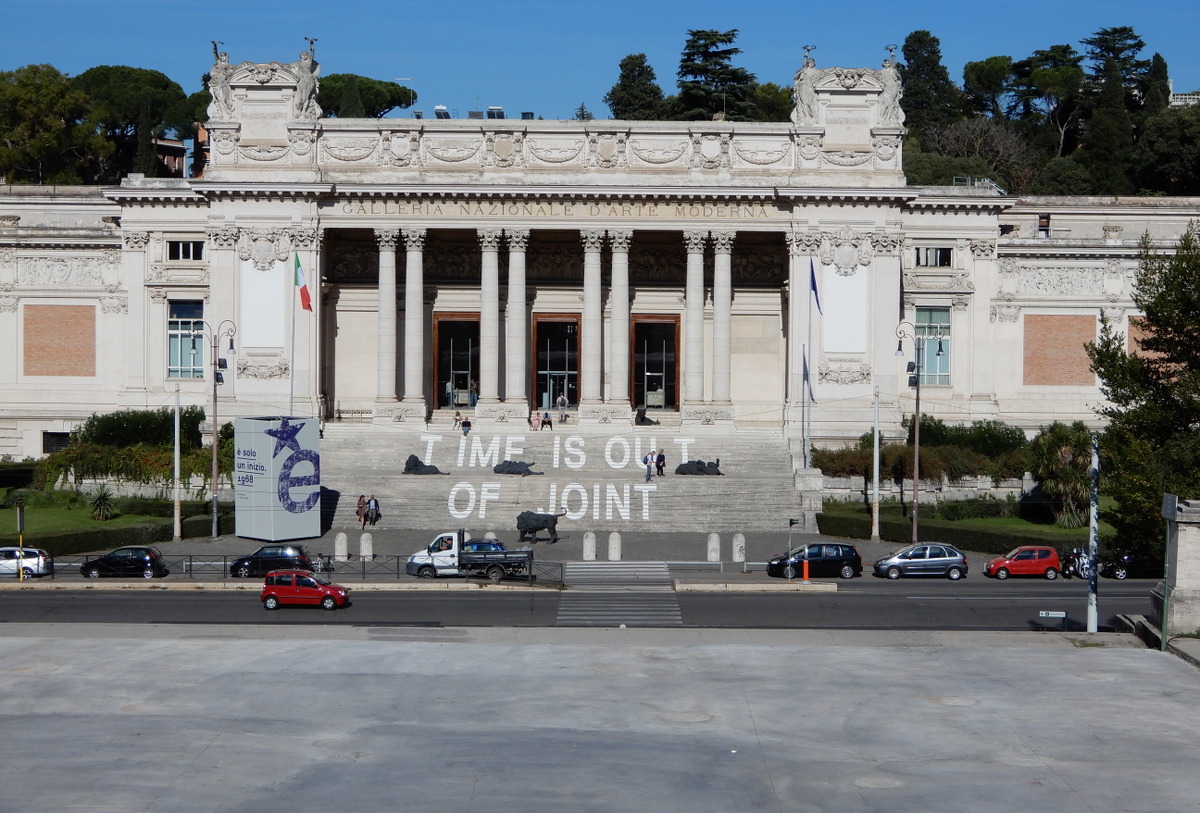
This year’s LibreOffice Conference will take place from 11 – 13 October in Rome, Italy. It’s a great opportunity for LibreOffice developers, users, supporters, translators and other members of the community to meet up, share ideas and make plans for future versions of the software.

And you can join us! On our conference website you’ll find a registration form, along with useful practical information. We’re still working on the website and conference programme, so stay tuned to the site for more information.

Also: if you’re attending and want to give a talk or presentation about what you’re doing with LibreOffice, check out the Call for Papers. There are many different topics and “tracks” in the programme, so whether you want to talk about development, QA, marketing, outreach, migrations or something else, submit your idea. The deadline for submissions is August 15.

We look forward to seeing you at the conference!