Annual Report 2018: New releases of LibreOffice

Thanks to your generous donations, and contributions from our ecosystem of certified developers, we released two major releases of LibreOffice in 2018: 6.0 on January 31, and version 6.1 on August 8.

In addition, 14 minor releases were also made available throughout the year, for the 5.4, 6.0 and 6.1 branches. Meanwhile, several Bug Hunting Sessions were held in preparation for the new major releases. These typically took place on a single day between set times, so that experienced developers and QA engineers could help new volunteers to file and triage bugs via the IRC channels and mailing lists. The Bug Hunting Sessions for LibreOffice 5.4 were held on April 27, May 28 and July 3 – while those for LibreOffice 6.2 took place on October 22, November 19 and December 21.

LibreOffice 6.0

On January 31, LibreOffice 6.0 was officially released after six months of development. This included a new ePUB filter, for saving documents as eBooks, while support for opening QuarkXPress documents was added as well. Other new features included: a revamped special characters dialog; OpenPGP support for signing and encryption on all desktop platforms; a brand new web browser-based help system; and better flexibility when using custom dictionaries.

In addition, LibreOffice 6.0 lets users perform mail merge operations using data from tables inside Writer itself, while in Calc, new commands were added to select unprotected cells on protected or unprotected sheets. Impress was also improved thanks to 10 new templates, designed for home and business use. This video summarises the improvements:

Please confirm that you want to play a YouTube video. By accepting, you will be accessing content from YouTube, a service provided by an external third party.

YouTube privacy policy

If you accept this notice, your choice will be saved and the page will refresh.
LibreOffice 6.1

Later in the year, on August 8, LibreOffice 6.1 was made available. This release included many new features such as Colibre, a new icon theme for Windows based on Microsoft’s icon design guidelines, which makes the office suite visually appealing for users coming from the Microsoft environment.

The image handling engine was reworked to be significantly faster and smoother thanks to a new graphic manager and an improved image lifecycle, with some advantages also when loading documents in Microsoft’s proprietary formats.

Then there was the reorganization of Draw menus with the addition of a new Page menu, for better UX consistency across the different modules, along with a major improvement for Base, only available in experimental mode: the old HSQLDB database engine has been deprecated, though still available, and the new Firebird database engine is now the default option (users are encouraged to migrate files using the migration assistant from HSQLDB to Firebird, or by exporting them to an external HSQLDB server).

Finally, Online Help pages were enriched with text and example files to guide the users through various features, and are now easier to localize. Check out the other short video:

Please confirm that you want to play a YouTube video. By accepting, you will be accessing content from YouTube, a service provided by an external third party.

YouTube privacy policy

If you accept this notice, your choice will be saved and the page will refresh.

This was all possible thanks to your donations! Support our community today, so we can keep improving LibreOffice, organising events and sharing knowledge. Thank you!

The Document Foundation releases LibreOffice 6.2.4

Berlin, May 22, 2019 – The Document Foundation announces LibreOffice 6.2.4, the fourth bug and regression fixing release of the LibreOffice 6.2 family, targeted at tech-savvy individuals: early adopters, technology enthusiasts and power users.

LibreOffice’s individual users are helped by a global community of volunteers: https://www.libreoffice.org/get-help/community-support/. On the website and the wiki there are guides, manuals, tutorials and HowTos. Donations help us to make all of these resources available.

LibreOffice users are invited to join the community at https://www.libreoffice.org/community/get-involved/, to improve LibreOffice by contributing back in one of the following areas: development, documentation, infrastructure, localization, quality assurance, design or marketing.

Enterprise Deployments

LibreOffice 6.2.4 represents the bleeding edge in term of features for open source office suites, and as such is not optimized for enterprise class deployments, where features are less important than robustness. Users wanting a more mature version can download LibreOffice 6.1.6, which includes some months of back-ported fixes.

Organizations looking for an enterprise class application backed by support and service level agreements (SLA) should source a LibreOffice LTS (Long Term Supported) version from those TDF Advisory Board members who provide this product (https://www.documentfoundation.org/governance/advisory-board/).

Also, value-added services for enterprise class deployments – related to software support, migrations and training – should be sourced from certified professionals (https://www.libreoffice.org/get-help/professional-support/).

Sourcing software and/or services from the ecosystem of certified professionals represents the best support option for enterprises deploying LibreOffice on a large number of desktops. In fact, these activities are contributed back to the project under the form of improvements to the software and the community, and trigger a virtuous circle which is beneficial to users and all other stakeholders.

Availability of LibreOffice 6.2.4

LibreOffice 6.2.4 is immediately available from the following link: https://www.libreoffice.org/download/. Minimum requirements for proprietary operating systems are Microsoft Windows 7 SP1 and Apple macOS 10.9. Builds of the latest LibreOffice Online source code are available as Docker images: https://hub.docker.com/r/libreoffice/online/.

LibreOffice Online is fundamentally a server service, and should be installed and configured by adding cloud storage and an SSL certificate. It might be considered an enabling technology for the cloud services offered by ISPs or the private cloud of enterprises and large organizations.

LibreOffice users, free software advocates and community members can support The Document Foundation with a donation at https://www.libreoffice.org/donate.

LibreOffice 6.2.4 is built with document conversion libraries from the Document Liberation Project: https://www.documentliberation.org.

The Document Foundation and LibreOffice Online at OW2con 2019

OW2con 2019 is the annual open source event bringing together the OW2 community, technology experts, software architects, IT project managers and decision-makers from around the world. The conference will be hosted by the Orange Gardens Innovation Center, Paris-Châtillon, on June 12-13, 2019.

The central theme of OW2con 2019 is: “Open Source Toward Industry Maturity”. Indeed, with open source becoming mainstream, IT developers, vendors, users and even open source organisations such as OW2 have to adapt. Today, open source projects are becoming increasingly competitive and all IT developers, vendors and users must have an open source strategy.

During OW2con 2019, The Document Foundation and LibreOffice Online will be presented during two different talks:

  1. Breakout SessionAdding LibreOffice To Your Online Solution, managed by Michael Meeks (Collabora), Philippe Hemmel (Arawa) and Thorsten Behrens (CIB), on Wednesday June 12, from 1:45pm to 3:45pm.
    LibreOffice Online can be integrated into cloud solutions, as in the case of Nextcloud, ownCloud, Pydio and Seafile. The software is 100% open source and can be the perfect solution for GDPR issues in organizations. During the session it will be possible to get an overview of the application, and ask both technical and business-related questions.
  2. TalkIntroducing The Document Foundation, by Simon Phipps (TDF/OSI), on Thursday June 13, from 9:45am to 10:00am.
    The Document Foundation is one of OW2’s newest Affiliate organisations, and is a global charity based in Germany that works to promote open source productivity tools. Its flagship project, LibreOffice, is available across major desktop platforms and continues the fourth decade of impact from the code that started life as Star Writer on CP/M.

More information about OW2con 2019 are available on the event website: https://www.ow2con.org/view/2019/.

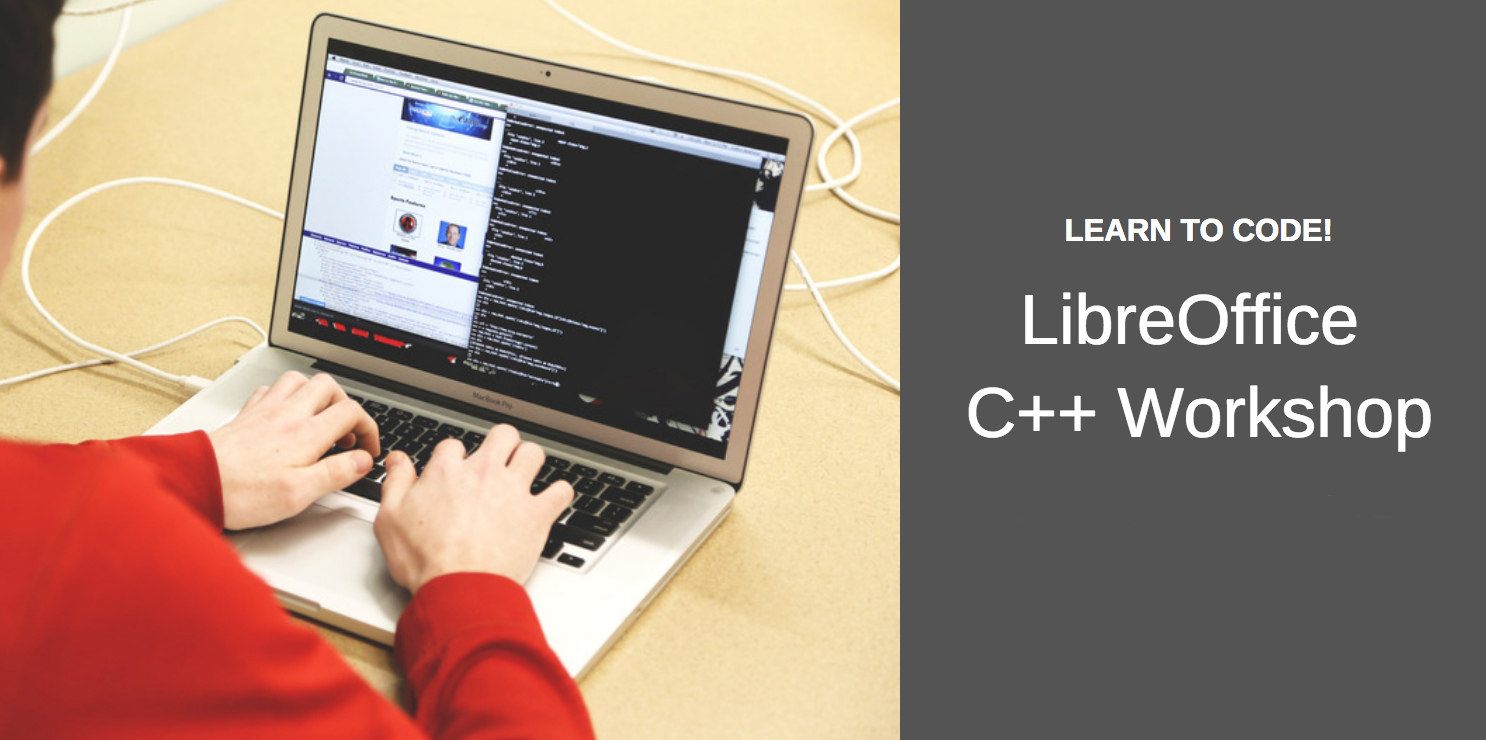
Next C++ workshop: Binary Search Trees, 23 May at 18:00 UTC

Learn C++ features with the help of LibreOffice developers! We’re running regular workshops which focus on a specific topic, and are accompanied by a real-time IRC meeting. For the next one, the topic is Binary Search Trees. Start by watching this presentation:

Please confirm that you want to play a YouTube video. By accepting, you will be accessing content from YouTube, a service provided by an external third party.

YouTube privacy policy

If you accept this notice, your choice will be saved and the page will refresh.
And check out the suggested EasyHacks.

Then join us for a discussion via our #libreoffice-dev IRC channel. You can ask experienced LibreOffice developers questions, and learn more about the language. We look forward to meeting you!

Month of LibreOffice, May 2019 – half way through!

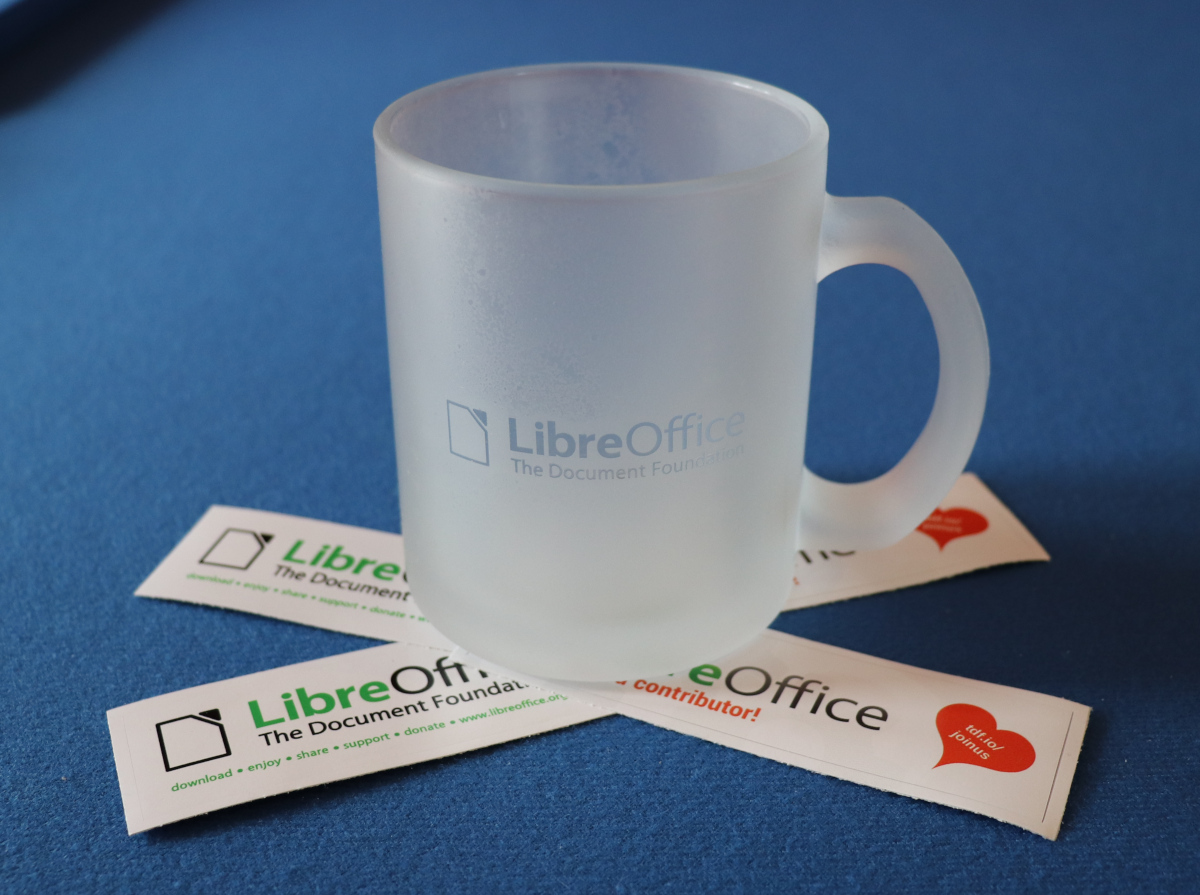
It’s the Month of LibreOffice, and we’re awarding sticker packs – and the chance to win cool mugs – to all contributors in the project! On this page we’re maintaining a list of names/usernames for people who’re helping out, and everyone there can claim a sticker pack at the end! We’ll also choose 10 people at random to get one of the mugs. So, how many packs have been awarded so far?

But there are still two weeks to go, so if your name isn’t there, check below to see how you can get involved! Many tasks only take 10 or 20 minutes, but make a big difference to the project. (And if you have already contributed this month, but your name isn’t there, email us with details and we’ll look into it.)

How to take part

There are many ways you can help out – and you don’t need to be a developer. For instance, you can be a…

  • Handy Helper, answering questions from users: over on Ask LibreOffice there are many users looking for help with the office suite. We’re keeping an eye on that site so if you give someone useful advice, you can claim your shiny stickers.
  • First Responder, helping to confirm new bug reports: go to our Bugzilla page and look for new bugs. If you can recreate one, add a comment like “CONFIRMED on Windows 10 and LibreOffice 6.2.3”. (Make sure you’re using the latest version of LibreOffice!)
  • Drum Beater, spreading the word: tell everyone about LibreOffice on Twitter or Mastodon! Just say why you love it or what you’re using it for, add the #libreoffice hashtag, and at the end of the month you can claim a sticker. (We have a maximum of 100 stickers for this category, in case the whole internet starts tweeting/tooting!)
  • Globetrotter, translating the user interface: LibreOffice is available in a wide range of languages, but its interface translations need to be kept up-to-date. Or maybe you want to translate the suite to a whole new language? Get involved here.
  • Code Cruncher, contributing source code: The codebase is big, but there are lots of places to get involved with small jobs. See our Developers page on the website and this page on the wiki to get started. Once you’ve submitted a patch, if it gets merged we’ll send you a sticker!
  • Docs Doctor, writing documentation: Another way to earn a badge is to help the LibreOffice documentation team. Whether you want to update the online help or add chapters to the handbooks, here’s where to start.

So dive in, get involved and help make LibreOffice better for millions of people around the world – and enjoy your sticker as thanks from us. We’ll be posting regular updates on this blog and our Mastodon and Twitter accounts over the next four weeks!

Annual Report 2018: The Document Foundation

Every year, The Document Foundation produces an Annual Report, detailing its activities in the projects and community. We’ll be posting parts of it here on the blog, while we prepare a final printed version…

Election of TDF Chairperson and Deputy

In February, the Board of Directors of The Document Foundation – during its first meeting of the new term – confirmed Marina Latini in the role of Chairwoman, and appointed Björn Michaelsen to the role of Deputy Chairman.

Marina said: “Our project is growing fast with contributors from several countries, and we need to focus much more on lowering the barriers to being a really welcoming community. I would like our community to become as inclusive as possible, and never leave out those who, just in appearance, look different to us. Openness is a state of mind.”

Björn, who had previously served as a Deputy on the Board, added: “I am encouraged to see strong contributors to the project as new candidates in this election, and hope to share the duty of serving with them, together providing a strong and reasonable voice of independent and unaffiliated input in the Board. Ultimately, I hope after this one last term I can confidently leave TDF’s Board with many new diverse and independent voices in all parts of the project and foundation, and retire back to spending my contributions more on – for instance – the source code again.”

New Advisory Board member

In May, TDF announced that BPM-Conseil, a company focused on open source business intelligence and based in Lyon (France), had joined the project’s Advisory Board. BPM-Conseil will develop the integration of LibreOffice with its business intelligence solutions Aklabox and Vanilla, and also create business intelligence-related extensions for LibreOffice.

BPM-Conseil is focused both on development of open source business intelligence solutions and on the related consultancy and integration activities. The company has a large roster of clients in France, such as the Ministries of Environment, Energy and Sea, Lyon Metropole, Nimes Metropole and City, La Rochelle Agglomeration, Haute and Basse Normandie, the Aveyron Department, and the University of Corsica.

Tenders

In 2017, TDF launched four tenders aimed at sharing knowledge about improving LibreOffice in several strategic areas, where the tasks are beyond the capabilities of independent volunteer developers. In 2018, companies selected to implement two of the tenders reported back on their work.

Firstly, Collabora was selected for the tender “improve image handling in LibreOffice (#201705-01)”. A new image life-cycle was developed, with simpler memory management for handling images and new swapping strategy. The results were incorporated into the LibreOffice 6.1 release – and a more detailed technical description of the work is on the blog, in order to share knowledge and experience from this project with the developer community and the general public.

The second tender, “implement HSQLDB binary format import in LibreOffice (#201705-03)”, was also assigned to Collabora and implemented by Tamás Bunth. He developed a mechanism to import database files with high fidelity from the HSQLDB binary file format, used by many existing ODB files, by reading the Java serialization code, and writing a filter to import all data into LibreOffice Base. The objective was to remove the legacy Java/HSQLDB database and to simplify the move to Firebird. More details are provided here.

Highlights of activities

Throughout the year, TDF supported initiatives and campaigns from other organisations that promote free and open source software. For instance, in February, we joined “I love Free Software Day”, a campaign by the Free Software Foundation Europe (FSFE). As they explain: “We should remember the power of a simple ‘thank you’ to motivate Free Software contributors in their important work for society. And the 14th of February is the ideal day to do that.”
March 27 was “Document Freedom Day 2018”, a campaign about open standards and document formats, aimed at non-technical people. The goal is to make regular users more aware of interoperability issues, and the importance of storing documents (and indeed any kind of data) in open and standardised formats. This helps users to avoid vendor lock-in, giving them more freedom to use the software they want – and this is also important for governments, companies and organisations.

In September, we joined the “International Day against DRM”. DRM, or Digital Rights Management, is a set of access control technologies for restricting the use of proprietary hardware and copyrighted works, by controlling the use, modification, and distribution of copyrighted works. Instead of educating users, companies prefer to restrict them from exercising their legal rights under the copyright law.

DRM is an epidemic spreading across the web, infiltrating homes, classrooms, workplaces, and just about everywhere else users can go. Tools, technologies, books, games, movies, and music are coming to us locked down with DRM, whether they are streaming or claim to be locally hosted. TDF supports the International Day Against DRM as part of its daily fight to make content sharing available to all individuals, and to educate them to adopt open standards to foster innovation.

Document Liberation Project

TDF also hosts and supports the Document Liberation Project (DLP), a sister project of LibreOffice, which fosters the development of software libraries that can import and export data in many different file formats. DLP libraries are used by many free and open source software projects, such as Inkscape, Scribus and LibreOffice, and help users to get control of their data – especially from old and proprietary file formats. In 2018, new libraries were added to the DLP project and the community produced videos encouraging people to contribute. Learn more about DLP in this quick video:

Please confirm that you want to play a YouTube video. By accepting, you will be accessing content from YouTube, a service provided by an external third party.

YouTube privacy policy

If you accept this notice, your choice will be saved and the page will refresh.
This was all possible thanks to your generous donations – support us today!