
The LibreOffice Conference 2019 begins! Before the main talks start tomorrow, we’re having a community meeting to talk about translating LibreOffice and spreading the word. If you’re near Almeria, Spain, come and join us…
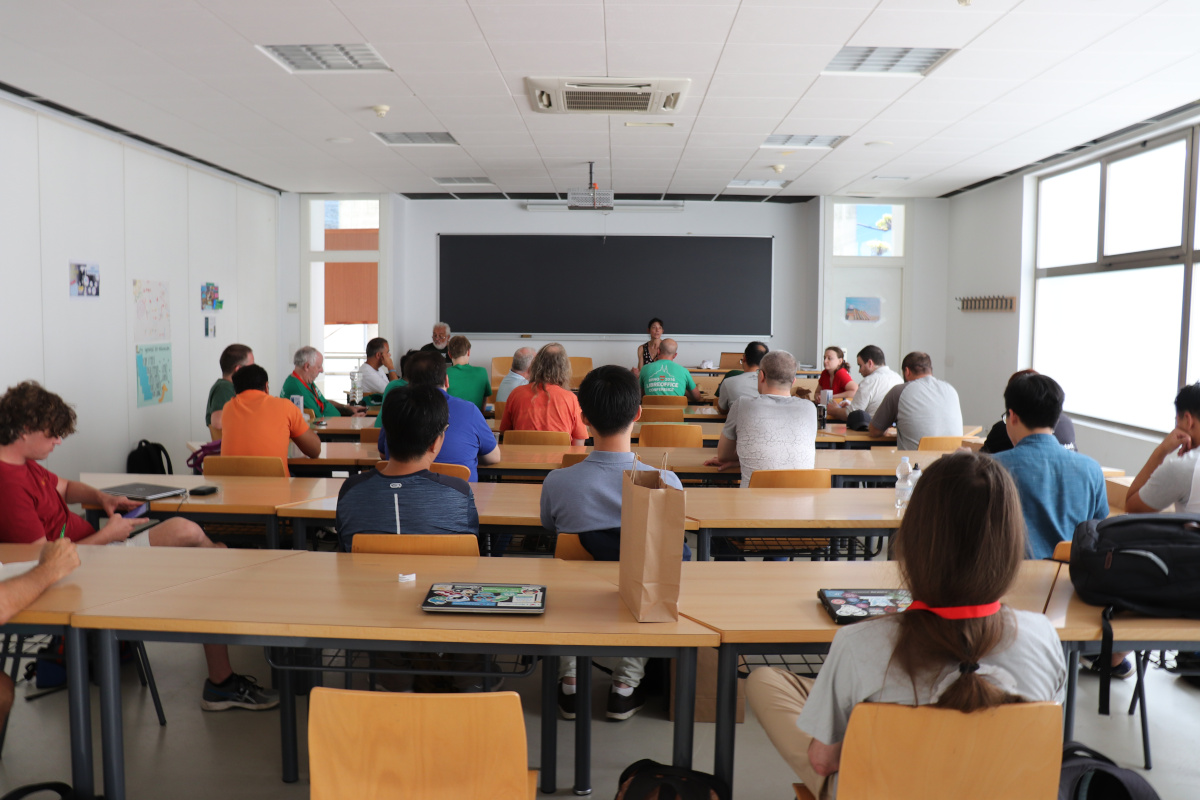
The LibreOffice Conference 2019 begins! Before the main talks start tomorrow, we’re having a community meeting to talk about translating LibreOffice and spreading the word. If you’re near Almeria, Spain, come and join us…
 Power users often implement macros in their documents, and LibreOffice’s volunteer contributors are typically power users, so it makes sense to ensure the tools they need are in excellent shape. We are excited to announce the creation of a dedicated team for macro improvements in the LibreOffice contributor community.
The team composition is currently as follows:
To make sure the macro team can work efficiently, the LibreOffice quality assurance team has cleaned up the collection of macro issues. The QA team will offer help to all macro team members to the best of its ability.
Examples of tasks the team members have worked on:
If you are interested in contributing to the macro team (development, testing or documentation), please send an email to ilmari.lauhakangas@libreoffice.org. Thanks!
 Berlin, September 5, 2019 – The Document Foundation announces LibreOffice 6.3.1, the first minor release of the LibreOffice 6.3 family, and LibreOffice 6.2.7, the seventh minor release of the LibreOffice 6.2 family, with many bug fixes and a key security improvement.
LibreOffice 6.3.1 and LibreOffice 6.2.7 consider the presence of any call to a script-like thing as equally hazardous as a macro, and present the user a warning dialog about the document trying to execute a script. Users should never allow the execution of macros and scripts embedded in documents, unless they are perfectly aware of the potential risks associated with the action.
LibreOffice 6.3.1 “fresh” is targeted at technology enthusiasts and power users, while LibreOffice 6.2.7 “still” is targeted at users in production environments and individual users who prefer robustness over advanced features. All LibreOffice users should update immediately their current version.
LibreOffice’s individual users are helped by a global community of volunteers: https://www.libreoffice.org/get-help/community-support/. On the website and the wiki there are guides, manuals, tutorials and HowTos. Donations help us to make all of these resources available.
LibreOffice users are invited to join the community at https://ask.libreoffice.org, where they can get and provide user-to-user support. While TDF can not provide commercial level support, there are guides, manuals, tutorials and HowTos on the website and the wiki. Your donations help us make these available.
LibreOffice 6.3.1’s change log pages are available on TDF’s wiki: https://wiki.documentfoundation.org/Releases/6.3.1/RC1 (changed in RC1) and https://wiki.documentfoundation.org/Releases/6.3.1/RC2 (changed in RC2). LibreOffice 6.2.7’s change log page is also available on TDF’s wiki: https://wiki.documentfoundation.org/Releases/6.2.7/RC1 (changed in RC1).
LibreOffice in business
For enterprise class deployments, TDF strongly recommend sourcing LibreOffice from one of the ecosystem partners to get long-term supported releases, dedicated assistance, custom new features and bug fixes, and other benefits. Also, the work done by ecosystem partners flows back into the LibreOffice project, benefiting everyone.
Also, support for migrations and trainings should be sourced from certified professionals who provide value-added services which extend the reach of the community to the corporate world and offer CIOs and IT managers a solution in line with proprietary offerings.
In fact, LibreOffice – thanks to its mature codebase, rich feature set, strong support for open standards, excellent compatibility and long-term support options from certified partners – represents the ideal solution for businesses that want to regain control of their data and free themselves from vendor lock-in.
Availability of the new versions of LibreOffice
LibreOffice 6.3.1 and LibreOffice 6.2.7 are immediately available from the following link: https://www.libreoffice.org/download/. Minimum requirements are specified on the download page. Builds of the latest LibreOffice Online source code are available as Docker images: https://hub.docker.com/r/libreoffice/online/.
LibreOffice Online is fundamentally a server-based platform, and should be installed and configured by adding cloud storage and an SSL certificate. It might be considered an enabling technology for the cloud services offered by ISPs or the private cloud of enterprises and large organizations.
LibreOffice users, free software advocates and community members can support The Document Foundation with a donation at https://www.libreoffice.org/donate.
All versions of LibreOffice are built with document conversion libraries from the Document Liberation Project: https://www.documentliberation.org.
 Good news for all users of high quality presentation software: a dedicated team has been formed within the LibreOffice community with the aim of further improving PPT/PPTX (PowerPoint) file format support. The initial developer members are:
Team members will be able to support each other through code reviews and advice. We will document the progress here on the TDF blog.
LibreOffice’s Quality Assurance team is currently going through the collections of PPT and PPTX issues and carefully re-analysing and prioritising them. The QA team will continue to provide support in the form of patch testing and verification.
Examples of tasks that the team members have worked on:
Everyone is invited to participate, either in development or testing. If you are interested in joining, please send an email to ilmari.lauhakangas@libreoffice.org. Or if you have a PPT(X) file that doesn’t look quite right in LibreOffice, help us to improve compatibility – attach it to a bug report so that our QA team can investigate!
(PPTX icon: ncrow on DeviantArt)
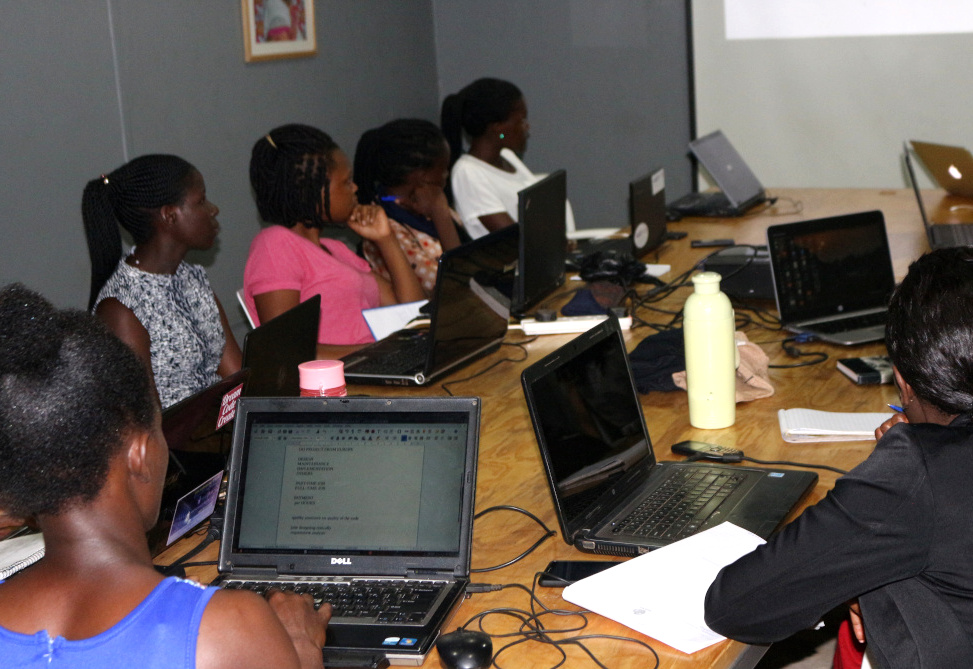
Today we’re talking to Emmanuel Semutenga, who helps young people in Uganda to develop key IT skills. Of course, LibreOffice plays a role in this…
I’m currently a back-end web developer by profession. I’m also a Project Manager for the project entitled “ICT for youth employability” at Kampabits, where my main work is on curriculum development. I live in Kampala, Uganda, Rubaga Division.
My hobbies and interests include blogging, cycling with Ultimate Cycling Uganda, dancing, making new friends, movies and hackathons.
Uganda currently has the highest youth population between 17 to 24 years – that makes 80 percent of the population, and most of these young people lack the practical skills to enable them to get employed. Hence the intervention of Kampabits.
Kampabits is a youth-based organization founded in 2010 that uses ICT multimedia creatively to improve the lives of less privileged youth from the non-formal settlements. We also create safe spaces for persons with disabilities to freely express themselves while learning these in-demand skills.
We have helped 350 young people since our inception, with skills in computer literacy, graphic design and coding skills (front-end, back-end and full-stack developers) during our six month trainings. Kampabits later places these young people in a three month internship with their partner companies.
Kampabits also runs a “Women in Tech” project that trains 15 women in advanced coding skills, to make them employable, in a period of six months. This project focuses on women who have prior knowledge of computer basics. They are later placed in outsourcing jobs in companies like Tunga.
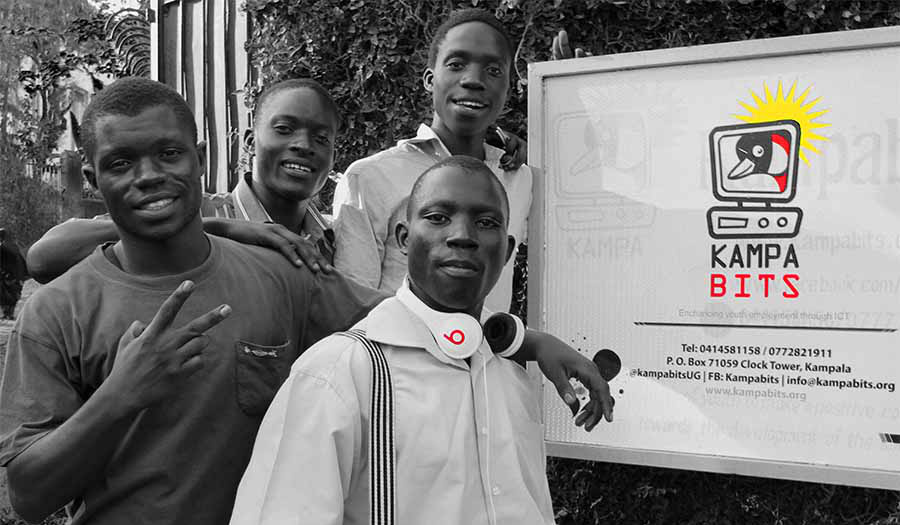
During the whole scope of the training, especially our computer literacy sessions, presentations and curriculum development, we use LibreOffice (Writer, Impress and Calc) to train the young people in word processing, presentations and business book keeping.
This is done to remove costs the involved in acquiring proprietary software, and also show the them that free alternatives will deliver the same quality of work as proprietary software. We use Ubuntu, Lubuntu and Linux Mint as our main operating systems – and they always come with LibreOffice preinstalled.
Other free software we use includes: Gimp as an alternative for Photoshop, Inkscape in place of Illustrator, OBS Studio for recording screencasts, Visual Studio Code as our main code text editor, and Scratch to introduce youth to computer programming
We also use both the Raspberry Pi 2 and 3 models to compliment our computer lab.
Using free software alternatives can help to divert funds to the more pressing needs of organizations – like acquiring more computers to cater for more beneficiaries. So I would advice other organizations to try them out in phases, until they feel comfortable enough to overhaul the whole structure.
A huge thanks to Emmanuel for his work, and it’s great to see free and open source software making a big change all across the planet. Everyone is welcome to join the LibreOffice project, regardless of their location or language, and help us to spread the word and break down digital divides!
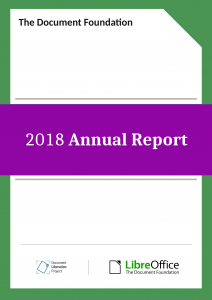 The Annual Report of The Document Foundation for the year 2018 is now available in PDF format from TDF Nextcloud in two different versions: low resolution (6.4MB) and high resolution (53.2MB). The annual report is based on the German version presented to the authorities in April.
The 52 page document has been entirely created with free open source software: written contents have obviously been developed with LibreOffice Writer (desktop) and collaboratively modified with LibreOffice Writer (online), charts have been created with LibreOffice Calc and prepared for publishing with LibreOffice Draw, drawings and tables have been developed or modified (from legacy PDF originals) with LibreOffice Draw, images have been prepared for publishing with GIMP, and the layout has been created with Scribus based on the existing templates.
All pictures are licensed under the Creative Commons Attribution-Share Alike 4.0 License, courtesy of TDF Members from Albania, Brasil, Germany, India, Indonesia, Italy, Japan, Nepal, Taiwan and Turkey. Stock photos are CC0 by Pixabay.
Marina Latini, Chairwoman of TDF Board of Directors, has written in the welcome address:
After eight full years, the challenge is to further grow the project, by leveraging the presence of active volunteers, enthusiastic supporters and happy users in many geographies. During the last couple of years, a growing number of events has been organized by native language communities around the world, with significant growth in Asia.
What we have achieved so far goes beyond the most optimistic forecasts of the project’s founders back in 2010, thanks to the commitment of the large group of people who manage the foundation and take care of related activities, and the volunteer contributions of organizations and individuals in every continent.
Of course, what we are now would not be possible without the generosity of thousand of donors and the valued members of the Advisory Board who support the growth of LibreOffice, the Document Liberation Project and the ecosystem around them.
Today, LibreOffice is the only suite for personal productivity with the ambition of providing desktop and cloud users with the same seamless experience, based on a solid set of features. Mobile apps are under development, to further extend the reach.
This Annual Report of The Document Foundation is a showcase of all community activities which support the growth of LibreOffice and the Document Liberation Project.
We are getting closer to our 10th anniversary. I look forward to another great year for our global community of friends, working united on the goal of creating the best free office software ever. Thank you very much to all of you who made this dream come true!