8 weeks, 9.4 million downloads

The announcement of LibreOffice 26.8 had a noticeable positive effect on download figures, which have since exceeded one million per week, totalling 9.4 million downloads over eight weeks, from 24 August to 18 October.

To these must be added updates for the Windows version, which are counted separately and are not included in the download figures, and downloads of older versions, which continue to be fairly high.
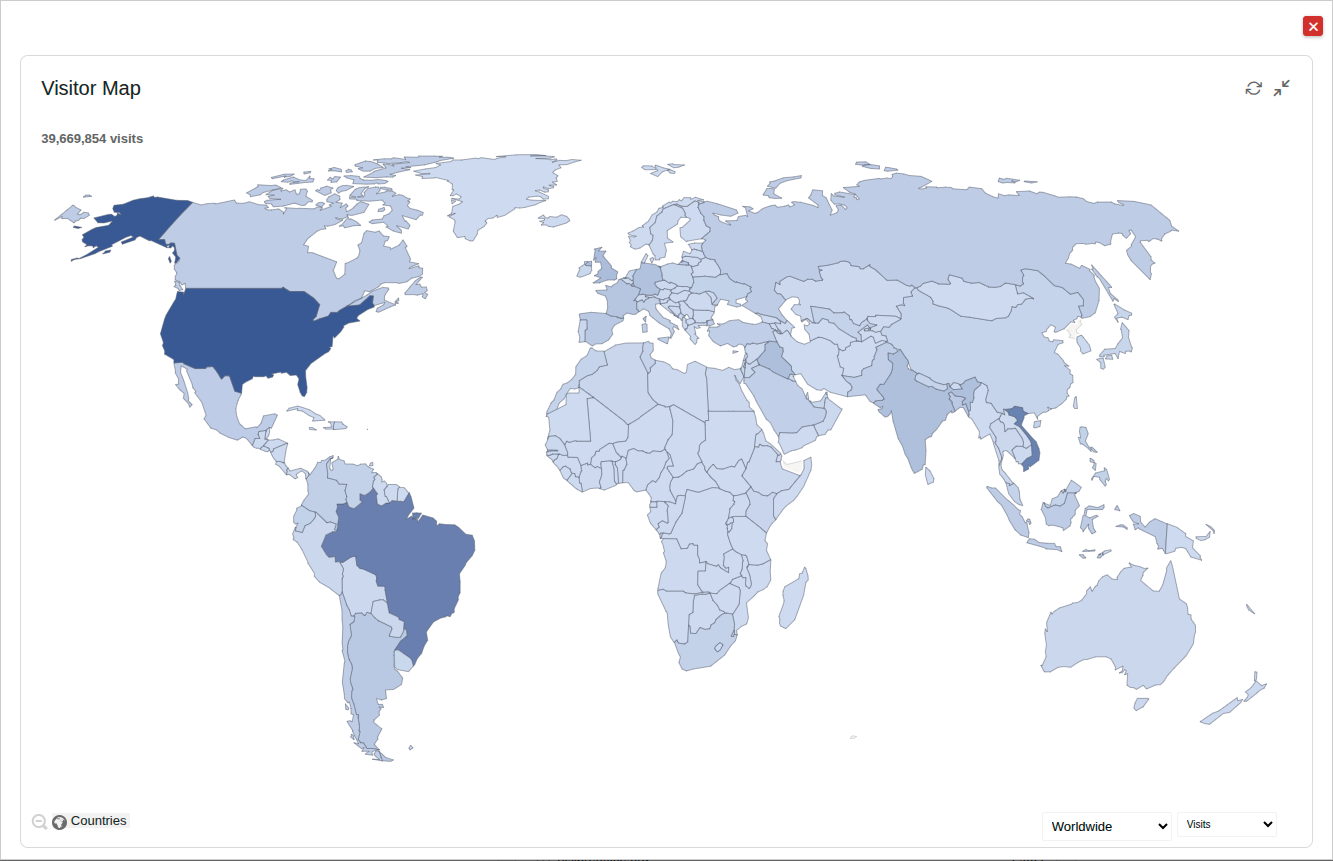
The three maps, generated automatically by Matomo, show, in order, visits to the downloads site (11,426,169), visits to the updates site (90,042,601), and visits to the site for older versions (39,669,854).
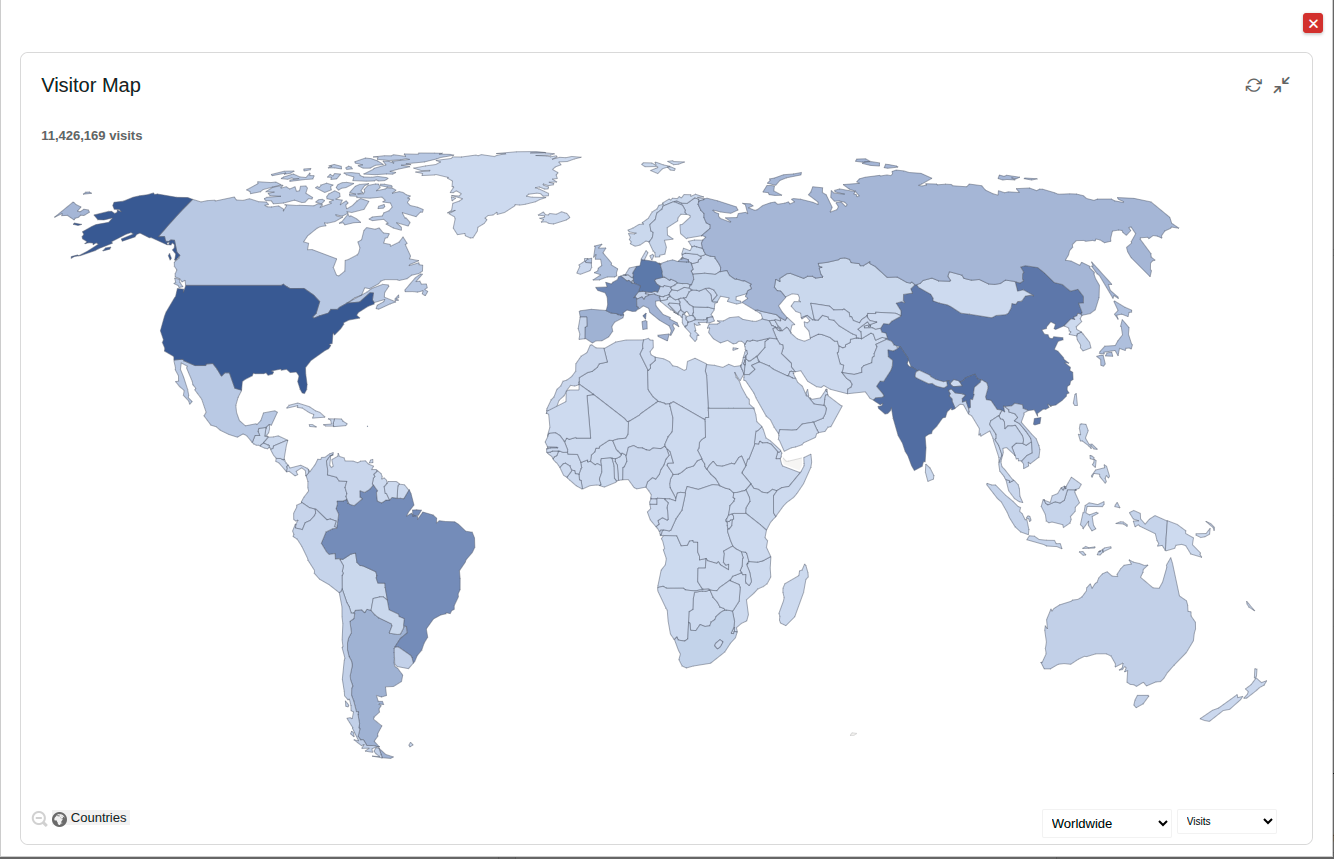
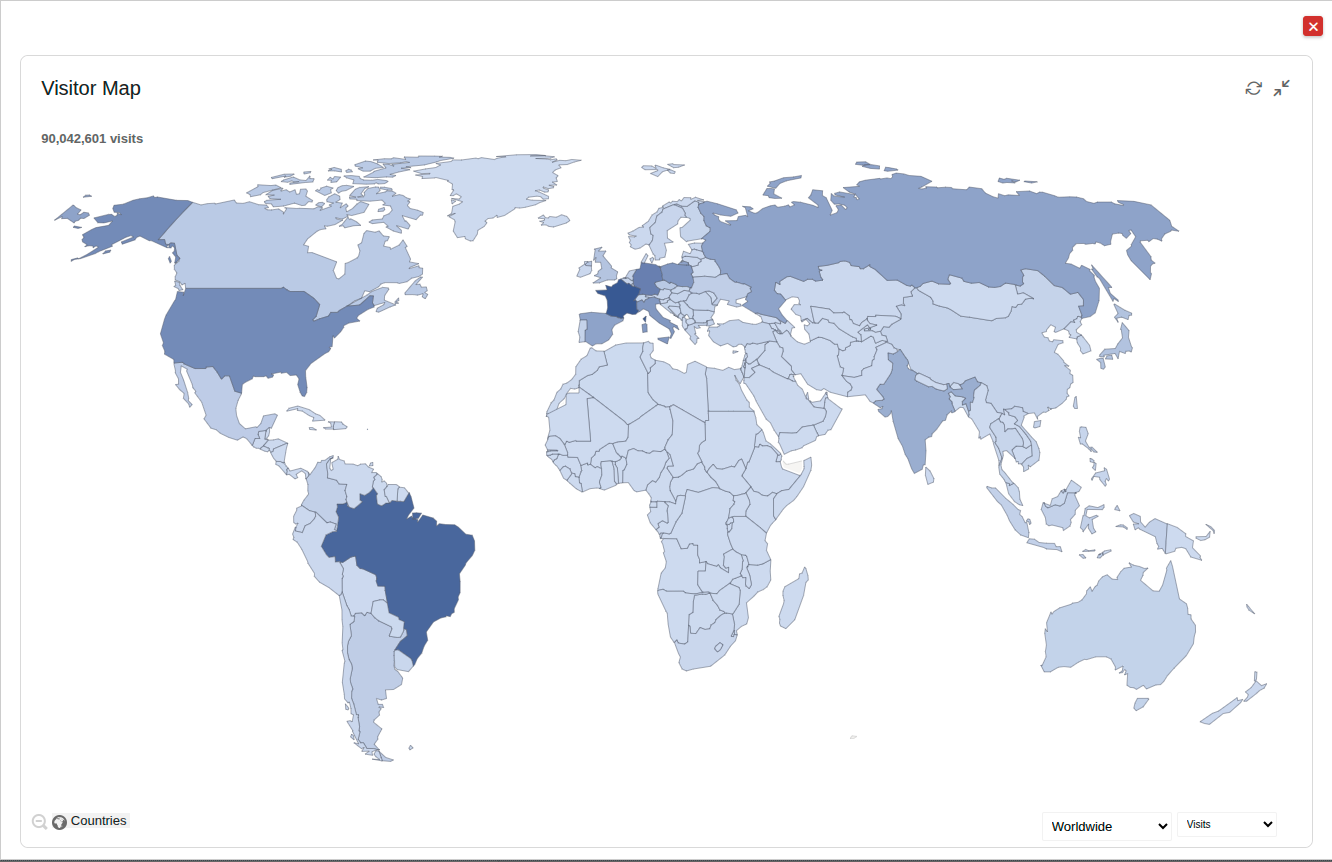
Anyone curious to know the origin of the visits (which is obviously higher than the number of downloads) can download a ZIP file containing the three CSV files. These figures are reliable but not precise to the nearest unit, as a visit does not necessarily result in a download, particularly in the case of updates and older versions.

Prior to the announcement of LibreOffice 26.8, the number of downloads was less than one million per week, although it was fairly close to that figure. In 2026, the number of downloads has grown dramatically compared to 2025, to the extent that the total for the year has already been exceeded, with 10 weeks still to go.

What are the reasons for this growth? It is difficult to explain based on the data, given that downloads are free and completely anonymous.

We like to think that the consistency of the LibreOffice project – which has been championing the concept of digital sovereignty and standard document formats for years – and the robustness of the software, which has never sought to be a clone of the most widely used office suite on the market but has always strived to forge its own path, are two very important factors that, in the long term, represent a significant advantage over all other products.

There is still a long way to go, however. Users are slowly but surely embracing free and open-source software, as they are coming to understand the benefits it brings to them and to their freedom. We are ready to welcome them.

LibreOffice comes to the rescue of Microsoft Publisher users

Yesterday, MS Publisher users joined the millions of users who have been abandoned – or forced into a completely unjustified update – by Microsoft over the years, alongside those using Office LTSC 2021 and Office 2021. Consequently, anyone who has purchased a Microsoft 365 subscription will no longer be able to open their PUB files.

For millions of schools, parishes, associations, small businesses and local authorities, this is a major problem. For over thirty years, they have been producing newsletters, leaflets, programmes, posters and calendars using Publisher. From today, these documents are in a proprietary format, the only fully compatible application for which has been abandoned by the very company that created it.

What Microsoft suggests

Microsoft suggests converting PUB files to PDF format for viewing and printing, and to DOCX format for editing. In reality, neither of these represents a solution to the problem.

PDF preserves the layout but is not designed to be edited. DOCX can be edited, but Word is not a page-layout tool, so complex files lose their formatting during conversion.

In both cases, users are asked to transfer content from one vendor-controlled proprietary format to another vendor-controlled proprietary format – which is, in fact, the same vendor. This is because documents are regarded as a by-product of the application, rather than as information belonging to those who created them.

For Microsoft, therefore, it is perfectly normal for access to content to disappear along with the application. This is a fact that should raise more than a few questions, but it seems to go unnoticed, to the extent that many Microsoft users claim this problem does not affect them.

The free software community has solved the problem

Publisher’s PUB format is not an open standard, so the developers working on the Document Liberation Project have reverse-engineered it and created the libmspub library, which is used by LibreOffice and Scribus to import Publisher files. This is to enable MS Publisher users to continue reading their own documents regardless of Microsoft’s decisions.

This means it is possible to open PUB files using free software and save them in the OpenDocument Format (ODF), the only standard, open format for office documents, which is not dependent on any single application or company. Alternatively, they can be opened with Scribus, which is open-source desktop publishing software, but does not use a standard document format.

LibreOffice Draw is the quickest way to open, view, edit and manage Publisher documents, and although it is not a desktop publishing application, it can be used for small multi-page documents, such as newsletters, or for single-page documents of any format.

A lesson to bear in mind

MS Publisher is not the first Microsoft application to disappear from the market, and it certainly won’t be the last. Each time, users are faced with the same question: who controls access to my documents? If the format is proprietary, the answer is: the vendor. If the format is standard and open, such as ODF, the answer is: the user.

If you are responsible for documents in a public sector organisation, a school or an association, now is the time to check whether your file format is proprietary and dependent on a single vendor’s application, so that you can plan the transition to an open standard format whilst it is still possible to open them.

The LibreOffice community is here to help you.

LibreOffice Migration Workshop in Nairobi, Kenya

LibreOffice Migration Workshop in Nairobi, Kenya

When governments, organisations and companies move to LibreOffice – as we’re seeing in Austria, Germany and other countries – they usually enlist the help of Certified Migration Professionals.

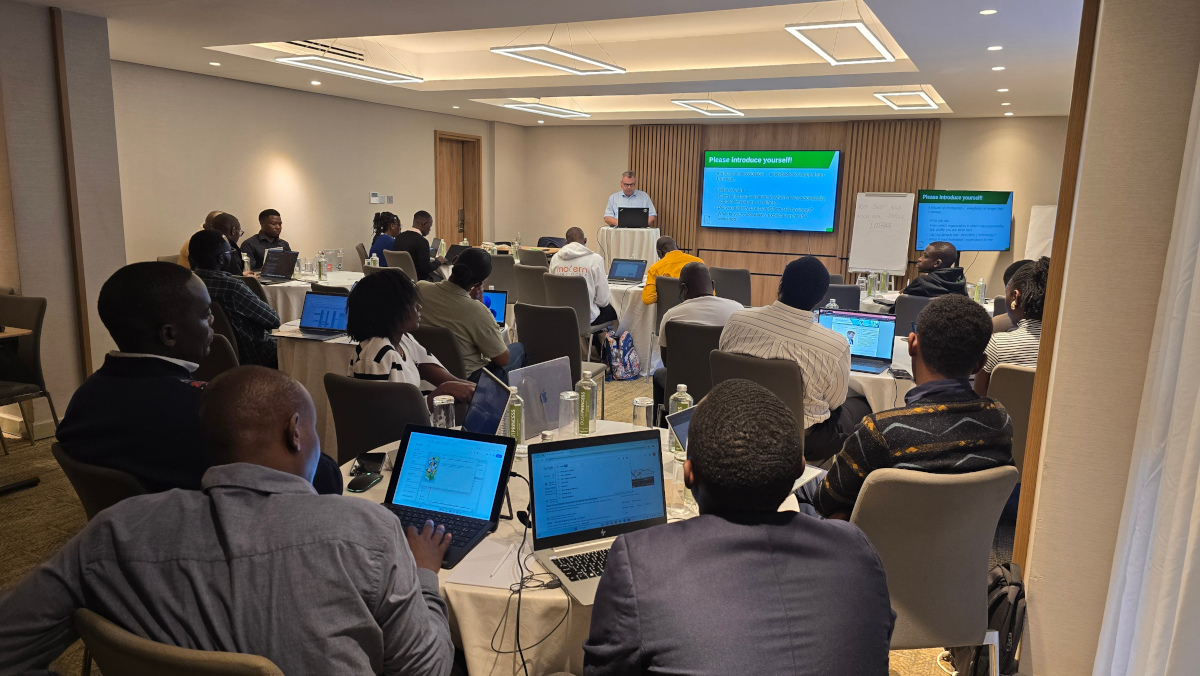
Recently in Nairobi, the capital city of Kenya, we held a LibreOffice Migration Workshop. 40 attendees registered, from the public and private sectors, and the session was conducted pro bono by Lothar Becker, co-chair of LibreOffice’s Certification Committee. The goal of the workshop was to grow and foster the LibreOffice Technology ecosystem by supporting partners and government organisations in facilitating migrations to the suite.

It took place in the conference rooms of a hotel in central Nairobi, with a great view:

LibreOffice Migration Workshop in Nairobi, Kenya

The event was hosted and funded by the Kenya branch of GIZ Germany, along with The Document Foundation, the non-profit entity behind LibreOffice. The first two days focused on LibreOffice, covering best practices for migrations to LibreOffice Technology, with the first day being more user-centric and looking at the user interface and features of the software. There was also a general introduction to TDF and open source.

Then, the second day focused more on the migration process, providing deeper insights into migration and training protocols. Other topics included digital sovereignty with the Open Document Format (ODF) and other certification processes with TDF.

LibreOffice Migration Workshop in Nairobi, Kenya

On the third day Lothar gave a talk called “Open source Community of Practice” in his capacity as OSBA board member. The talk focused on “Open Source as an Enabler of Digital Sovereignty & Innovation” with respect to DPI, Free and Open Source Software, open standards, and AI.

Special thanks to Carsten Glöckner, Amrit Labhuram, their team from GIZ Kenya for all their help and support in organising these events. Lastly, during the workshop Lothar had the opportunity to learn about the valuable work of the Telesky Foundation for digital participation of all children in Kenya from John Mbugua. Lothar handed over a book about “Ada & Zangemann” from Matthias Kirschner (Free Software Foundation Europe).

LibreOffice Migration Workshop in Nairobi, Kenya

LibreOffice Conference 2026 group photo – and final video updates

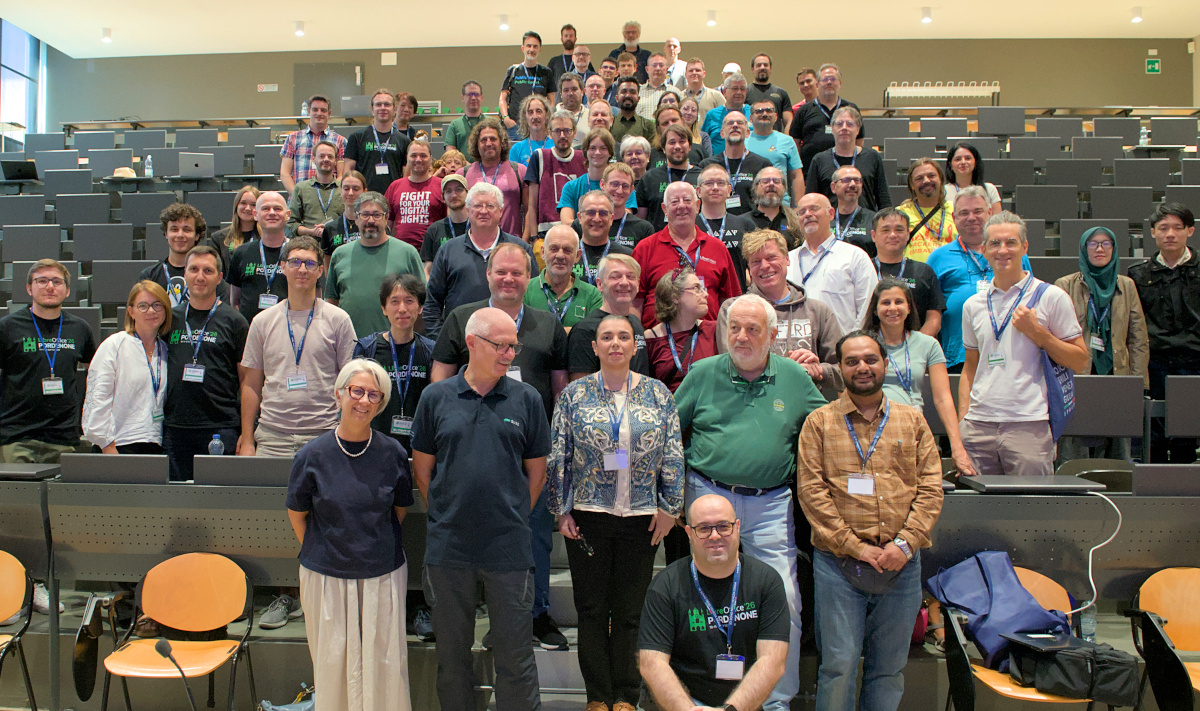
LibreOffice Conference 2026 group photo

Last month we had the LibreOffice Conference 2026 in Pordenone, northern Italy. Huge thanks to the organisers for such a great event! At lunchtime on the final day we took a group photo, which you can see above – but of course, some people had left by then, so thanks to those people as well for attending 😊

We’ve also finalised the YouTube playlist with 32 talks from the event. For a few talks which had recording issues, we don’t have videos of them, but the volunteer organisers did a great job recording the vast majority of talks.

Please confirm that you want to play a YouTube video. By accepting, you will be accessing content from YouTube, a service provided by an external third party.

YouTube privacy policy

If you accept this notice, your choice will be saved and the page will refresh.

The videos are also available on the Pordenone LUG’s PeerTube channel.

Now we’re looking ahead to the VII Latin American Congress of LibreOffice, and FOSDEM. We hope to see you there!

LibreOffice 26.8.1 is now available, at last

Unfortunately, the release of LibreOffice 26.8.1 has been a bit of a struggle, firstly due to a series of minor issues with the packaging of the Windows version, and then because of a serious malfunction in the server managing the downloads, which forced us to revert to the previous version for a few days.

Today, at last, LibreOffice 26.8.1 is available for download. All links have been checked at least three times to prevent the same problems from recurring. We would like to thank all our most loyal users – those who update LibreOffice immediately after every announcement – for their patience.

And we hope that this completely unexpected malfunction has not put any users off LibreOffice. The download link remains the same: https://www.libreoffice.org/download

State of the Project (October 2025 – September 2026)

We are releasing the State of the Project Slide Deck, which is updated quarterly and based on data extracted from the LibreOffice dashboard and the Matomo repository between 1 October 2025 and 30 September 2026.

Over the course of 12 months, 297 developers worked on the source code, making a total of 11,676 new commits (Git). Of these, 2,596 (22%) were provided by 228 volunteer developers (77%), 4,818 (41%) by 11 developers from The Document Foundation (4%), and 4,636 (37%) by 58 developers from seven ecosystem companies (19%).

The slide deck is also a tribute to the top 20 Git and Gerrit committers, the top 20 Bugzilla issue submitters, the top 20 Discourse contributors, and the top 20 Weblate translators. Thank you to all of them and to all the other contributors.

Examining donations and downloads, the trend during the first nine months of 2026 confirms the positive trend that began in early 2025. The number of donations and downloads increased significantly in August and September 2026 thanks to a number of small but important changes to the marketing strategy and donation mechanism. It is important to note that the figures refer to the number of transactions, rather than their value, which is available via the ledgers published on The Document Foundation website.

You are invited to view the slides and download the file to compare it with the previous slide decks published in January, April and July. The next slide deck will be available in January and will cover the 12 months between 1 January 2026 and 31 December 2026.

In January 2026, we started publishing these slide decks to provide a transparent overview of the project’s progress through some of the most significant development, download and donation data collected by the TDF marketing team.

Download the slide deck in English