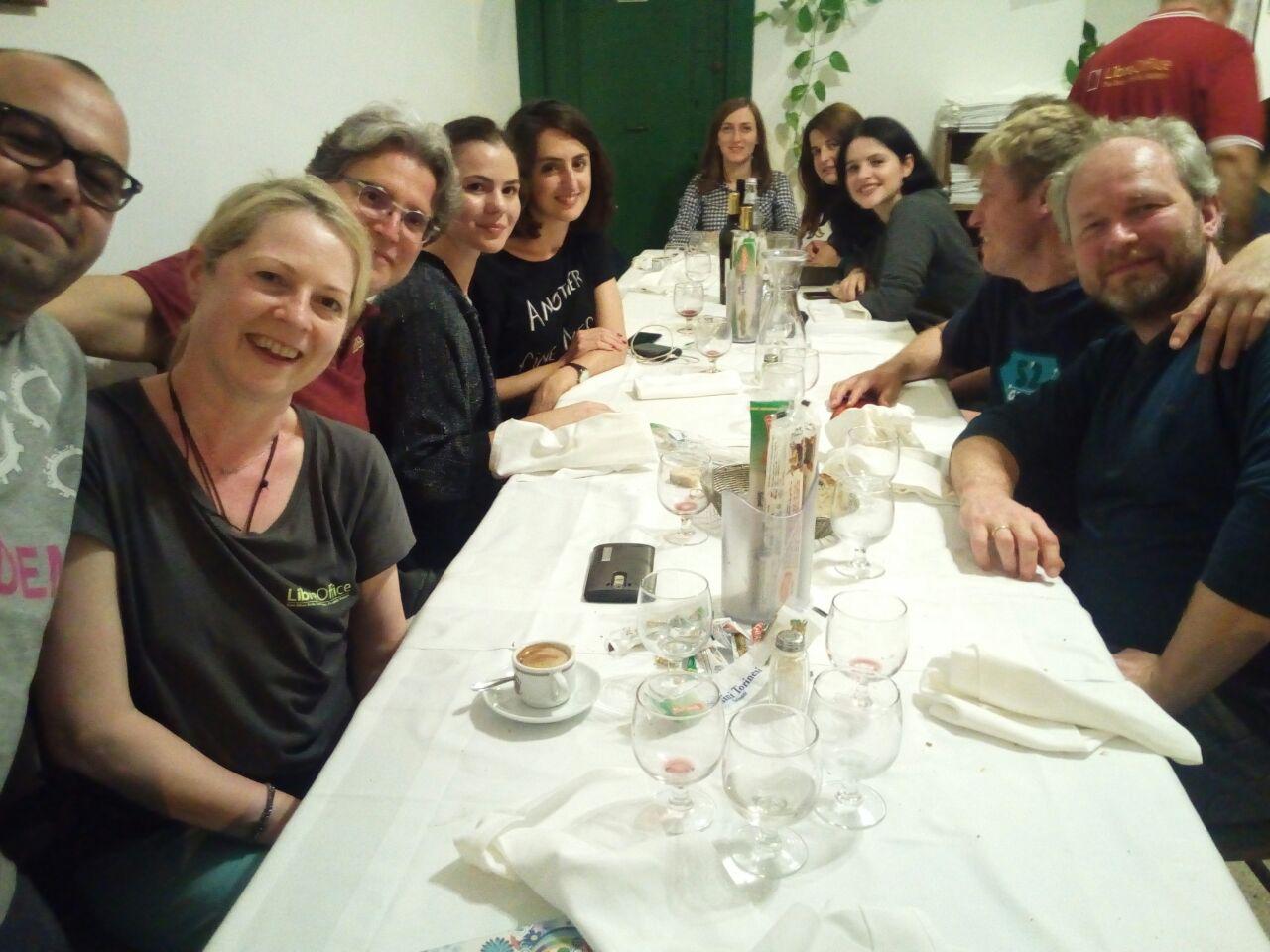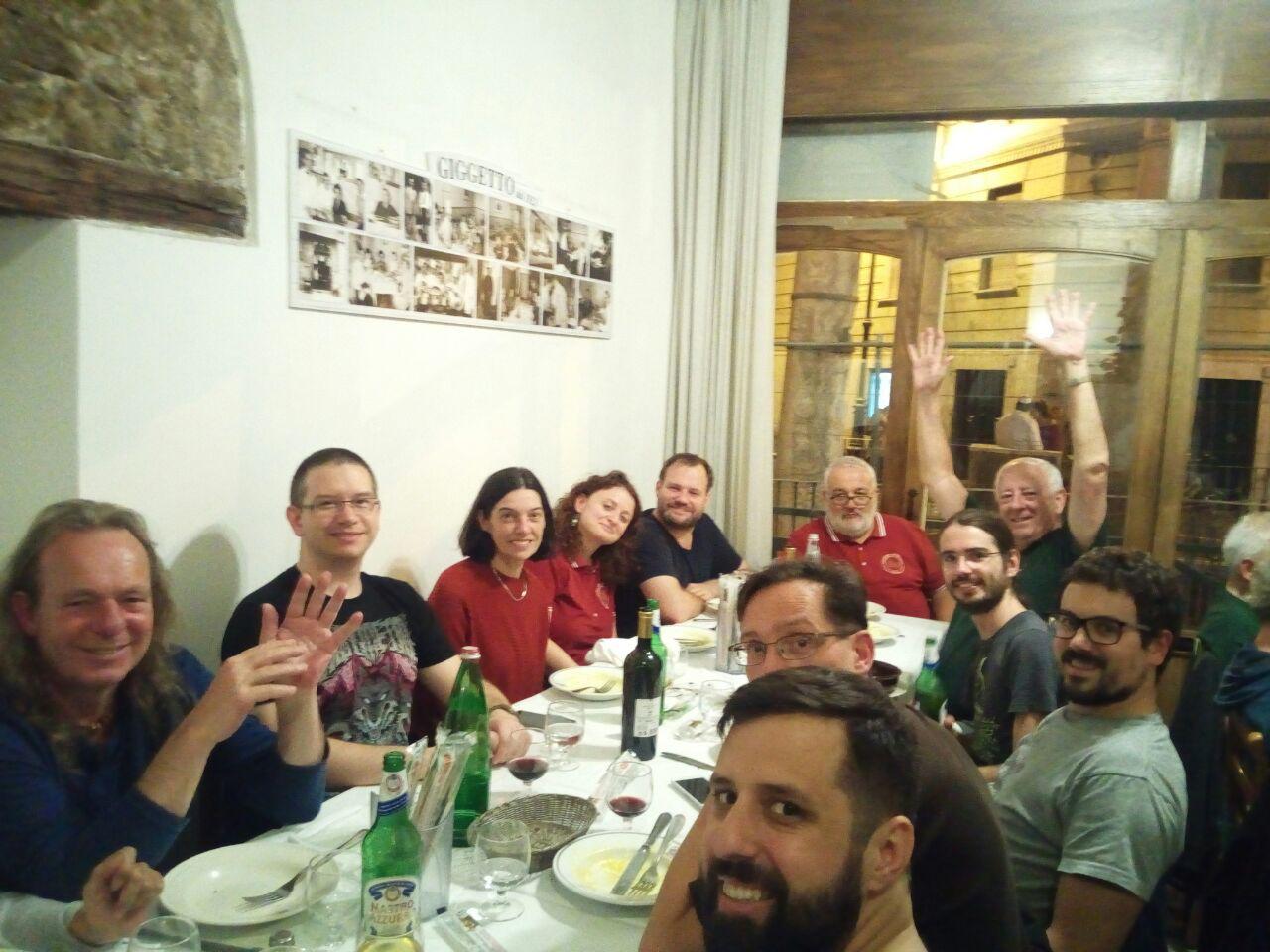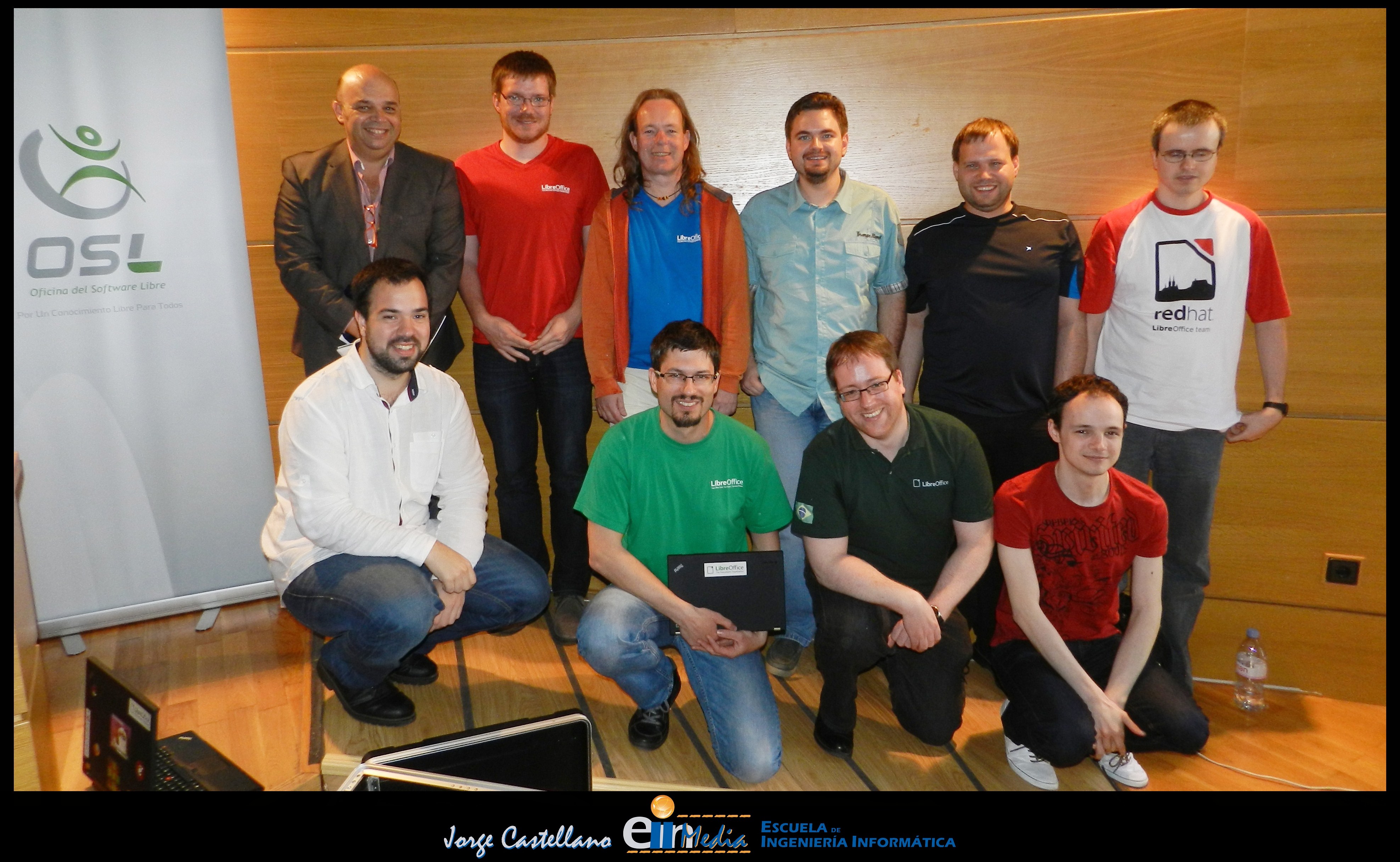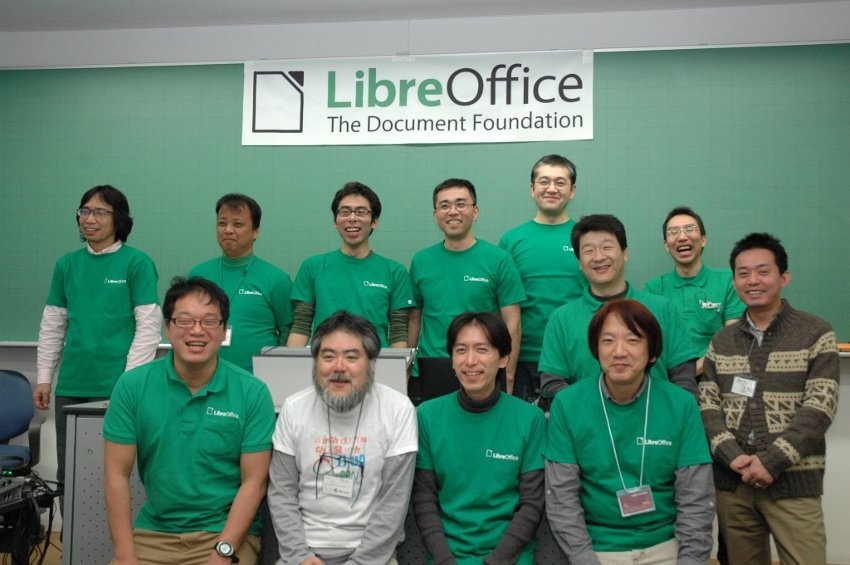
LibreOffice’s development community has been growing steadily for seven years, thanks to the great enthusiasm demonstrated by several core members. They have mentored an entirely new generation of LibreOffice developers, also thanks to Hackfests and other face-to-face meeting opportunities such as FOSDEM and the LibreOffice Conference.
After seven years is now the right time to start thinking about the new generation of Hackfests. For several reasons, their number has decreased over the last couple of years, and they have never really gone beyond European borders (even with core developers flying over the Atlantic to attract potential new developers).
Bjoern Michaelsen will be hosting a conference call to discuss HackFests “The New Generation” on Sunday, September 17, at 4:30PM CEST (Berlin time, or UTC +2). Everyone interested is warmly invited to participate, especially from LibreOffice native language communities around the world.
If you cannot connect, make your voice heard by sending a couple of ideas by email to the Projects mailing list: projects@global.libreoffice.org.
31 organisations ask to improve public procurement of software
Digital services offered and used by public administrations are the critical infrastructure of 21st-century democratic nations. To establish trustworthy systems, government agencies must ensure they have full control over systems at the core of our digital infrastructure. This is rarely the case today due to restrictive software licences.
Today, 31 organisations are publishing an open letter in which they call for lawmakers to advance legislation requiring publicly financed software developed for the public sector be made available under a Free and Open Source Software licence. The initial signatories include CCC, EDRi, Free Software Foundation Europe, KDE, Open Knowledge Foundation Germany, openSUSE, Open Source Business Alliance, Open Source Initiative, The Document Foundation, Wikimedia Deutschland, as well as several others; they ask individuals and other organisation to sign the open letter. The open letter will be sent to candidates for the German Parliament election and, during the coming months, until the 2019 EU parliament elections, to other representatives of the EU and EU member states.
“Because the source code of proprietary software is often a business secret, it radically increases the difficulty of discovering both accidental and intentional security flaws in critical software. Reverse engineering proprietary software to improve or strengthen it is an absolute necessity in today’s environment, but this basic technical requirement is unlawful in many circumstances and jurisdictions. With critical infrastructure such as hospitals, automobile factories, and freight shippers having all been brought offline this year due to flaws concealed within proprietary software, unauditable code is a liability that states can no longer subsidize with special legal privileges without incurring a cost denominated in lives.
Right now, the blueprints for much of our most critical public infrastructure are simply unavailable to the public. By aligning public funding with a Free Software requirement — “Free” referring to public code availability, not cost — we can find and fix flaws before they are used to turn the lights out in the next hospital.” says Edward Snowden, President of the Freedom of the Press Foundation about the “Public Money Public Code” campaign launch.
Public institutions spend millions of euros each year on the development of new software tailored to their needs. The procurement choices of the public sector play a significant role in determining which companies are allowed to compete and what software is supported with tax payers’ money. Public administrations on all levels frequently have problems sharing code with each other, even if they funded its complete development. Furthermore, without the option for independent third parties to run audits or other security checks on the code, sensible citizen data is at risk.
“We need software that fosters the sharing of good ideas and solutions. Only like this will we be able to improve digital services for people all over Europe. We need software that guarantees freedom of choice, access, and competition. We need software that helps public administrations regain full control of their critical digital infrastructure, allowing them to become and remain independent from a handful of companies,” says Matthias Kirschner, President of the Free Software Foundation Europe.
That is why the signatories call on representatives all around Europe to modernise their digital infrastructure to allow other public administrations, companies, or individuals to freely use, study, share and improve applications developed with public money. Thereby providing safeguards for the public administration against being locked in to services from specific companies that use restrictive licences to hinder competition, and ensuring that the source code is accessible so that back doors and security holes can be fixed without depending on only one service provider.
“Public bodies are financed through taxes. They should spend funds responsibly and in the most efficient way possible. If it is public money, it should be public code as well!”, says Kirschner.
Please confirm that you want to play a YouTube video. By accepting, you will be accessing content from YouTube, a service provided by an external third party.
As Tommy kindly mentioned on the QA mailing list, this week the LibreOffice project has surpassed the 40,000 resolved bugs milestone – a huge achievement demonstrating the enormous amount of effort the community puts into software quality. If we take a look at the numbers from August 2016 (the month we started to collect data from Bugzilla) up to now, 7,143 bugs have been closed during this year, with an average of 133 bugs closed each week.
Let’s see some charts for the mentioned timeframe.
Number of bugs closed each weekAccumulative number of bugs closedStatuses of the bugs closed
Get Involved!
So, you’ve seen what the QA team is doing across the LibreOffice project – why not get involved and help out? Even if you only have half an hour of spare time each week, by confirming bugs (and fixes) you can make LibreOffice better for millions of people around the world. And in addition, you build up valuable experience working with a large project and open source community – which could be very useful for a future career! Discover more about the QA team in our video interview with QA engineer Xisco Fauli.
(Notes about this blog post: raw data can be checked here. For more stats, visit the stats page in the QA wiki.)
I have just visited Taiwan to attend COSCUP, meet representatives of the Taiwanese government and the local community, and run a certification session. Generally speaking, it was a very positive trip, because I was able to get a grasp of the activities at every level. Taiwan is definitely one of the strongholds of The Document Foundation.
COSCUP is the annual conference held by the Taiwanese Open source community since 2006. This year, the event has returned to its original location at the National Taiwan University on August 5/6, with a number of community managed tracks. ODF and LibreOffice were featured during the first day, when I was able to present about the advantages of ODF over OOXML to a large audience of Taiwanese people – mostly young students – who asked several questions. Taiwan is one of the countries moving to ODF, so the topic is rather hot.
The meeting with representatives of the Taiwanese government, led by Digital Minister Audrey Tang, was organized on Monday, August 7, in the early afternoon. During the meeting, we discussed the situation of the migrations to ODF in Europe, together with the opportunities and the challenges faced by every government. I learned about the digital strategy of the Taiwanese government, and about the investments they are doing to introduce open source software to the next generations of citizens. Digital Minister Audrey Tang asked about the evolution of LibreOffice in the cloud.
The meeting with the Taiwanese LibreOffice community spanned over a couple of events: a dinner on Saturday night, during which I had the opportunity to taste some real Chinese and Taiwanese dishes (which are rather different from their European equivalents), and a meetup on Monday night, during which I could talk about ODF vs OOXML, to provide some competitive marketing background on the topic. Moving from OOXML to ODF is not easy, not even in countries where the decision is backed by the government like Taiwan. It is therefore important that all community members know the differences between the two document formats and the advantages of ODF in term of interoperability and costs over OOXML.
I would like to take the opportunity of thanking LibreOffice Taiwanese community for the organization of my presence in the island, and congratulate the Taiwanese government for their comprehensive digital strategy to support not only open source software and open standards but also the education of a new generation of digital citizens.
Starting from July, the TDF team has increased by one unit with the arrival of Teodor Mircea Ionita, aka Shinnok, in the role of Development Mentor.
Teodor has a degree in Computer Science from the University of Iasi in Romania, his native country and city, where he is still living.
We asked Teodor a couple of questions in order to introduce him to the LibreOffice community.
How would you describe yourself?
I’m a passionate open source advocate and developer, Unix head and occasionally sysadmin. I’m also deeply interested and involved in systems, network and information security as an independent security researcher and aficionado.
On a personal note, I like to travel a lot, enjoy swimming and sun bathing, exchanging good reads and good movies (who doesn’t like them?), as well as interacting with peeps of various trades and life experiences and learning from real people, instead of avatars.
Can you outline your work experience?
My experience in the field spans across 10 years, casting a wide range of interest in programming and scripting languages, operating systems, network and web technologies, with a rather strong focus on systems, network and application development on Unix flavours and cross-platform technologies.
I’ve been venturing with many more technologies throughout my career path, such as web development, system administration and some electrical engineering. Suffice it to say that I cast a wide and evolving net of interests in this fascinating and rapidly ever changing field. Not sure where it will ever stop? 🙂
I like to think of myself as a passionate open source advocate and developer, and an eager contributor to several FLOSS communities/projects like the Nmap Security Suite, Openwall and the Qt project. I also contribute via technical blogging, participation at events and conferences and involvement in knowledge and code exchange based communities like Stack Overflow and GitHub.
As a seeder to the open source ecosystem I authored several open-source tools: a front-end to the John the Ripper password security testing suite, and a cross-platform desktop app for the Tarsnap secure online backup service, as well as less impressive projects like an FTP server and a small GUI version of the Netcat tool.
Gabriele Ponzo (left), Theodor and Xisco Fauli (right) at KDE Akademy in Almeria (Spain)
Which are your desktop configuration and preferred development tools?
Having been a longtime Debian user on desktop, server and mobile (Maemo, Moblin, Meego, Nokia N810/900… the first real “smart” phones IMHO, good old days), lately I’ve been using macOS as my preferred desktop platform of choice out of convenience and probably because I’m getting older.
I like having a decent desktop and range of GUI applications to choose from, on top of the powerful Unix backend and tooling that I need for my day-to-day work – and I think the Mac provides that to a sufficiently acceptable degree and atop of a good hardware lineup.
Rest assured, on my day to day routine I still interact a lot with the various Linux and BSD distros out there, I wouldn’t go anywhere without my virtual machine only USB3 SSD Samsung Pro drive.
I still sport a powerful Intel based desktop workstation, with a triple boot, built just a year ago paired with a 40” 4k display from Philips, but I find that I use it sparingly nowadays.
For editing I use Vim, for complex projects Qt Creator IDE, LLVM/Clang tooling for C++, Git everyday everywhere and that’s about it.
Why did you decide to apply for the position of TDF Development Mentor?
This one has a simple answer: I was actively looking to fill a gap in my clients roster and what I usually do in that case is look at the daily tools that I’ve been using for years, with a preference towards the open ones, that I would like and love to contribute to and push further.
Needless to say LibreOffice was one of those indispensable tools for me and lo and behold, the TDF was actually looking for the Development Mentor position! We got in touch, we clicked and so I started as soon as possible. Thank you TDF! I’m genuinely excited to be part of it and hopefully I’ll be able make myself a valuable asset in a short time.
Teodor is available on IRC using the alias shinnok.
Berlin, August 2nd, 2017 – Effective immediately, The Document Foundation offers a transparent overview of LibreOffice development with the announcement of a Dashboard, available at http://dashboard.documentfoundation.org, which provides a visual representation of the activity on the source code.
LibreOffice Dashboard: activities during the last 30 days
Developed by Bitergia, the Dashboard is based on information retrieved from publicly available data sources, such as Git, Gerrit and Bugzilla repositories, or mailing lists archives. All tools used to retrieve, store, analyse and visualize data from repositories are based on free, open source software. The key component is GrimoireLab, a software development analytics toolset.
“The Dashboard shows the key information about LibreOffice development in several panels, each one including different visualizations, with many actionable elements”, says Bjoern Michaelsen, one of TDF BoD members who has managed the project. “When the user interacts with the actionable elements, the information in the whole panel (or in the whole dashboard) are reconfigured, by filtering in or out some data. Following our transparency guidelines, we are therefore offering an open window on LibreOffice development”.
“Bitergia was founded by a group of Spanish FLOSS enthusiasts, with a large experience in development, research and consultancy”, says company co-founder Jesus Gonzalez-Barahona. “We are very happy to see our software deployed by The Document Foundation for LibreOffice, one of the largest and most successful free software projects”.
Other key software used to produce the Dashboard are Python (to develop most of the retrieval and analytics programs), ElasticSearch (for data storage) and Kibitter, a fork of Kibana contributed back upstream (for data visualization).