Celebrating “I Love Free Software Day” 2017

I love free software

LibreOffice is free software. This means that it’s totally free of charge to download and use – a benefit that many people appreciate. But free software is about much more than just saving money; it’s about having freedom to control our own computers and devices. Free software is incredibly important for digital freedoms, security, privacy and civil rights. All together, free software is a movement.

So what defines free software, compared to proprietary software? The Free Software Foundation outlines four key freedoms that we should have as users of the software. Here’s a summary:

  • The freedom to run the program as you wish, for any purpose
  • The freedom to study how the program works, and change its source code
  • The freedom to redistribute copies so you can help your friends and colleagues
  • The freedom to distribute copies of your modified versions to others, so that they can benefit

Fundamental to this is the license under which the software is made available. LibreOffice is released under the Mozilla Public License Version 2.0, a free and open source license that lets everyone share the program – and gives everyone the right to study how it works and modify it.

The importance of freedom

Free software is essential to the success of LibreOffice. Because of the license it uses, anyone can join our community and help to improve the software. The low cost of ownership means that developing countries can reap the benefits of LibreOffice without having to spend large amounts of money. And no company can take LibreOffice and lock it up as proprietary, closed software forever.

Now, most LibreOffice users are not software developers. And they may ask: “Apart from the low cost, how do I benefit from LibreOffice being free software?” The best response to this is: with free software, you control your computer. With proprietary, closed software – where you can’t study how it works or modify it – the software controls you. Sure, some proprietary software may look tempting in terms of technical features, but without the four freedoms listed above, you don’t truly have control of your software, your computer and your data. Someone else does.

One common misconception is that free software means no money for developers. This simply isn’t true! While the software itself is free to download, many companies make money by providing extra services on top: documentation, technical support, and bespoke features. Look at our certified developers, for instance, and then consider all of the companies making money around the GNU/Linux ecosystem. You can develop free software, help make the world a better place, and still earn a good living as well!

A big thank you

Of course, LibreOffice is just one example of a well-known free software project. Others include GNU/Linux, Firefox and KDE – but there are thousands more. Today we celebrate the vibrant, rich and active communities around the web that are working hard to provide us with all of this great software – so we’d like to say a big thank you to all LibreOffice developers, and indeed everyone else working on free and open source projects.

Keep up the great work!
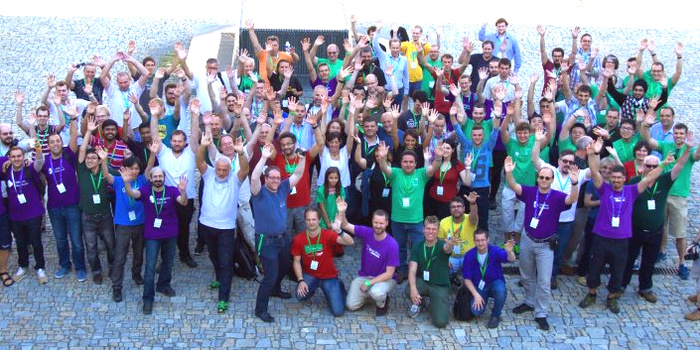
LibreOffice conference Brno

Statement by The Document Foundation about the upcoming discussion at the City of Munich to step back to Windows and MS Office

The Document Foundation is an independent, charitable entity and the home of LibreOffice. We have followed the developments in Munich with great concerns and like to express our disappointment to see a minority of politicians apparently ignoring the expert advice for which they’ve sought.

Rumours of the City of Munich returning to Microsoft Windows and Microsoft Office have been regularly leaking since the election of Mayor Dieter Reiter, who was described as a “Microsoft fan” when interviewed by StadtBild magazine in 2014.

Mayor Dieter Reiter asked Accenture, a Microsoft partner, to produce a report about the situation of the City of Munich’s IT infrastructure, that resulted in a 450-page document where the main issues were identified as organizational ones and not related to open source operating systems and applications.

In the age of open data and transparency in political decision making, we are glad that the report is now made available to the general public (https://www.ris-muenchen.de/RII/RII/DOK/SITZUNGSVORLAGE/4277724.pdf).

According to the report, only a minor percentage of users (between 18% and 28%, based on different applications) had severe issues related to software, which could be solved by migrating these users to Windows and MS Office. Incidentally, 15% of users acknowledged severe issues related to MS Office.

In fact, the Accenture report suggests decoupling the operating system and application to reduce dependencies at client level. To ensure this, both Windows and LiMux should be deployed in a basic configuration, which includes operating systems as well as applications, such as LibreOffice, calendar and e-mail, required by all units and self-service providers. The basic configuration should be extended depending on the application.

In spite of the suggestions, on Wednesday, February 15, Munich City Council will discuss a proposal – filed by a minority of city councillors – to install Windows 10 and MS Office 2016 on all workstations by 2020. This would cost taxpayers close to 90 million euro over the next six years, with a 35% aggravation over the 66 million euro figure suggested by Accenture.

In addition, according to estimates provided by Green Party councillors, another 15 million euros should be spent to replace or upgrade PCs which are perfect for a small footprint operating system such as Linux, but cannot support even a Windows 10 basic configuration.

Last, but not least, most expenditures related to the purchase of Microsoft licenses will contribute to the GDP of Ireland (where all Microsoft products sold in Europe are sourced from) rather than to local enterprises who support the open source solutions deployed today. This is a rather striking difference in the allocation of taxpayers money, which should be carefully considered.

Apart from the cost aggravation, the proposal under discussion ignores the main reason behind the decision to migrate from proprietary to open source software by the City of Munich, i.e. independence from a single software vendor and the move from proprietary to standard document formats.

In fact, although the proposal associates MS Office document formats with the “industry standard” concept, it should be clear that all MS Office documents are proprietary and obfuscated, and therefore inappropriate for interoperability, even when they have been recognized by international standard bodies such as ISO. A standard document format, to be considered as such, must be implemented in the real world and not only described on paper.

If the current proposal will be approved, the City of Munich will not only lose the vendor independence it has sought over the last dozen of years, but will pursue a strategy which ignores the current trend mandating open document standards in countries such as UK, France, Sweden, the Netherlands and Taiwan.

Instead of investing in the education about open document standards, to increase the adoption and thus reduce interoperability costs, the City of Munich will adopt a pseudo-standard document format which is known to create issues even when upgrading from a previous release of the same MS Office software.

Based on the above considerations, The Document Foundation thinks that the proposal to be discussed on Wednesday, February 15, represents a significant step backwards for the City of Munich, with a substantial increase in expenditure, an unknown amount of hidden cost related to interoperability, and a questionable usage of taxpayers money.

Stellungnahme der Document Foundation zur bevorstehenden Diskussion der Stadt München über eine Rückmigration zu Windows und MS Office

The Document Foundation ist eine unabhängige, gemeinnützige Stiftung und die Heimat von LibreOffice. Wir haben die Entwicklungen in München mit großer Besorgnis verfolgt und sind enttäuscht darüber, dass eine kleine Gruppe von Politikern offensichtlich den Rat genau derjenigen Experten ignoriert, die sie zuvor selbst aufgesucht haben.

Seit der Wahl von Oberbürgermeister Dieter Reiter sind regelmäßig Gerüchte über eine Rückkehr der Stadt München zu Microsoft Windows und Microsoft Office im Umlauf. Reiter wurde in einem Interview mit dem stadtbild-Magazin im Jahr 2014 als „Microsoft-Fan“ beschrieben.

Oberbürgermeister Dieter Reiter hat den Microsoft-Partner Accenture beauftragt, einen Bericht über die IT-Infrastruktur der Stadt München zu erstellen. Das Ergebnis war ein 450 Seiten langes Gutachten, in dem nicht etwa Open Source-Betriebssysteme und -Applikationen, sondern vielmehr organisatorische Themen als Problem identifiziert wurden.

In Zeiten von Open Data und Transparenz im politischen Entscheidungsprozess freut es uns, dass dieses Gutachten nun auch der Allgemeinheit zur Verfügung gestellt wird (https://www.ris-muenchen.de/RII/RII/DOK/SITZUNGSVORLAGE/4277724.pdf).

Dem Gutachten zufolge hatte nur eine sehr kleine Zahl von Anwendern (je nach Applikation zwischen 18% und 28%) größere Probleme mit den Programmen, was durch die Umstellung ihrer Arbeitsplätze auf Windows und MS Office behoben werden könnte. Bemerkenswert ist aber, dass 15% aller Anwender angegeben haben, auch größere Probleme mit MS Office zu haben.

Das Accenture-Gutachten schlägt eine Trennung von Betriebssystem und Anwendungen vor, um die clientseitigen Abhängigkeiten zu reduzieren. Um das zu gewährleisten, sollen sowohl Windows als auch LiMux jeweils in einer Basiskonfiguration zur Verfügung gestellt werden, was sowohl Betriebssystem als auch Applikationen beinhaltet, beispielsweise LibreOffice, Terminverwaltung und E-Mail, wie sie von allen Abteilungen benötigt werden. Diese Grundkonfiguration soll abhängig von der jeweiligen Anwendung erweitert werden.

Trotz dieser Empfehlung wird der Münchener Stadtrat auf Initiative einiger weniger Politiker am Mittwoch, den 15. Februar, den Vorschlag diskutieren, bis zum Jahr 2020 sowohl Windows 10 als auch MS Office 2016 auf den städtischen Arbeitsplätzen einzuführen. Das wird den Steuerzahler an die 90.000.000 € (in Worten: neunzig Millionen Euro) über die nächsten sechs Jahre kosten, eine Steigerung um 35% gegenüber den von Accenture ursprünglich vermuteten 66 Millionen.

Zusätzlich sollen laut eines Kostenvoranschlags von Stadträten der Grünen weitere 15.000.000 € (in Worten: fünfzehn Millionen Euro) dafür ausgegeben werden, alte Computer aufzurüsten oder zu ersetzen, die sich zwar perfekt für ein ressourcenschonende Betriebssystem wie Linux eignen, aber nicht einmal eine Windows 10-Basiskonfiguration unterstützen würden.

Zu guter Letzt wird ein Großteil der Ausgaben im Zusammenhang mit dem Kauf von Microsoft-Lizenzen primär die irische Wirtschaft fördern – denn von dort stammen alle in Europa verkauften Microsoft-Produkte – anstatt örtlichen Firmen zugute zu kommen, die bereits die schon vorhandenen Open-Source-Lösungen betreuen. Das ist eine ziemlich auffällige Verschiebung bei der Verteilung von Steuergeldern, die entsprechend berücksichtigt werden sollte.

Ganz abgesehen von der Kostensteigerung vernachlässigt der Vorschlag zudem den wichtigsten Grund für die Migration hin zu freier Software: die Unabhängigkeit von einem einzelnen Softwareanbieter und den Wechsel weg von proprietären hin zu offenen Dokumentformaten.

Obwohl der eingebrachte Vorschlag die MS-Office-Dokumentformate als Industriestandard bezeichnet, sollte klar sein, dass MS-Office-Dokumente proprietär und daher nur bedingt für die Interoperabilität geeignet sind, selbst wenn sie von internationalen Standardisierungsgremien wie der ISO anerkannt sind. Ein Dokumentformat, das als offener Standard gelten soll, muss auch so implementiert werden und darf nicht nur auf dem Papier bestehen.

Falls der aktuelle Vorschlag angenommen würde, verliert die Stadt München nicht nur die Herstellerunabhängigkeit, nach der sie mehr als ein Jahrzehnt gestrebt hat, sondern wird vielmehr auch eine Strategie verfolgen, die den unübersehbaren Trend hin zu offenen Dokumentformaten in Ländern wie Großbritannien, Frankreich, Schweden, den Niederlanden und Taiwan schlicht ignoriert.

Anstatt in den Umgang mit offenen Dokumentformaten zu investieren, um deren Verbreitung weiter zu erhöhen und dadurch die Kosten für Interoperabilität zu senken, würde die Stadt München ein pseudo-standardisiertes Dokumentenformat einsetzen, das bekannt dafür ist, ist selbst dann Probleme zu verursachen, wenn von einer MS-Office-Version auf die nächste aktualisiert wird.

Aufgrund dieser Erwägungen ist die gemeinnützige Stiftung The Document Foundation der festen Überzeugung, dass der Vorschlag, der diesen Mittwoch diskutiert wird, für die Stadt München einen erheblichen Rückschritt bedeuten würde, verbunden mit einer erheblichen Steigerung der Kosten, einer unbekannten Zahl versteckter Kosten für die Interoperabilität – sowie einer fragwürdigen Verwendung von Steuergeldern.