🇹đŸ‡ș LibreOffice in Latin America: heading to Havana for the 2025 Latin American Congress

From October 6 to 9, Havana, Cuba, will host the Latin American LibreOffice 2025 Conference, a meeting that will bring together contributors, developers, universities, and governments from the region to celebrate and strengthen free software.

This year, the Latin American conference will be held as part of the IV International Congress on Digital Transformation (Cibersociedad 2025) in Havana, Cuba. This integration reinforces LibreOffice’s crucial role in the digital transformation of Latin American communities, promoting open innovation, technological sovereignty, and collaboration between countries.

The event will take place at the iconic Hotel Nacional de Cuba and will feature an intense program of lectures, panels, and workshops dedicated to LibreOffice, its communities, and institutional adoption initiatives.

🌍 A meeting that connects communities and governments

The opening ceremony will pay tribute to Cuban volunteer Carlos Parra, who passed away in 2022.

It was thanks to his dedication, articulation, and love for the community that the opportunity arose to hold the Latin American LibreOffice Congress in Cuba—a dream he helped make possible.

Carlos was the link between the Cuban community and The Document Foundation, and his contribution will remain as a legacy of collaboration and commitment to digital freedom.

During the event, Adlair Cerecedo-MĂ©ndez will present the experience of Office GobMX, the LibreOffice-based suite developed by the Mexican government. Other highlights include the panel “LibreOffice is freedom,” with Olivier Hallot, founding member of The Document Foundation and Documentation Coordinator for the LibreOffice Project, as well as discussions on government migration, extensions, technical quality, and the rebirth of the Cuban community — with participation from Gustavo Pacheco (Brazil), Mauricio Baeza (Mexico), and Xisco FaulĂ­ (Spain).

đŸ§‘â€đŸ« Training and academic innovation

At the University of Information Sciences (UCI), the event will open space for young people and educators with the “LibreOffice and Universities” lab, led by Gustavo Pacheco, and the “Creating my first extension” workshop, conducted by Mauricio Baeza — a practical opportunity for those who want to learn how to expand LibreOffice and contribute technically to the project.

💬 Regional meetings and plans for 2026

The congress will close with meetings between Latin American members of the LibreOffice community, addressing:

  • the 2026 events calendar (including esLibre and the next Latin American Congress);
  • academic projects such as Google Summer of Code and Outreachy;
  • and new partnerships with other free software communities, such as GNOME Latam.

These sessions reflect the collective commitment to strengthening collaboration between countries and consolidating a more active presence for Latin America within The Document Foundation.

đŸ’Ș An event driven by volunteers

The Congreso Latinoamericano de LibreOffice is an event organized entirely by volunteers, who dedicate their time, energy, and knowledge to make this initiative possible. Our special recognition and thanks go to Daniel Rodriguez (Argentina), GastĂłn Hannay (Uruguay), Omar Correa (Cuba), Gustavo Pacheco (Brazil), and Juan GonzĂĄlez (Mexico), who have been working tirelessly to make every detail of this edition possible.

We also express our sincere gratitude to the University of Computer Sciences (UCI) and the Cibersociedad 2025 organization for opening their doors and sharing their infrastructure—including rooms, laboratories, and technical support—making it possible to hold the Latin American LibreOffice Congress within their event.

This partnership reinforces the spirit of academic collaboration and the joint commitment to digital transformation in Latin America.

The Document Foundation (TDF), in its mission to promote LibreOffice and strengthen its global community, supports and sponsors these activities, enabling the participation of volunteers from different countries.

This support allows members of the Latin American community to meet in person, exchange experiences, and strengthen the international collaboration that sustains the project.

🌎 Freedom, collaboration, and the future

The LibreOffice Latin American Congress in Cuba is more than a technical event—it is a reunion of the Latin American community, united by ideals of freedom, solidarity, and technological sovereignty.

LibreOffice is, above all, a project made by people, for people. And this congress is living proof that collaboration can cross borders, languages, and generations.

📅 Date: October 6-9, 2025

📍 Location: Hotel Nacional de Cuba – Havana

🌐 More information: latam.conference.libreoffice.org

The artificial complexity of OOXML files (the DOCX case)

The complexity of the OOXML format is linked to its design and was deliberately created to make the format more difficult for non-Microsoft software developers to implement. Compatibility issues are caused by a veritable “maze” of tags used even for the simplest content, which binds users to the Microsoft ecosystem in the first example of standard-based lock-in.

The DOCX case

To demonstrate the difference in complexity between the XML schemas of Writer and Word text documents in the ODF and OOXML formats, I used two classic English theatre plays: William Shakespeare’s Hamlet and Oscar Wilde’s The Importance of Being Earnest. I downloaded the text versions of these works from Project Gutenberg — a library of classic texts for which US copyright has expired — and deleted the introductions and conclusions added by Project Gutenberg, without making any other changes.

I then repeated this process for both documents.

I copied all the text and pasted it, without any formatting, into two newly created blank documents. For Writer, I used the template that I usually use for unstructured documents; for Word, I did not use a template. This means that, in Writer, the XML schema contains information about the template (margins, paragraph and font formatting), but this does not increase its complexity.

To perform the analysis, I duplicated and renamed the two files, replacing the original extension with “ZIP”, and then decompressed them to create two folders containing all the files of the respective XML schemas.

The LibreOffice folder contained three subfolders and six files with the same names as those in the ODS file examined last week, as would be expected of a standard aiming to simplify life for developers and users. All the content is actually in the content.xml file, while the other files contain instructions for displaying the text document correctly.

The Microsoft 365 folder contains three subfolders and the [Content_Types].xml file, as with the XLSX file examined last week. One of the subfolders has a different name, but this is related to the application and does not increase complexity. Opening the [Content_Types].xml file provides information about the other files, including those in the subfolders.

In this case, the content is in the document.xml file inside the Word folder, which contains folders and files that differ completely from those in the XLSX file. Again, there is no technical reason for this difference in the XML schemas of the two files other than to make their internal structures different and more complex.

Let’s now analyse William Shakespeare’s Hamlet and then Oscar Wilde’s The Importance of Being Earnest.

Here is the PDF of Hamlet:

hamlet


The difference in complexity between the document.xml and content.xml files is striking when you compare their lengths: the content.xml file has 6,802 lines, while the document.xml file has 60,245 lines, compared to a text document of 5,566 lines.

Let us now compare the two files’ XML schemas from the beginning to the end of the introduction.

CONTENT.XML

<office:body>
<office:text text:use-soft-page-breaks=”true”>
<office:forms form:automatic-focus=”false” form:apply-design-mode=”false”/>
<text:sequence-decls>
<text:sequence-decl text:display-outline-level=”0″ text:name=”Illustration”/>
<text:sequence-decl text:display-outline-level=”0″ text:name=”Table”/>
<text:sequence-decl text:display-outline-level=”0″ text:name=”Text”/>
<text:sequence-decl text:display-outline-level=”0″ text:name=”Drawing”/>
<text:sequence-decl text:display-outline-level=”0″ text:name=”Figure”/>
</text:sequence-decls>
<text:p text:style-name=”P1″>THE TRAGEDY OF HAMLET, PRINCE OF DENMARK</text:p>
<text:p text:style-name=”P1″/>
<text:p text:style-name=”P1″>by William Shakespeare</text:p>
<text:p text:style-name=”P1″/>
<text:p text:style-name=”P1″>Contents</text:p>
<text:p text:style-name=”P1″/>
<text:p text:style-name=”P1″><text:s/>ACT I</text:p>
<text:p text:style-name=”P1″><text:s/>Scene I. Elsinore. A platform before the Castle</text:p>
<text:p text:style-name=”P1″><text:s/>Scene II. Elsinore. A room of state in the Castle</text:p>
<text:p text:style-name=”P1″><text:s/>Scene III. A room in Polonius’s house</text:p>
<text:p text:style-name=”P1″><text:s/>Scene IV. The platform</text:p>
<text:p text:style-name=”P1″><text:s/>Scene V. A more remote part of the Castle</text:p>
<text:p text:style-name=”P1″/>
<text:p text:style-name=”P1″><text:s/>ACT II</text:p>
<text:p text:style-name=”P1″><text:s/>Scene I. A room in Polonius’s house</text:p>
<text:p text:style-name=”P1″><text:s/>Scene II. A room in the Castle</text:p>
<text:p text:style-name=”P1″/>
<text:p text:style-name=”P1″><text:s/>ACT III</text:p>
<text:p text:style-name=”P1″><text:s/>Scene I. A room in the Castle</text:p>
<text:p text:style-name=”P1″><text:s/>Scene II. A hall in the Castle</text:p>
<text:p text:style-name=”P1″><text:s/>Scene III. A room in the Castle</text:p>
<text:p text:style-name=”P1″><text:s/>Scene IV. Another room in the Castle</text:p>
<text:p text:style-name=”P1″/>
<text:p text:style-name=”P1″><text:s/>ACT IV</text:p>
<text:p text:style-name=”P1″><text:s/>Scene I. A room in the Castle</text:p>
<text:p text:style-name=”P1″><text:s/>Scene II. Another room in the Castle</text:p>
<text:p text:style-name=”P1″><text:s/>Scene III. Another room in the Castle</text:p>
<text:p text:style-name=”P1″><text:s/>Scene IV. A plain in Denmark</text:p>
<text:p text:style-name=”P1″><text:s/>Scene V. Elsinore. A room in the Castle</text:p>
<text:p text:style-name=”P1″><text:soft-page-break/><text:s/>Scene VI. Another room in the Castle</text:p>
<text:p text:style-name=”P1″><text:s/>Scene VII. Another room in the Castle</text:p>
<text:p text:style-name=”P1″/>
<text:p text:style-name=”P1″><text:s/>ACT V</text:p>
<text:p text:style-name=”P1″><text:s/>Scene I. A churchyard</text:p>
<text:p text:style-name=”P1″><text:s/>Scene II. A hall in the Castle</text:p>
<text:p text:style-name=”P1″/>
<text:p text:style-name=”P1″>Dramatis PersonĂŠ</text:p>
<text:p text:style-name=”P1″/>
<text:p text:style-name=”P1″>HAMLET, Prince of Denmark</text:p>
<text:p text:style-name=”P1″>CLAUDIUS, King of Denmark, Hamlet’s uncle</text:p>
<text:p text:style-name=”P1″>The GHOST of the late king, Hamlet’s father</text:p>
<text:p text:style-name=”P1″>GERTRUDE, the Queen, Hamlet’s mother, now wife of Claudius</text:p>
<text:p text:style-name=”P1″>POLONIUS, Lord Chamberlain</text:p>
<text:p text:style-name=”P1″>LAERTES, Son to Polonius</text:p>
<text:p text:style-name=”P1″>OPHELIA, Daughter to Polonius</text:p>
<text:p text:style-name=”P1″>HORATIO, Friend to Hamlet</text:p>
<text:p text:style-name=”P1″>FORTINBRAS, Prince of Norway</text:p>
<text:p text:style-name=”P1″>VOLTEMAND, Courtier</text:p>
<text:p text:style-name=”P1″>CORNELIUS, Courtier</text:p>
<text:p text:style-name=”P1″>ROSENCRANTZ, Courtier</text:p>
<text:p text:style-name=”P1″>GUILDENSTERN, Courtier</text:p>
<text:p text:style-name=”P1″>MARCELLUS, Officer</text:p>
<text:p text:style-name=”P1″>BARNARDO, Officer</text:p>
<text:p text:style-name=”P1″>FRANCISCO, a Soldier</text:p>
<text:p text:style-name=”P1″>OSRIC, Courtier</text:p>
<text:p text:style-name=”P1″>REYNALDO, Servant to Polonius</text:p>
<text:p text:style-name=”P1″>Players</text:p>
<text:p text:style-name=”P1″>A Gentleman, Courtier</text:p>
<text:p text:style-name=”P1″>A Priest</text:p>
<text:p text:style-name=”P1″><text:soft-page-break/>Two Clowns, Grave-diggers</text:p>
<text:p text:style-name=”P1″>A Captain</text:p>
<text:p text:style-name=”P1″>English Ambassadors.</text:p>
<text:p text:style-name=”P1″>Lords, Ladies, Officers, Soldiers, Sailors, Messengers, and Attendants</text:p>

It is a reasonably complex XML file. After the initial instructions on the sequence of content, the text of the tragedy can easily be located alongside the sequence of the five acts and the descriptions of the dramatis personae.

DOCUMENT.XML

<w:body>
<w:p xmlns:wp14=”http://schemas.microsoft.com/office/word/2010/wordml” wp14:paraId=”73C9069B” wp14:textId=”09294AE1″>
<w:r w:rsidR=”0C2508E9″>
<w:rPr/>
<w:t>THE TRAGEDY OF HAMLET, PRINCE OF DENMARK</w:t>
</w:r>
</w:p>
<w:p xmlns:wp14=”http://schemas.microsoft.com/office/word/2010/wordml” w:rsidP=”03F02A92″ wp14:paraId=”3AA342A9″ wp14:textId=”00E76CB9″>
<w:pPr>
<w:pStyle w:val=”Normal”/>
</w:pPr>
<w:r w:rsidR=”0C2508E9″>
<w:rPr/>
<w:t xml:space=”preserve”> </w:t>
</w:r>
</w:p>
<w:p xmlns:wp14=”http://schemas.microsoft.com/office/word/2010/wordml” w:rsidP=”03F02A92″ wp14:paraId=”1B479704″ wp14:textId=”129900F6″>
<w:pPr>
<w:pStyle w:val=”Normal”/>
</w:pPr>
<w:r w:rsidR=”0C2508E9″>
<w:rPr/>
<w:t>by William Shakespeare</w:t>
</w:r>
</w:p>
<w:p xmlns:wp14=”http://schemas.microsoft.com/office/word/2010/wordml” w:rsidP=”03F02A92″ wp14:paraId=”6C6F02DD” wp14:textId=”1D8A204F”>
<w:pPr>
<w:pStyle w:val=”Normal”/>
</w:pPr>
<w:r w:rsidR=”0C2508E9″>
<w:rPr/>
<w:t xml:space=”preserve”> </w:t>
</w:r>
</w:p>
<w:p xmlns:wp14=”http://schemas.microsoft.com/office/word/2010/wordml” w:rsidP=”03F02A92″ wp14:paraId=”1F7D25FF” wp14:textId=”4619853B”>
<w:pPr>
<w:pStyle w:val=”Normal”/>
</w:pPr>
<w:r w:rsidR=”0C2508E9″>
<w:rPr/>
<w:t xml:space=”preserve”> </w:t>
</w:r>
</w:p>
<w:p xmlns:wp14=”http://schemas.microsoft.com/office/word/2010/wordml” w:rsidP=”03F02A92″ wp14:paraId=”50471715″ wp14:textId=”708F3004″>
<w:pPr>
<w:pStyle w:val=”Normal”/>
</w:pPr>
<w:r w:rsidR=”0C2508E9″>
<w:rPr/>
<w:t xml:space=”preserve”> </w:t>
</w:r>
</w:p>
<w:p xmlns:wp14=”http://schemas.microsoft.com/office/word/2010/wordml” w:rsidP=”03F02A92″ wp14:paraId=”7E2BE7BA” wp14:textId=”48A7F848″>
<w:pPr>
<w:pStyle w:val=”Normal”/>
</w:pPr>
<w:r w:rsidR=”0C2508E9″>
<w:rPr/>
<w:t xml:space=”preserve”> </w:t>
</w:r>
</w:p>
<w:p xmlns:wp14=”http://schemas.microsoft.com/office/word/2010/wordml” w:rsidP=”03F02A92″ wp14:paraId=”5B16A927″ wp14:textId=”10A9E3F9″>
<w:pPr>
<w:pStyle w:val=”Normal”/>
</w:pPr>
<w:r w:rsidR=”0C2508E9″>
<w:rPr/>
<w:t>Contents</w:t>
</w:r>
</w:p>
<w:p xmlns:wp14=”http://schemas.microsoft.com/office/word/2010/wordml” w:rsidP=”03F02A92″ wp14:paraId=”429A556E” wp14:textId=”6416D4DB”>
<w:pPr>
<w:pStyle w:val=”Normal”/>
</w:pPr>
<w:r w:rsidR=”0C2508E9″>
<w:rPr/>
<w:t xml:space=”preserve”> </w:t>
</w:r>
</w:p>
<w:p xmlns:wp14=”http://schemas.microsoft.com/office/word/2010/wordml” w:rsidP=”03F02A92″ wp14:paraId=”1C38A773″ wp14:textId=”4F3F8ED2″>
<w:pPr>
<w:pStyle w:val=”Normal”/>
</w:pPr>
<w:r w:rsidR=”0C2508E9″>
<w:rPr/>
<w:t>ACT I</w:t>
</w:r>
</w:p>
<w:p xmlns:wp14=”http://schemas.microsoft.com/office/word/2010/wordml” w:rsidP=”03F02A92″ wp14:paraId=”59328897″ wp14:textId=”21C9F129″>
<w:pPr>
<w:pStyle w:val=”Normal”/>
</w:pPr>
<w:r w:rsidR=”0C2508E9″>
<w:rPr/>
<w:t>Scene I. Elsinore. A platform before the Castle</w:t>
</w:r>
</w:p>
<w:p xmlns:wp14=”http://schemas.microsoft.com/office/word/2010/wordml” w:rsidP=”03F02A92″ wp14:paraId=”30C9E582″ wp14:textId=”0A7616FF”>
<w:pPr>
<w:pStyle w:val=”Normal”/>
</w:pPr>
<w:r w:rsidR=”0C2508E9″>
<w:rPr/>
<w:t>Scene II. Elsinore. A room of state in the Castle</w:t>
</w:r>
</w:p>
<w:p xmlns:wp14=”http://schemas.microsoft.com/office/word/2010/wordml” w:rsidP=”03F02A92″ wp14:paraId=”5EAB6C01″ wp14:textId=”70B75214″>
<w:pPr>
<w:pStyle w:val=”Normal”/>
</w:pPr>
<w:r w:rsidR=”0C2508E9″>
<w:rPr/>
<w:t>Scene III. A room in Polonius’s house</w:t>
</w:r>
</w:p>
<w:p xmlns:wp14=”http://schemas.microsoft.com/office/word/2010/wordml” w:rsidP=”03F02A92″ wp14:paraId=”232393A3″ wp14:textId=”069440B2″>
<w:pPr>
<w:pStyle w:val=”Normal”/>
</w:pPr>
<w:r w:rsidR=”0C2508E9″>
<w:rPr/>
<w:t>Scene IV. The platform</w:t>
</w:r>
</w:p>
<w:p xmlns:wp14=”http://schemas.microsoft.com/office/word/2010/wordml” w:rsidP=”03F02A92″ wp14:paraId=”65E1A75F” wp14:textId=”1E769B73″>
<w:pPr>
<w:pStyle w:val=”Normal”/>
</w:pPr>
<w:r w:rsidR=”0C2508E9″>
<w:rPr/>
<w:t>Scene V. A more remote part of the Castle</w:t>
</w:r>
</w:p>
<w:p xmlns:wp14=”http://schemas.microsoft.com/office/word/2010/wordml” w:rsidP=”03F02A92″ wp14:paraId=”6C6D2F5C” wp14:textId=”13700863″>
<w:pPr>
<w:pStyle w:val=”Normal”/>
</w:pPr>
<w:r w:rsidR=”0C2508E9″>
<w:rPr/>
<w:t xml:space=”preserve”> </w:t>
</w:r>
</w:p>
<w:p xmlns:wp14=”http://schemas.microsoft.com/office/word/2010/wordml” w:rsidP=”03F02A92″ wp14:paraId=”339DBFF3″ wp14:textId=”4AF718C4″>
<w:pPr>
<w:pStyle w:val=”Normal”/>
</w:pPr>
<w:r w:rsidR=”0C2508E9″>
<w:rPr/>
<w:t>ACT II</w:t>
</w:r>
</w:p>
<w:p xmlns:wp14=”http://schemas.microsoft.com/office/word/2010/wordml” w:rsidP=”03F02A92″ wp14:paraId=”774AAE76″ wp14:textId=”3F8EE2B8″>
<w:pPr>
<w:pStyle w:val=”Normal”/>
</w:pPr>
<w:r w:rsidR=”0C2508E9″>
<w:rPr/>
<w:t>Scene I. A room in Polonius’s house</w:t>
</w:r>
</w:p>
<w:p xmlns:wp14=”http://schemas.microsoft.com/office/word/2010/wordml” w:rsidP=”03F02A92″ wp14:paraId=”526BCABF” wp14:textId=”441F6801″>
<w:pPr>
<w:pStyle w:val=”Normal”/>
</w:pPr>
<w:r w:rsidR=”0C2508E9″>
<w:rPr/>
<w:t>Scene II. A room in the Castle</w:t>
</w:r>
</w:p>
<w:p xmlns:wp14=”http://schemas.microsoft.com/office/word/2010/wordml” w:rsidP=”03F02A92″ wp14:paraId=”6A1841AB” wp14:textId=”1FBE8D34″>
<w:pPr>
<w:pStyle w:val=”Normal”/>
</w:pPr>
<w:r w:rsidR=”0C2508E9″>
<w:rPr/>
<w:t xml:space=”preserve”> </w:t>
</w:r>
</w:p>
<w:p xmlns:wp14=”http://schemas.microsoft.com/office/word/2010/wordml” w:rsidP=”03F02A92″ wp14:paraId=”577B4504″ wp14:textId=”1BF167DB”>
<w:pPr>
<w:pStyle w:val=”Normal”/>
</w:pPr>
<w:r w:rsidR=”0C2508E9″>
<w:rPr/>
<w:t>ACT III</w:t>
</w:r>
</w:p>
<w:p xmlns:wp14=”http://schemas.microsoft.com/office/word/2010/wordml” w:rsidP=”03F02A92″ wp14:paraId=”2724CC9A” wp14:textId=”293764E9″>
<w:pPr>
<w:pStyle w:val=”Normal”/>
</w:pPr>
<w:r w:rsidR=”0C2508E9″>
<w:rPr/>
<w:t>Scene I. A room in the Castle</w:t>
</w:r>
</w:p>
<w:p xmlns:wp14=”http://schemas.microsoft.com/office/word/2010/wordml” w:rsidP=”03F02A92″ wp14:paraId=”04FF9ABE” wp14:textId=”30F918C2″>
<w:pPr>
<w:pStyle w:val=”Normal”/>
</w:pPr>
<w:r w:rsidR=”0C2508E9″>
<w:rPr/>
<w:t>Scene II. A hall in the Castle</w:t>
</w:r>
</w:p>
<w:p xmlns:wp14=”http://schemas.microsoft.com/office/word/2010/wordml” w:rsidP=”03F02A92″ wp14:paraId=”338872C6″ wp14:textId=”1F0AFFE6″>
<w:pPr>
<w:pStyle w:val=”Normal”/>
</w:pPr>
<w:r w:rsidR=”0C2508E9″>
<w:rPr/>
<w:t>Scene III. A room in the Castle</w:t>
</w:r>
</w:p>
<w:p xmlns:wp14=”http://schemas.microsoft.com/office/word/2010/wordml” w:rsidP=”03F02A92″ wp14:paraId=”46D240C2″ wp14:textId=”3D28AE8B”>
<w:pPr>
<w:pStyle w:val=”Normal”/>
</w:pPr>
<w:r w:rsidR=”0C2508E9″>
<w:rPr/>
<w:t>Scene IV. Another room in the Castle</w:t>
</w:r>
</w:p>
<w:p xmlns:wp14=”http://schemas.microsoft.com/office/word/2010/wordml” w:rsidP=”03F02A92″ wp14:paraId=”64F40DC7″ wp14:textId=”16C2A388″>
<w:pPr>
<w:pStyle w:val=”Normal”/>
</w:pPr>
<w:r w:rsidR=”0C2508E9″>
<w:rPr/>
<w:t xml:space=”preserve”> </w:t>
</w:r>
</w:p>
<w:p xmlns:wp14=”http://schemas.microsoft.com/office/word/2010/wordml” w:rsidP=”03F02A92″ wp14:paraId=”4B538D6F” wp14:textId=”7CB11368″>
<w:pPr>
<w:pStyle w:val=”Normal”/>
</w:pPr>
<w:r w:rsidR=”0C2508E9″>
<w:rPr/>
<w:t>ACT IV</w:t>
</w:r>
</w:p>
<w:p xmlns:wp14=”http://schemas.microsoft.com/office/word/2010/wordml” w:rsidP=”03F02A92″ wp14:paraId=”2508ABE7″ wp14:textId=”4925909D”>
<w:pPr>
<w:pStyle w:val=”Normal”/>
</w:pPr>
<w:r w:rsidR=”0C2508E9″>
<w:rPr/>
<w:t>Scene I. A room in the Castle</w:t>
</w:r>
</w:p>
<w:p xmlns:wp14=”http://schemas.microsoft.com/office/word/2010/wordml” w:rsidP=”03F02A92″ wp14:paraId=”5ABD1B8F” wp14:textId=”68A02D9E”>
<w:pPr>
<w:pStyle w:val=”Normal”/>
</w:pPr>
<w:r w:rsidR=”0C2508E9″>
<w:rPr/>
<w:t>Scene II. Another room in the Castle</w:t>
</w:r>
</w:p>
<w:p xmlns:wp14=”http://schemas.microsoft.com/office/word/2010/wordml” w:rsidP=”03F02A92″ wp14:paraId=”57D2E145″ wp14:textId=”08927478″>
<w:pPr>
<w:pStyle w:val=”Normal”/>
</w:pPr>
<w:r w:rsidR=”0C2508E9″>
<w:rPr/>
<w:t>Scene III. Another room in the Castle</w:t>
</w:r>
</w:p>
<w:p xmlns:wp14=”http://schemas.microsoft.com/office/word/2010/wordml” w:rsidP=”03F02A92″ wp14:paraId=”2BA12E96″ wp14:textId=”1E35C8BC”>
<w:pPr>
<w:pStyle w:val=”Normal”/>
</w:pPr>
<w:r w:rsidR=”0C2508E9″>
<w:rPr/>
<w:t>Scene IV. A plain in Denmark</w:t>
</w:r>
</w:p>
<w:p xmlns:wp14=”http://schemas.microsoft.com/office/word/2010/wordml” w:rsidP=”03F02A92″ wp14:paraId=”4DF8BEC9″ wp14:textId=”67676CF3″>
<w:pPr>
<w:pStyle w:val=”Normal”/>
</w:pPr>
<w:r w:rsidR=”0C2508E9″>
<w:rPr/>
<w:t>Scene V. Elsinore. A room in the Castle</w:t>
</w:r>
</w:p>
<w:p xmlns:wp14=”http://schemas.microsoft.com/office/word/2010/wordml” w:rsidP=”03F02A92″ wp14:paraId=”17EE90DC” wp14:textId=”708C9696″>
<w:pPr>
<w:pStyle w:val=”Normal”/>
</w:pPr>
<w:r w:rsidR=”0C2508E9″>
<w:rPr/>
<w:t>Scene VI. Another room in the Castle</w:t>
</w:r>
</w:p>
<w:p xmlns:wp14=”http://schemas.microsoft.com/office/word/2010/wordml” w:rsidP=”03F02A92″ wp14:paraId=”3302F704″ wp14:textId=”2ADB2A66″>
<w:pPr>
<w:pStyle w:val=”Normal”/>
</w:pPr>
<w:r w:rsidR=”0C2508E9″>
<w:rPr/>
<w:t>Scene VII. Another room in the Castle</w:t>
</w:r>
</w:p>
<w:p xmlns:wp14=”http://schemas.microsoft.com/office/word/2010/wordml” w:rsidP=”03F02A92″ wp14:paraId=”0F7C9E68″ wp14:textId=”5D706618″>
<w:pPr>
<w:pStyle w:val=”Normal”/>
</w:pPr>
<w:r w:rsidR=”0C2508E9″>
<w:rPr/>
<w:t xml:space=”preserve”> </w:t>
</w:r>
</w:p>
<w:p xmlns:wp14=”http://schemas.microsoft.com/office/word/2010/wordml” w:rsidP=”03F02A92″ wp14:paraId=”1091F950″ wp14:textId=”2EE5201C”>
<w:pPr>
<w:pStyle w:val=”Normal”/>
</w:pPr>
<w:r w:rsidR=”0C2508E9″>
<w:rPr/>
<w:t>ACT V</w:t>
</w:r>
</w:p>
<w:p xmlns:wp14=”http://schemas.microsoft.com/office/word/2010/wordml” w:rsidP=”03F02A92″ wp14:paraId=”6E162B67″ wp14:textId=”10199C37″>
<w:pPr>
<w:pStyle w:val=”Normal”/>
</w:pPr>
<w:r w:rsidR=”0C2508E9″>
<w:rPr/>
<w:t>Scene I. A churchyard</w:t>
</w:r>
</w:p>
<w:p xmlns:wp14=”http://schemas.microsoft.com/office/word/2010/wordml” w:rsidP=”03F02A92″ wp14:paraId=”1A2FA647″ wp14:textId=”683EF1FA”>
<w:pPr>
<w:pStyle w:val=”Normal”/>
</w:pPr>
<w:r w:rsidR=”0C2508E9″>
<w:rPr/>
<w:t>Scene II. A hall in the Castle</w:t>
</w:r>
</w:p>
<w:p xmlns:wp14=”http://schemas.microsoft.com/office/word/2010/wordml” w:rsidP=”03F02A92″ wp14:paraId=”62A90ACE” wp14:textId=”156F1611″>
<w:pPr>
<w:pStyle w:val=”Normal”/>
</w:pPr>
<w:r w:rsidR=”0C2508E9″>
<w:rPr/>
<w:t xml:space=”preserve”> </w:t>
</w:r>
</w:p>
<w:p xmlns:wp14=”http://schemas.microsoft.com/office/word/2010/wordml” w:rsidP=”03F02A92″ wp14:paraId=”557F5426″ wp14:textId=”05194972″>
<w:pPr>
<w:pStyle w:val=”Normal”/>
</w:pPr>
<w:r w:rsidR=”0C2508E9″>
<w:rPr/>
<w:t xml:space=”preserve”> </w:t>
</w:r>
</w:p>
<w:p xmlns:wp14=”http://schemas.microsoft.com/office/word/2010/wordml” w:rsidP=”03F02A92″ wp14:paraId=”011BF8B2″ wp14:textId=”175BE494″>
<w:pPr>
<w:pStyle w:val=”Normal”/>
</w:pPr>
<w:r w:rsidR=”0C2508E9″>
<w:rPr/>
<w:t xml:space=”preserve”> </w:t>
</w:r>
</w:p>
<w:p xmlns:wp14=”http://schemas.microsoft.com/office/word/2010/wordml” w:rsidP=”03F02A92″ wp14:paraId=”4BB65B79″ wp14:textId=”7256A412″>
<w:pPr>
<w:pStyle w:val=”Normal”/>
</w:pPr>
<w:r w:rsidR=”0C2508E9″>
<w:rPr/>
<w:t xml:space=”preserve”> </w:t>
</w:r>
</w:p>
<w:p xmlns:wp14=”http://schemas.microsoft.com/office/word/2010/wordml” w:rsidP=”03F02A92″ wp14:paraId=”1EEEFC18″ wp14:textId=”2D4F2D20″>
<w:pPr>
<w:pStyle w:val=”Normal”/>
</w:pPr>
<w:r w:rsidR=”0C2508E9″>
<w:rPr/>
<w:t>Dramatis PersonĂŠ</w:t>
</w:r>
</w:p>
<w:p xmlns:wp14=”http://schemas.microsoft.com/office/word/2010/wordml” w:rsidP=”03F02A92″ wp14:paraId=”69D361D6″ wp14:textId=”0A66ADE7″>
<w:pPr>
<w:pStyle w:val=”Normal”/>
</w:pPr>
<w:r w:rsidR=”0C2508E9″>
<w:rPr/>
<w:t xml:space=”preserve”> </w:t>
</w:r>
</w:p>
<w:p xmlns:wp14=”http://schemas.microsoft.com/office/word/2010/wordml” w:rsidP=”03F02A92″ wp14:paraId=”7198BA63″ wp14:textId=”0ECB601B”>
<w:pPr>
<w:pStyle w:val=”Normal”/>
</w:pPr>
<w:r w:rsidR=”0C2508E9″>
<w:rPr/>
<w:t>HAMLET, Prince of Denmark</w:t>
</w:r>
</w:p>
<w:p xmlns:wp14=”http://schemas.microsoft.com/office/word/2010/wordml” w:rsidP=”03F02A92″ wp14:paraId=”7A30698D” wp14:textId=”2A3EE787″>
<w:pPr>
<w:pStyle w:val=”Normal”/>
</w:pPr>
<w:r w:rsidR=”0C2508E9″>
<w:rPr/>
<w:t>CLAUDIUS, King of Denmark, Hamlet’s uncle</w:t>
</w:r>
</w:p>
<w:p xmlns:wp14=”http://schemas.microsoft.com/office/word/2010/wordml” w:rsidP=”03F02A92″ wp14:paraId=”7D437DFF” wp14:textId=”0C3AFC43″>
<w:pPr>
<w:pStyle w:val=”Normal”/>
</w:pPr>
<w:r w:rsidR=”0C2508E9″>
<w:rPr/>
<w:t>The GHOST of the late king, Hamlet’s father</w:t>
</w:r>
</w:p>
<w:p xmlns:wp14=”http://schemas.microsoft.com/office/word/2010/wordml” w:rsidP=”03F02A92″ wp14:paraId=”663C7E0E” wp14:textId=”4F1E93F2″>
<w:pPr>
<w:pStyle w:val=”Normal”/>
</w:pPr>
<w:r w:rsidR=”0C2508E9″>
<w:rPr/>
<w:t>GERTRUDE, the Queen, Hamlet’s mother, now wife of Claudius</w:t>
</w:r>
</w:p>
<w:p xmlns:wp14=”http://schemas.microsoft.com/office/word/2010/wordml” w:rsidP=”03F02A92″ wp14:paraId=”1EE14B03″ wp14:textId=”567F43B4″>
<w:pPr>
<w:pStyle w:val=”Normal”/>
</w:pPr>
<w:r w:rsidR=”0C2508E9″>
<w:rPr/>
<w:t>POLONIUS, Lord Chamberlain</w:t>
</w:r>
</w:p>
<w:p xmlns:wp14=”http://schemas.microsoft.com/office/word/2010/wordml” w:rsidP=”03F02A92″ wp14:paraId=”7A4F8A78″ wp14:textId=”39759F7E”>
<w:pPr>
<w:pStyle w:val=”Normal”/>
</w:pPr>
<w:r w:rsidR=”0C2508E9″>
<w:rPr/>
<w:t>LAERTES, Son to Polonius</w:t>
</w:r>
</w:p>
<w:p xmlns:wp14=”http://schemas.microsoft.com/office/word/2010/wordml” w:rsidP=”03F02A92″ wp14:paraId=”11E371D7″ wp14:textId=”36CD515A”>
<w:pPr>
<w:pStyle w:val=”Normal”/>
</w:pPr>
<w:r w:rsidR=”0C2508E9″>
<w:rPr/>
<w:t>OPHELIA, Daughter to Polonius</w:t>
</w:r>
</w:p>
<w:p xmlns:wp14=”http://schemas.microsoft.com/office/word/2010/wordml” w:rsidP=”03F02A92″ wp14:paraId=”2D438C1E” wp14:textId=”7211E8E5″>
<w:pPr>
<w:pStyle w:val=”Normal”/>
</w:pPr>
<w:r w:rsidR=”0C2508E9″>
<w:rPr/>
<w:t>HORATIO, Friend to Hamlet</w:t>
</w:r>
</w:p>
<w:p xmlns:wp14=”http://schemas.microsoft.com/office/word/2010/wordml” w:rsidP=”03F02A92″ wp14:paraId=”4E6B50D6″ wp14:textId=”559117D7″>
<w:pPr>
<w:pStyle w:val=”Normal”/>
</w:pPr>
<w:r w:rsidR=”0C2508E9″>
<w:rPr/>
<w:t>FORTINBRAS, Prince of Norway</w:t>
</w:r>
</w:p>
<w:p xmlns:wp14=”http://schemas.microsoft.com/office/word/2010/wordml” w:rsidP=”03F02A92″ wp14:paraId=”1B5B4955″ wp14:textId=”599A64FC”>
<w:pPr>
<w:pStyle w:val=”Normal”/>
</w:pPr>
<w:r w:rsidR=”0C2508E9″>
<w:rPr/>
<w:t>VOLTEMAND, Courtier</w:t>
</w:r>
</w:p>
<w:p xmlns:wp14=”http://schemas.microsoft.com/office/word/2010/wordml” w:rsidP=”03F02A92″ wp14:paraId=”32BA9096″ wp14:textId=”6E8C2728″>
<w:pPr>
<w:pStyle w:val=”Normal”/>
</w:pPr>
<w:r w:rsidR=”0C2508E9″>
<w:rPr/>
<w:t>CORNELIUS, Courtier</w:t>
</w:r>
</w:p>
<w:p xmlns:wp14=”http://schemas.microsoft.com/office/word/2010/wordml” w:rsidP=”03F02A92″ wp14:paraId=”60FD9B45″ wp14:textId=”2F2E3956″>
<w:pPr>
<w:pStyle w:val=”Normal”/>
</w:pPr>
<w:r w:rsidR=”0C2508E9″>
<w:rPr/>
<w:t>ROSENCRANTZ, Courtier</w:t>
</w:r>
</w:p>
<w:p xmlns:wp14=”http://schemas.microsoft.com/office/word/2010/wordml” w:rsidP=”03F02A92″ wp14:paraId=”0CC7985B” wp14:textId=”56DED383″>
<w:pPr>
<w:pStyle w:val=”Normal”/>
</w:pPr>
<w:r w:rsidR=”0C2508E9″>
<w:rPr/>
<w:t>GUILDENSTERN, Courtier</w:t>
</w:r>
</w:p>
<w:p xmlns:wp14=”http://schemas.microsoft.com/office/word/2010/wordml” w:rsidP=”03F02A92″ wp14:paraId=”775EA68F” wp14:textId=”089F9982″>
<w:pPr>
<w:pStyle w:val=”Normal”/>
</w:pPr>
<w:r w:rsidR=”0C2508E9″>
<w:rPr/>
<w:t>MARCELLUS, Officer</w:t>
</w:r>
</w:p>
<w:p xmlns:wp14=”http://schemas.microsoft.com/office/word/2010/wordml” w:rsidP=”03F02A92″ wp14:paraId=”4E2AEAC2″ wp14:textId=”34855F77″>
<w:pPr>
<w:pStyle w:val=”Normal”/>
</w:pPr>
<w:r w:rsidR=”0C2508E9″>
<w:rPr/>
<w:t>BARNARDO, Officer</w:t>
</w:r>
</w:p>
<w:p xmlns:wp14=”http://schemas.microsoft.com/office/word/2010/wordml” w:rsidP=”03F02A92″ wp14:paraId=”6DB5A437″ wp14:textId=”146C2E48″>
<w:pPr>
<w:pStyle w:val=”Normal”/>
</w:pPr>
<w:r w:rsidR=”0C2508E9″>
<w:rPr/>
<w:t>FRANCISCO, a Soldier</w:t>
</w:r>
</w:p>
<w:p xmlns:wp14=”http://schemas.microsoft.com/office/word/2010/wordml” w:rsidP=”03F02A92″ wp14:paraId=”389BDBAC” wp14:textId=”0B30EC2E”>
<w:pPr>
<w:pStyle w:val=”Normal”/>
</w:pPr>
<w:r w:rsidR=”0C2508E9″>
<w:rPr/>
<w:t>OSRIC, Courtier</w:t>
</w:r>
</w:p>
<w:p xmlns:wp14=”http://schemas.microsoft.com/office/word/2010/wordml” w:rsidP=”03F02A92″ wp14:paraId=”12730B2E” wp14:textId=”60DC1BFE”>
<w:pPr>
<w:pStyle w:val=”Normal”/>
</w:pPr>
<w:r w:rsidR=”0C2508E9″>
<w:rPr/>
<w:t>REYNALDO, Servant to Polonius</w:t>
</w:r>
</w:p>
<w:p xmlns:wp14=”http://schemas.microsoft.com/office/word/2010/wordml” w:rsidP=”03F02A92″ wp14:paraId=”7FA85C5A” wp14:textId=”3D66976B”>
<w:pPr>
<w:pStyle w:val=”Normal”/>
</w:pPr>
<w:r w:rsidR=”0C2508E9″>
<w:rPr/>
<w:t>Players</w:t>
</w:r>
</w:p>
<w:p xmlns:wp14=”http://schemas.microsoft.com/office/word/2010/wordml” w:rsidP=”03F02A92″ wp14:paraId=”2F38E070″ wp14:textId=”309A60BF”>
<w:pPr>
<w:pStyle w:val=”Normal”/>
</w:pPr>
<w:r w:rsidR=”0C2508E9″>
<w:rPr/>
<w:t>A Gentleman, Courtier</w:t>
</w:r>
</w:p>
<w:p xmlns:wp14=”http://schemas.microsoft.com/office/word/2010/wordml” w:rsidP=”03F02A92″ wp14:paraId=”53493710″ wp14:textId=”48B3D2A5″>
<w:pPr>
<w:pStyle w:val=”Normal”/>
</w:pPr>
<w:r w:rsidR=”0C2508E9″>
<w:rPr/>
<w:t>A Priest</w:t>
</w:r>
</w:p>
<w:p xmlns:wp14=”http://schemas.microsoft.com/office/word/2010/wordml” w:rsidP=”03F02A92″ wp14:paraId=”611C5F94″ wp14:textId=”22FB27D4″>
<w:pPr>
<w:pStyle w:val=”Normal”/>
</w:pPr>
<w:r w:rsidR=”0C2508E9″>
<w:rPr/>
<w:t>Two Clowns, Grave-diggers</w:t>
</w:r>
</w:p>
<w:p xmlns:wp14=”http://schemas.microsoft.com/office/word/2010/wordml” w:rsidP=”03F02A92″ wp14:paraId=”577DC4BA” wp14:textId=”2FD3CAA0″>
<w:pPr>
<w:pStyle w:val=”Normal”/>
</w:pPr>
<w:r w:rsidR=”0C2508E9″>
<w:rPr/>
<w:t>A Captain</w:t>
</w:r>
</w:p>
<w:p xmlns:wp14=”http://schemas.microsoft.com/office/word/2010/wordml” w:rsidP=”03F02A92″ wp14:paraId=”0BAF6209″ wp14:textId=”35658011″>
<w:pPr>
<w:pStyle w:val=”Normal”/>
</w:pPr>
<w:r w:rsidR=”0C2508E9″>
<w:rPr/>
<w:t>English Ambassadors.</w:t>
</w:r>
</w:p>
<w:p xmlns:wp14=”http://schemas.microsoft.com/office/word/2010/wordml” w:rsidP=”03F02A92″ wp14:paraId=”260F5D8D” wp14:textId=”0FC10ABC”>
<w:pPr>
<w:pStyle w:val=”Normal”/>
</w:pPr>
<w:r w:rsidR=”0C2508E9″>
<w:rPr/>
<w:t>Lords, Ladies, Officers, Soldiers, Sailors, Messengers, and Attendants</w:t>
</w:r>
</w:p>

This XML file contains a lot of repetition. Is it really necessary to include the same information about the schema and style for every line of content, including empty ones? I doubt it personally, but since I am not a technician, I am willing to listen to reasons from those who argue that this content is essential and not artificial complexity.

Let’s see if the same thing happens with Oscar Wilde’s ‘The Importance of Being Earnest’. Here is the PDF:

earnest


In this case, the artificial complexity of the Word document is less apparent, as the content.xml file has 3,974 lines compared to a text document of 3,885 lines, and the document.xml file has 8,610 lines. Therefore, we have gone from a file that is almost ten times longer in terms of the number of lines to a file that is just over twice as long. This difference can be explained by comparing the first lines of the two files’ XML schemas (only those with content).

CONTENT.XML

<text:p text:style-name=”P1″>The Importance of Being Earnest</text:p>
<text:p text:style-name=”P1″>A Trivial Comedy for Serious People</text:p>
<text:p text:style-name=”P1″>THE PERSONS IN THE PLAY</text:p>
<text:p text:style-name=”P1″>John Worthing, J.P.</text:p>
<text:p text:style-name=”P1″>Algernon Moncrieff</text:p>
<text:p text:style-name=”P1″>Rev. Canon Chasuble, D.D.</text:p>
<text:p text:style-name=”P1″>Merriman, Butler</text:p>
<text:p text:style-name=”P1″>Lane, Manservant</text:p>
<text:p text:style-name=”P1″>Lady Bracknell</text:p>
<text:p text:style-name=”P1″>Hon. Gwendolen Fairfax</text:p>
<text:p text:style-name=”P1″>Cecily Cardew</text:p>
<text:p text:style-name=”P1″>Miss Prism, Governess</text:p>
<text:p text:style-name=”P1″>THE SCENES OF THE PLAY</text:p>
<text:p text:style-name=”P1″>ACT I. Algernon Moncrieff’s Flat in Half-Moon Street, W.</text:p>
<text:p text:style-name=”P1″>ACT II. The Garden at the Manor House, Woolton.</text:p>
<text:p text:style-name=”P1″>ACT III. Drawing-Room at the Manor House, Woolton.</text:p>
<text:p text:style-name=”P1″>TIME: The Present.</text:p>
<text:p text:style-name=”P1″>LONDON: ST. JAMES’S THEATRE</text:p>
<text:p text:style-name=”P1″>Lessee and Manager: Mr. George Alexander</text:p>
<text:p text:style-name=”P1″>February 14th, 1895</text:p>
<text:p text:style-name=”P1″>John Worthing, J.P.: Mr. George Alexander.</text:p>
<text:p text:style-name=”P1″>Algernon Moncrieff: Mr. Allen Aynesworth.</text:p>
<text:p text:style-name=”P1″>Rev. Canon Chasuble, D.D.: Mr. H. H. Vincent.</text:p>
<text:p text:style-name=”P1″>Merriman: Mr. Frank Dyall.</text:p>
<text:p text:style-name=”P1″>Lane: Mr. F. Kinsey Peile.</text:p>
<text:p text:style-name=”P1″>Lady Bracknell: Miss Rose Leclercq.</text:p>
<text:p text:style-name=”P1″>Hon. Gwendolen Fairfax: Miss Irene Vanbrugh.</text:p>
<text:p text:style-name=”P1″>Cecily Cardew: Miss Evelyn Millard.</text:p>
<text:p text:style-name=”P1″>Miss Prism: Mrs. George Canninge.</text:p>
<text:p text:style-name=”P1″>FIRST ACT</text:p>
<text:p text:style-name=”P1″>SCENE</text:p>
<text:p text:style-name=”P1″>Morning-room in Algernon’s flat in Half-Moon Street. The room is</text:p>
<text:p text:style-name=”P1″>luxuriously and artistically furnished. The sound of a piano is heard</text:p>
<text:p text:style-name=”P1″>in the adjoining room.</text:p>
<text:p text:style-name=”P1″>[Lane is arranging afternoon tea on the table, and after the music has</text:p>
<text:p text:style-name=”P1″>ceased, Algernon enters.]</text:p>
<text:p text:style-name=”P1″>ALGERNON.</text:p>
<text:p text:style-name=”P1″>Did you hear what I was playing, Lane?</text:p>
<text:p text:style-name=”P1″>LANE.</text:p>
<text:p text:style-name=”P1″>I didn’t think it polite to listen, sir.</text:p>
<text:p text:style-name=”P1″><text:soft-page-break/>ALGERNON.</text:p>
<text:p text:style-name=”P1″>I’m sorry for that, for your sake. I don’t play accurately—any one can</text:p>
<text:p text:style-name=”P1″>play accurately—but I play with wonderful expression. As far as the</text:p>
<text:p text:style-name=”P1″>piano is concerned, sentiment is my forte. I keep science for Life.</text:p>
<text:p text:style-name=”P1″>LANE.</text:p>
<text:p text:style-name=”P1″>Yes, sir.</text:p>
<text:p text:style-name=”P1″>ALGERNON.</text:p>
<text:p text:style-name=”P1″>And, speaking of the science of Life, have you got the cucumber</text:p>
<text:p text:style-name=”P1″>sandwiches cut for Lady Bracknell?</text:p>
<text:p text:style-name=”P1″>LANE.</text:p>
<text:p text:style-name=”P1″>Yes, sir. [Hands them on a salver.]</text:p>
<text:p text:style-name=”P1″>ALGERNON.</text:p>
<text:p text:style-name=”P1″>[Inspects them, takes two, and sits down on the sofa.] Oh! . . . by the</text:p>
<text:p text:style-name=”P1″>way, Lane, I see from your book that on Thursday night, when Lord</text:p>
<text:p text:style-name=”P1″>Shoreman and Mr. Worthing were dining with me, eight bottles of</text:p>
<text:p text:style-name=”P1″>champagne are entered as having been consumed.</text:p>
<text:p text:style-name=”P1″>LANE.</text:p>
<text:p text:style-name=”P1″>Yes, sir; eight bottles and a pint.</text:p>
<text:p text:style-name=”P1″>ALGERNON.</text:p>
<text:p text:style-name=”P1″>Why is it that at a bachelor’s establishment the servants invariably</text:p>
<text:p text:style-name=”P1″>drink the champagne? I ask merely for information.</text:p>
<text:p text:style-name=”P1″>LANE.</text:p>
<text:p text:style-name=”P1″>I attribute it to the superior quality of the wine, sir. I have often</text:p>
<text:p text:style-name=”P1″>observed that in married households the champagne is rarely of a</text:p>
<text:p text:style-name=”P1″>first-rate brand.</text:p>
<text:p text:style-name=”P1″><text:soft-page-break/>ALGERNON.</text:p>
<text:p text:style-name=”P1″>Good heavens! Is marriage so demoralising as that?</text:p>

DOCUMENT.XML

<w:t>The Importance of Being Earnest</w:t>
<w:t>A Trivial Comedy for Serious People</w:t>
<w:t>THE PERSONS IN THE PLAY</w:t>
<w:t>John Worthing, J.P. Algernon Moncrieff Rev. Canon Chasuble, D.D. Merriman, Butler Lane, Manservant Lady Bracknell Hon. Gwendolen Fairfax Cecily Cardew Miss Prism, Governess</w:t>
<w:t>THE SCENES OF THE PLAY</w:t>
<w:t>ACT I. Algernon Moncrieff’s Flat in Half-Moon Street, W.</w:t>
<w:t>ACT II. The Garden at the Manor House, Woolton.</w:t>
<w:t>ACT III. Drawing-Room at the Manor House, Woolton.</w:t>
<w:t>TIME: The Present.</w:t>
<w:t>LONDON: ST. JAMES’S THEATRE</w:t>
<w:t>Lessee and Manager: Mr. George Alexander</w:t>
<w:t>February 14th, 1895</w:t>
<w:t>John Worthing, J.P.: Mr. George Alexander. Algernon Moncrieff: Mr. Allen Aynesworth. Rev. Canon Chasuble, D.D.: Mr. H. H. Vincent. Merriman: Mr. Frank Dyall. Lane: Mr. F. Kinsey Peile. Lady Bracknell: Miss Rose Leclercq. Hon. Gwendolen Fairfax: Miss Irene Vanbrugh. Cecily Cardew: Miss Evelyn Millard. Miss Prism: Mrs. George Canninge.</w:t>
<w:t>FIRST ACT</w:t>
<w:t>SCENE</w:t>
<w:t>Morning-room in Algernon’s flat in Half-Moon Street. The room is luxuriously and artistically furnished. The sound of a piano is heard in the adjoining room.</w:t>
<w:t>[Lane is arranging afternoon tea on the table, and after the music has ceased, Algernon enters.]</w:t>
<w:t>ALGERNON. Did you hear what I was playing, Lane?</w:t>
<w:t>LANE. I didn’t think it polite to listen, sir.</w:t>
<w:t>ALGERNON. I’m sorry for that, for your sake. I don’t play accurately—any one can play accurately—but I play with wonderful expression. As far as the piano is concerned, sentiment is my forte. I keep science for Life.</w:t>
<w:t>LANE. Yes, sir.</w:t>
<w:t>ALGERNON. And, speaking of the science of Life, have you got the cucumber sandwiches cut for Lady Bracknell?</w:t>
<w:t>LANE. Yes, sir. [Hands them on a salver.]</w:t>
<w:t>ALGERNON. [Inspects them, takes two, and sits down on the sofa.] Oh! . . . by the way, Lane, I see from your book that on Thursday night, when Lord Shoreman and Mr. Worthing were dining with me, eight bottles of champagne are entered as having been consumed.</w:t>
<w:t>LANE. Yes, sir; eight bottles and a pint.</w:t>
<w:t>ALGERNON. Why is it that at a bachelor’s establishment the servants invariably drink the champagne? I ask merely for information.</w:t>
<w:t>LANE. I attribute it to the superior quality of the wine, sir. I have often observed that in married households the champagne is rarely of a first-rate brand.</w:t>
<w:t>ALGERNON. Good heavens! Is marriage so demoralising as that?</w:t>

While the content.xml file retains all the line breaks (hard returns) of the text document, the document.xml file “reinterprets” the text, reconstructing all the paragraphs even when this makes no sense, as with lists of characters and the actors who play them. It also adds punctuation that does not exist in the text file, such as commas to replace hard returns. This is why the file is shorter than the “Hamlet” file, but it introduces an arbitrary “simplification” that does not respect the original document.

Until today, I was convinced that the XML schema of OOXML files was unnecessarily complex for the reasons I have explained at length on several occasions. However, it is not only unnecessarily complex, but also unnecessarily “creative” (always complicating the lives of developers and users).

Conclusions

Unfortunately, the reality is what I have explained several times, without going into technical detail. This has been confirmed by more technical analyses of XLSX and DOCX files, and I believe it will also be confirmed by next week’s PPTX file analysis. Microsoft has created an unnecessarily complex and incomprehensibly creative file format, which complicates the lives of developers and users more than I thought.

Indeed, while it is challenging to manage artificial complexity, it is arguably impossible to manage “creativity” that reinterprets the contents of a document by inventing paragraphs where it might make sense — albeit with a faithful format — and where it makes no sense, as with lists.

Perhaps, in my personal opinion, “creativity” was introduced to make it difficult for companies based in countries where reverse engineering is not illegal to emulate the OOXML format, as I don’t believe “creative” reverse engineering is possible, even with the help of AI.

Users should protect their rights by choosing an open standard format, such as ODF, which gives them control over their content and everything that this entails, including privacy protection, proper management of sensitive data and the ability to decide what to share and with whom.

This is a format whose development process, characteristics, and version are known; whose description corresponds to what happens on the user’s PC; and which faithfully reproduces the contents of the displayed document. It is a format that enables even less experienced users to identify and, in many cases, solve problems.

In short, it is the only open and standard document format that we would all like to have, but which only a minority use due to a lack of knowledge about the reality of the OOXML format, and the messianic trust that too many users place in Microsoft. This leads them to believe that there cannot be a commercial strategy behind a document format that is hostile to users’ interests.

LibreOffice Podcast, Episode #5 – Accessibility in Free and Open Source Software

LibreOffice strives to be accessible for people with special needs or limitations, such as visual impairment or limited motor abilities. How does the software work towards this? What accessibility features are in the pipeline? And how can all users help out? We talk to Michael Weghorn about these topics – and more. (This episode is also available on PeerTube.)

Please confirm that you want to play a YouTube video. By accepting, you will be accessing content from YouTube, a service provided by an external third party.

YouTube privacy policy

If you accept this notice, your choice will be saved and the page will refresh.

Join the LibreOffice Team as a Paid Developer focusing on the Base database application, preferably full-time, remote (m/f/d)

The Document Foundation's team

Love LibreOffice development? Want to turn your passion into a paid job? We are The Document Foundation (TDF), the non-profit entity behind LibreOffice. We’re passionate about free software, the open source culture and about bringing new companies and people with fresh ideas into our community.

To improve the Base database application of LibreOffice, the office productivity suite for over 200 million users around the globe, we’re searching for a developer (m/f/d) to start work (from home) as soon as possible. This is what you’ll do:

  • Work on the LibreOffice codebase (mostly C++)
  • Focus on Base, its frontend and backend features and all the ways databases are used elsewhere in the software
  • Fix bugs, implement new features, and improve the quality of database code in LibreOffice
  • Document what you do, actively share knowledge in public with volunteers and contributors via blog posts, workshops and conference talks, so other developers and users have an easier time learning about your work

Examples of tasks:

  • Polish the Firebird integration
  • Improve the tool for migrating databases from HSQLDB to Firebird
  • Make the new C++-based Report Builder production-ready
  • Add support for SQLite databases

What we want from you:

  • Very good C++ development skills
  • Proven experience working with databases
  • Good team-playing skills
  • Speaking and writing English

Previous contributions to FOSS projects (show us your repos!) are a plus. A previously established relationship within the developer community, as well as with other teams such as QA is a plus, but it is not mandatory at the start and can be achieved during the work itself.

As always, TDF will give some preference to individuals who have previously shown a commitment to TDF, including but not limited to members of TDF. Not being a member does not exclude any applicants from consideration.

Join us!

All jobs at The Document Foundation are remote jobs, where you can work from your home office or a co-working space. The work time during the day is flexible, apart from a few fixed meetings. The role is offered as full-time (ideally 40 hours per week). While we prefer full-time for the role, part-time applications, or proposals to grow the hours over time, will be considered. Candidates that are resident in (or willing to relocate to) Germany will be employed directly by TDF. Otherwise, external payroll services will be used if available in the candidate’s country of residence.

Are you interested? Get in touch! We aim to schedule the first interview within two weeks of your application. You can also approach us any time for an informal chat, to learn about the role or in case of questions.

TDF welcomes applications from all suitably qualified persons regardless of their race, sex, gender, disability, religion/belief, sexual orientation or age. Don’t be afraid to be different, and stay true to yourself. We like you that way! 😊

We’re looking forward to receiving your application, including information about you (your resume), when you are available for the job, and of course your financial expectations. We expect you to provide details about your C++ experience. Pointing to public repositories with your code is very helpful. Please send us an e-mail to developers@documentfoundation.org no later than October 22, 2025. If you haven’t received feedback by November 20, 2025, your application could not be considered.

Also note: we only accept applications from the applicant, and not from any intermediary. We do not accept agency resumes. Please do not forward resumes to any recruiting alias or employee.

Austria’s military switches from Microsoft Office to LibreOffice

Logo of Bundesheer

Like we’re seeing in Schleswig-Holstein, Denmark and many other government bodies and organisations, the Austrian military (Bundesheer) has migrated 16,000 PCs from Microsoft Office to LibreOffice.

As Heise reports, the main reasons behind the switch are to:

  • strengthen digital sovereignty
  • maintain independence of IT infrastructure
  • ensure that data is processed in-house

The initial plan to move to LibreOffice was formed in 2020, and detailed planning and training of internal developers for improvements began in 2022. In 2023, a company in Germany was contracted to provide technical support and additional development.

The Austrian military’s migration reflects a growing demand for independence from single vendors. With free and open source software like LibreOffice, anyone can study and modify the source code to make improvements specifically for their setup and workflow. Government bodies and organisations can free themselves from vendor lock-in, spending taxpayer’s money on local companies to provide support and further development – rather than paying for license fees from overseas companies.

At the recent LibreOffice Conference 2025, representatives from the Austrian armed forces gave a talk about their switch from Microsoft Office, highlighting some of the new features and improvements that they have sponsored:

Presentation slide of improvements in LibreOffice, such as notes pane, and import of pivot table protected sheets

Click here to view the slides

LibreOffice turns 15: a celebration of freedom, collaboration and open technologies and standards

Fifteen years ago, we announced our ambitious plan to provide the world with a fully free and open office suite created by and for the community. Today, we are celebrating 15 years of LibreOffice — a milestone not only for the software itself, but also for the global movement that it represents.

LibreOffice was born on 28 September 2010 when it was launched as a fork of OpenOffice. This was not just a technical split, but also a declaration of independence, transparency, and freedom. LibreOffice would be free: free to use, free to modify, and free from corporate constraints.

From day one, our mission has been clear: to empower people through open technology.

A community like no other

LibreOffice has never been alone. Throughout its journey, it has been supported by a community of thousands of contributors and dozens of companies who have contributed to development, design, localisation, quality assurance and other services to support its growth. Many have simply dedicated their time, skills and passion to creating something unique and better for everyone.

Over the years, the community has:

  • Released dozens of major versions, each more powerful and significantly better than the last;
  • Localised LibreOffice into over 120 languages, some of which are rare or at risk of disappearing, making it accessible to more than 5 billion people;
  • Kept the source code open, making it more modern and secure thanks to countless improvements and rewrites;
  • Organised conferences, workshops, and hackfests that have stimulated innovation and mentoring.

This is not just software. It is a living project, fuelled by real people and companies who are committed to its daily growth.

Why LibreOffice is more important than ever

In an era of cloud lock-in, creeping surveillance and disappearing ownership, LibreOffice remains a bastion of digital autonomy. It gives individuals, schools, non-profit organisations and governments the opportunity to own their tools rather than “renting” them under licence.

It supports ODF (Open Document Format), the only open document standard, which guarantees users transparent access to and management of their documents and perpetual control over their content. No subscriptions. No forced updates. No strings attached.

Looking back, moving forward

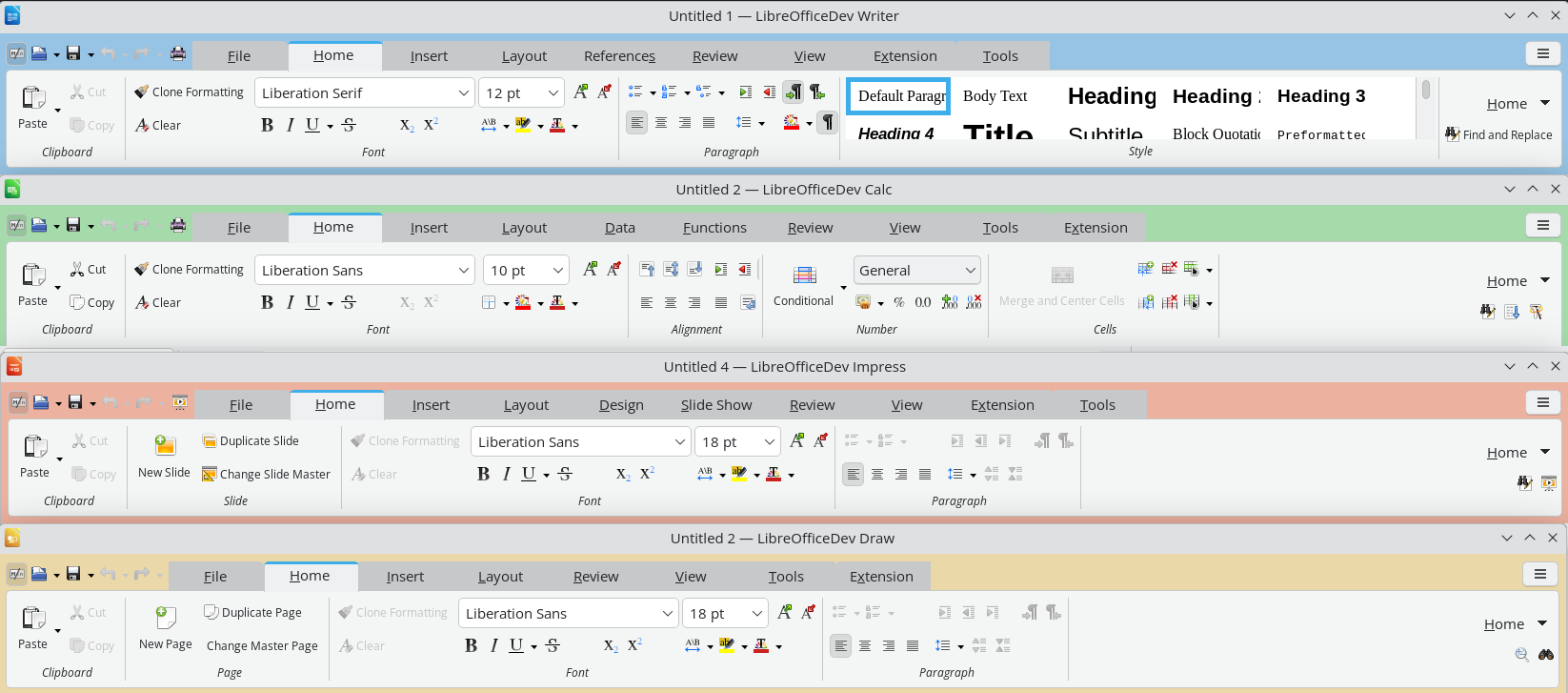
Fifteen years is a significant milestone, but LibreOffice is not slowing down. Thanks to continuous improvements to the user interface, increased compatibility, and greater integration with modern systems (including the cloud), the project is moving forward with the same energy with which it was launched.

Here’s what the future looks like:

  • More powerful collaboration tools for teams and organisations
  • Ever-improving compatibility with proprietary formats and native handling of the open document format standard
  • A flexible user interface and user experience to meet the compatibility needs of users accustomed to the rigid interface of proprietary software
  • Continuous performance and security improvements at all levels
  • An ever-expanding network of volunteer contributors and partner companies around the world.

Join the celebrations!

This anniversary is about more than just LibreOffice; it’s about you too: the users, volunteer contributors, ecosystem companies, supporters and everyone who believes in open-source software.

If you have ever reported a bug, done a translation, answered user questions, contributed to the documentation, written source code, organised an event, made a donation, or simply shared LibreOffice with someone else, then you are part of the story.

So raise your glass (or open a text document, spreadsheet, presentation, or drawing) and join us in celebrating 15 years of LibreOffice and the people who made it possible. The best is yet to come!