
Four more videos from the auditorium at LibreOffice Conference 2019

We’ve uploaded some more videos from our recent LibreOffice Conference 2019 in Almeria, Spain! First up, “Databases in LibreOffice” with Tamás Bunth:

Please confirm that you want to play a YouTube video. By accepting, you will be accessing content from YouTube, a service provided by an external third party.

YouTube privacy policy

If you accept this notice, your choice will be saved and the page will refresh.
Next, “Scripting LibreOffice Python macros” with Alain Romedenne:

Please confirm that you want to play a YouTube video. By accepting, you will be accessing content from YouTube, a service provided by an external third party.

YouTube privacy policy

If you accept this notice, your choice will be saved and the page will refresh.
“Custom Widget Themes” with Tomaž Vajngerl:

Please confirm that you want to play a YouTube video. By accepting, you will be accessing content from YouTube, a service provided by an external third party.

YouTube privacy policy

If you accept this notice, your choice will be saved and the page will refresh.
And the Google Summer of Code (GSoC) panel:

Please confirm that you want to play a YouTube video. By accepting, you will be accessing content from YouTube, a service provided by an external third party.

YouTube privacy policy

If you accept this notice, your choice will be saved and the page will refresh.
The Document Foundation welcomes the release to OASIS of the TC Committee Draft of ODF Version 1.3 for ratification

Editor of the new version of the ODF standard document format sponsored by the Community of ODF Specification Maintainers (COSM) *

Berlin, November 7, 2019 – The Document Foundation welcomes the release to OASIS of TC Committee Draft of ODF Version 1.3 for ratification. At the end of the process, ODF Version 1.3 will be submitted to ISO to become a standard. The final approval is expected in late 2020 or early 2021.

Editing of ODF Version 1.3 Committee Draft has been sponsored by the Community of ODF Specification Maintainers (COSM), a project launched by The Document Foundation in 2017 with the donation of a seed of euro 10,000 to get the COSM project started, plus up to euro 20,000 to match each euro donated by other stakeholders.

So far, the COSM project has been backed by Microsoft, Collabora, the UK Government Digital Services, CIB, the European Commission’s StandICT project and Open-Xchange. The money has been used to pay an editor to finalize the ODF 1.3 specification and manage it through the OASIS review and ratification process.

Major new features of ODF 1.3 are digital signature and OpenPGP-based XML encryption of documents, plus several improvements to features already available in ODF 1.2 like new polynomial and moving average regression types for charts, a new specification for number of decimal digits in number formatting, a special header/footer style for first page of documents, contextual spacing for paragraphs, additional type argument values for the WEEKDAY function, and the new text master template document type. Most of these new features have been contributed by developers at CIB, Collabora, Microsoft and The Document Foundation.

“The third revision of ODF is now well on the way to becoming a ratified standard and confirms that the crowdfunding approach TDF seeded at COSM is an effective way to have the open document standard maintained without needing a deep-pocketed international corporation behind them”, said Thorsten Behrens, TDF board member.

Tender for consultancy on implementing ODF 1.3 conformance in LibreOffice (#201911-01)

The Document Foundation (TDF), the charitable entity behind the world’s leading free office suite LibreOffice, seeks for companies or individuals to

provide consultancy on implementing ODF 1.3 conformance in LibreOffice

to start work as soon as possible. TDF is looking for an individual or company to give technical consultancy on ensuring that LibreOffice will properly implement the Open Document Format (ODF) version 1.3 for both importing and exporting. This can involve one or more of the following tasks:

Required skills

  • Extensive knowledge of C++
  • Experience working on the LibreOffice source code
  • Experience with implementing and testing the Open Document Format

We exclusively use free, libre and open source (FLOSS) software for development wherever possible, and the resulting work must be licensed under the Mozilla Public License v2.0.

Other skills

  • English (conversationally fluent in order to coordinate and plan with members of TDF)

TDF welcomes applications from all suitably qualified persons regardless of their race, sex, disability, religion/belief, sexual orientation or age.

Bidders will get a preference for including a partner or independent developer who has not been involved in a successful tender before.

As always, TDF will give some preference to individuals who have previously shown a commitment to TDF, including but not limited to certified developers and/or members of TDF. Not being a member, or never having contributed before, does not exclude any applicants from consideration.

The task offered is a project-based one-off, with no immediate plans to a mid- or long-term contractual relationship. It is offered on a freelance, project basis. Individuals and companies applying can be located anywhere in the world.

TDF is looking forward to receiving your applications for one or more of the aforementioned tasks, your financial expectations and the earliest date of your availability, via e-mail to a committee at tender20191101@documentfoundation.org no later than November 15, 2019.

Applicants who have not received feedback by November 29, 2019, should consider that their application, after careful review, was not accepted.

Additional information as per 2019-11-06: When budgeting, we anticipated that this project to take in the region of 20 (twenty) days of work

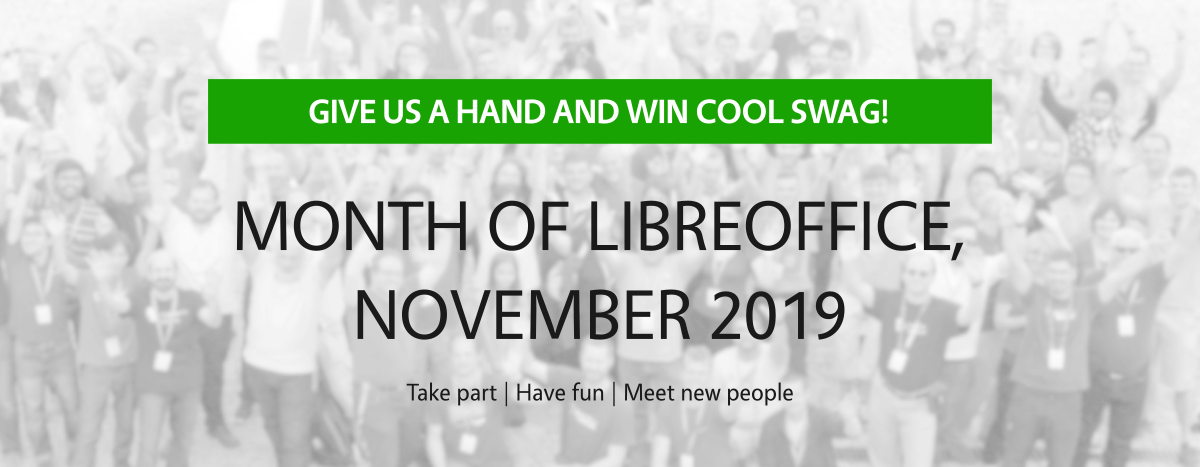
Starting today: The Month of LibreOffice, November 2019 – get cool swag!

Thanks to our worldwide community of developers and supporters, every release of LibreOffice includes new features, bugfixes, compatibility boosts, translations, and other improvements. This month, we want to say a big thanks to everyone who helps out – and encourage more people to join our friendly community as well! So how are we going to do this?

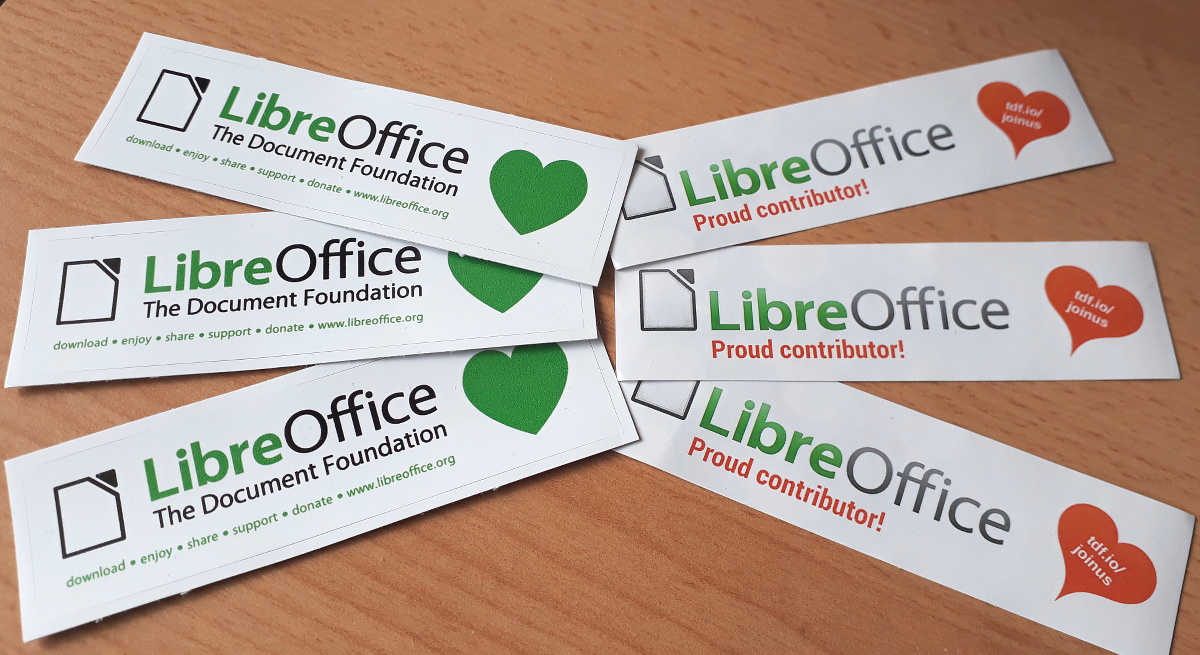
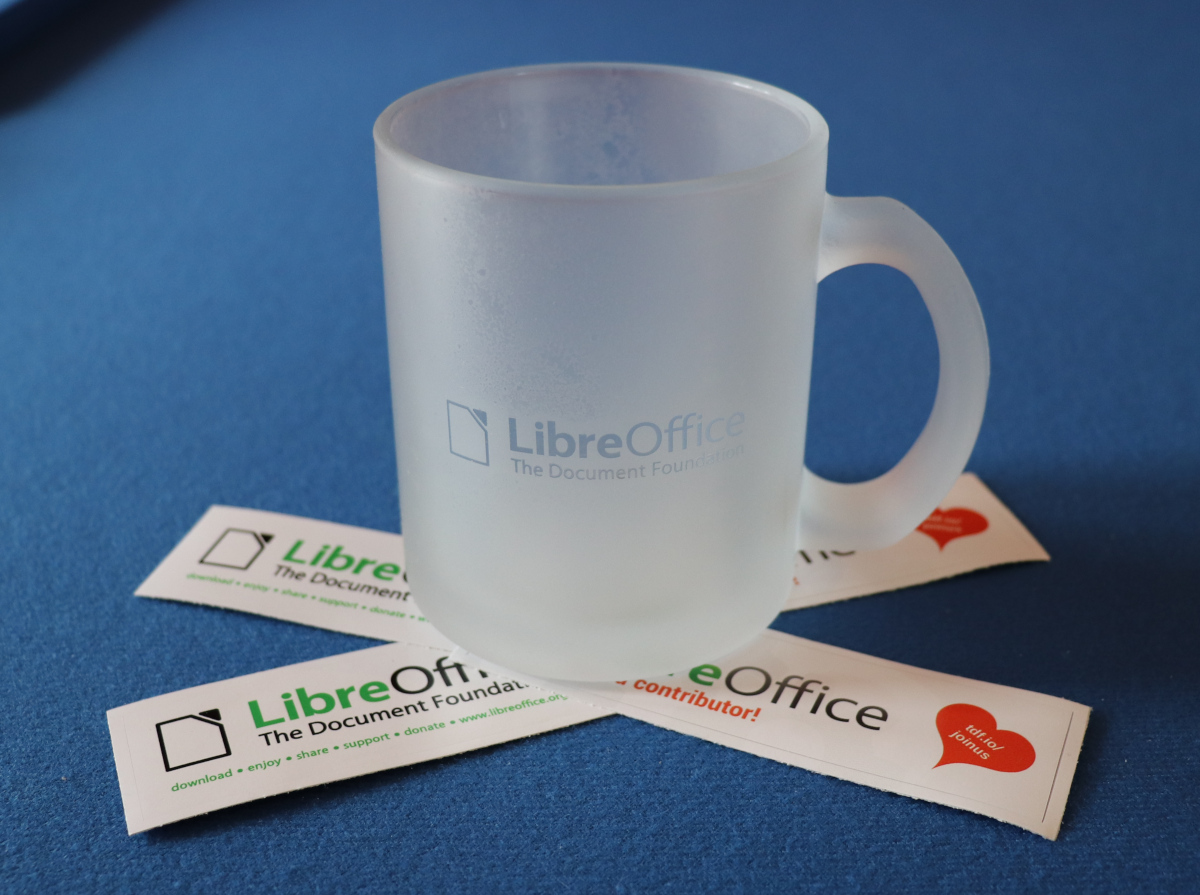
Well, everyone who contributes can claim an awesome sticker pack at the end of the month:

And even better, we’ll also choose 10 contributors at random to receive an exclusive glass LibreOffice mug – there aren’t many of these in the wild:

How to take part

So, let’s get started! There are many ways you can help out – and you don’t need to be a developer. For instance, you can be a…

  • Handy Helper, answering questions from users: over on Ask LibreOffice there are many users looking for help with the office suite. We’re keeping an eye on that site so if you give someone useful advice, you can claim your shiny stickers.
  • First Responder, helping to confirm new bug reports: go to our Bugzilla page and look for new bugs. If you can recreate one, add a comment like “CONFIRMED on Windows 10 and LibreOffice 6.3.3”. (Make sure you’re using the latest version of LibreOffice!)
  • Drum Beater, spreading the word: tell everyone about LibreOffice on Twitter or Mastodon! Just say why you love it or what you’re using it for, add the #libreoffice hashtag, and at the end of the month you can claim a sticker. (We have a maximum of 100 stickers for this category, in case the whole internet starts tweeting/tooting!)
  • Globetrotter, translating the user interface: LibreOffice is available in a wide range of languages, but its interface translations need to be kept up-to-date. Or maybe you want to translate the suite to a whole new language? Get involved here.
  • Code Cruncher, contributing source code: The codebase is big, but there are lots of places to get involved with small jobs. See our Developers page on the website and this page on the wiki to get started. Once you’ve submitted a patch, if it gets merged we’ll send you a sticker!
  • Docs Doctor, writing documentation: Another way to earn a badge is to help the LibreOffice documentation team. Whether you want to update the online help or add chapters to the handbooks, here’s where to start.

So there’s plenty to do! As the contributions come in, we’ll be updating this page every day with usernames. So dive in, get involved and help make LibreOffice better for millions of people around the world – and enjoy your sticker as thanks from us. We’ll be posting regular updates on this blog and our Mastodon and Twitter accounts over the next four weeks!